
Prime Business Rewards UK: What Sellers Need to Know
Reading Time: 4 minutes Prime Business Rewards UK is a new points programme for Amazon…
Running short of time? Get PDF of the blog in your mail.
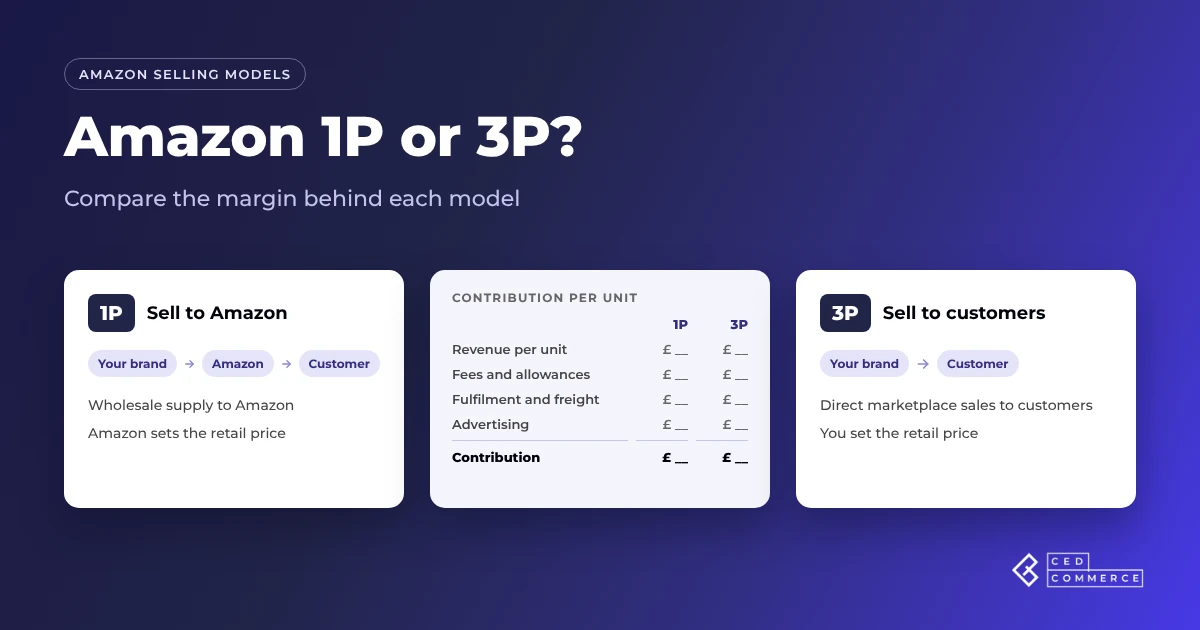
Amazon 1P vs 3P comes down to who sells to the customer. In the 1P model, you sell stock to Amazon at wholesale prices through Vendor Central, and Amazon resells it. In the 3P model, you sell directly to customers through Seller Central and set your own prices. Amazon’s UK selling guide describes Vendor Central as invitation-only, so for many brands the decision is how to run 3P well and whether a vendor relationship suits some product lines.
The question came up again this month in a guest piece on ChannelX by Nick Comer, founder and CEO of Amazon Vendor specialist Rosetta Brands. He argues that established brands should assess Vendor Central alongside Seller Central. For your business, the useful answer sits at product-line level: which model leaves more contribution after its full commercial and operating costs.
Under 1P, Amazon is your customer. It places purchase orders, buys and owns the inventory, and generally sets the retail price. The relationship works like any other wholesale account, with Amazon’s own terms and operational requirements. Brands that already supply large retailers may find that familiar.
Under 3P, the shopper is your customer. You list products, set prices, and own the stock until it sells. You can fulfil orders yourself or use Fulfilment by Amazon (FBA). Using FBA doesn’t make you a 1P vendor: Amazon stores and ships the stock, but you remain the seller.
Wholesale revenue and marketplace revenue can’t share one unadjusted margin calculation. Under 1P, you record a wholesale price less agreed deductions. Under 3P, you record the retail price less selling fees and the cost of running the channel. Fill in a worksheet like this for each product line:
| Line | 1P (Vendor Central) | 3P (Seller Central) |
|---|---|---|
| Revenue basis | Wholesale price on Amazon’s purchase orders | Retail price paid by the customer, excluding VAT |
| Deductions and fees | Allowances and deductions in your vendor agreement | Referral fees and other selling fees from the rate card |
| Landed product cost | Cost to make the product and deliver it to Amazon | Cost to make the product and deliver it to your warehouse or FBA |
| Logistics | Shipping to Amazon fulfilment centres under its requirements | Fulfilment, storage and returns, through FBA or your own operation |
| Advertising | Spend needed to support sell-through | Spend needed to win traffic and sales |
| Payment timing | Payment terms on invoices to Amazon | Disbursement schedule, plus stock you finance until it sells |
| Contribution | Revenue less all of the above | Revenue less all of the above |
Use your own agreements and fee schedules. Percentages quoted by other brands won’t reflect your terms, and the cash tied up in stock can change which model is easier to fund.
| Situation | Model that often fits | Why |
|---|---|---|
| Testing demand for a new product | 3P | You control price, listings, and stock while you learn |
| Established range already sold wholesale to retailers | 1P, if invited | It works like your other wholesale accounts |
| You need control of retail price and brand presentation | 3P | Amazon generally sets the retail price for Vendor products |
| Small team for marketplace operations | 1P, if invited | Amazon handles retail selling while you manage supply and the commercial relationship |
| Tight cash and slow sell-through | Compare both | Depends on your vendor payment terms and your 3P cash cycle |
Comer’s view is that the two models can complement each other, with the choice following the brand’s objectives and whether the numbers work. Whether you can run both, and for which products, depends on your arrangements with Amazon.
Before you grow beyond Amazon, separate what you own from what Amazon owns.
For the seller-owned part of your catalog, the listings you already built for Seller Central or Shopify give you a head start on other marketplaces. You can connect Shopify and Amazon for the Amazon side, then check which other channels support your source catalog and selling country.
CedCommerce · UniCon
Take your existing catalog to more marketplaces
Use UniCon to prepare listings for supported channels and manage catalog updates from one place.
Related reading: Learn how to plan your multichannel expansion and how to manage multichannel selling from Shopify. Prefer to set things up yourself? View UniCon on the Shopify App Store.
Vendor Central is for 1P vendors, who sell stock to Amazon at wholesale prices for Amazon to resell. Seller Central is for 3P sellers, who list and sell products directly to Amazon customers and set their own prices.
Yes. Amazon’s UK selling guide describes Amazon Vendor as an invitation-only programme. Seller Central is open to eligible businesses that register.
No. Fulfilment by Amazon is a fulfilment service for 3P sellers. Amazon stores and ships the stock, but the seller keeps ownership until the sale and sets the price.
Many brands run a hybrid model, often with different product lines in each. What you can sell through each depends on your agreements with Amazon, so check them before you decide which products go where.


Reading Time: 4 minutes Prime Business Rewards UK is a new points programme for Amazon…
Reading Time: 3 minutes Amazon announced its 2027 US Fulfillment by Amazon (FBA) fees on…
Reading Time: 9 minutes When one Amazon FBA or Walmart WFS inventory pool also sells…
Reading Time: 9 minutes Amazon MCF and Walmart MCS both name Temu, SHEIN and TikTok…
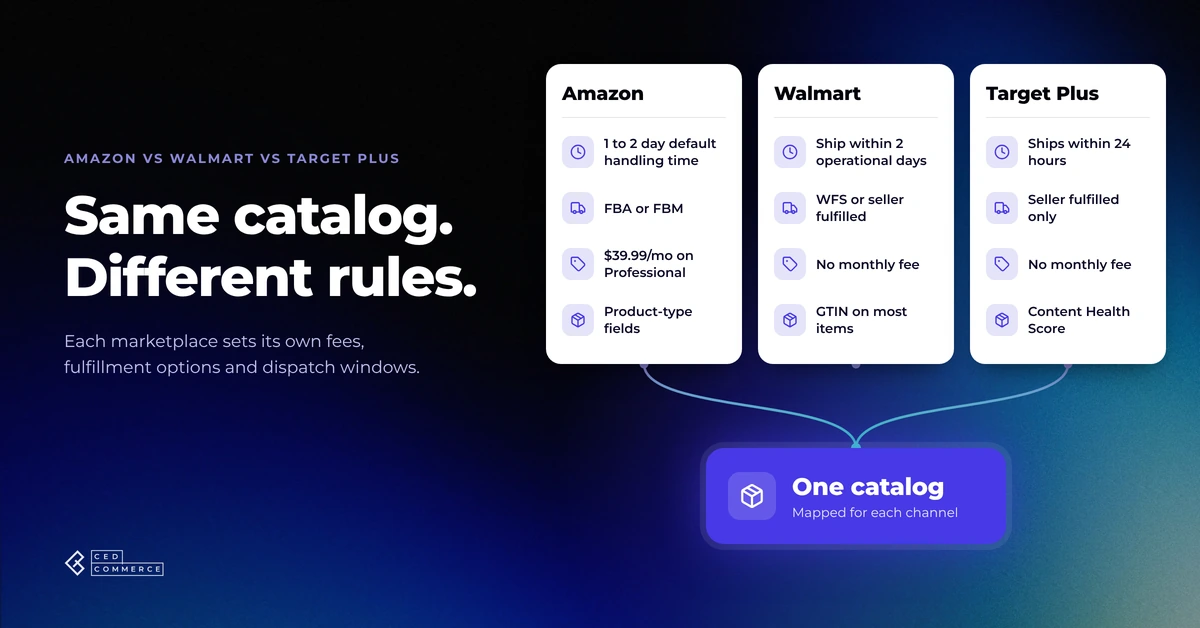
Reading Time: 11 minutes If you already sell on Amazon, adding Walmart or Target Plus…
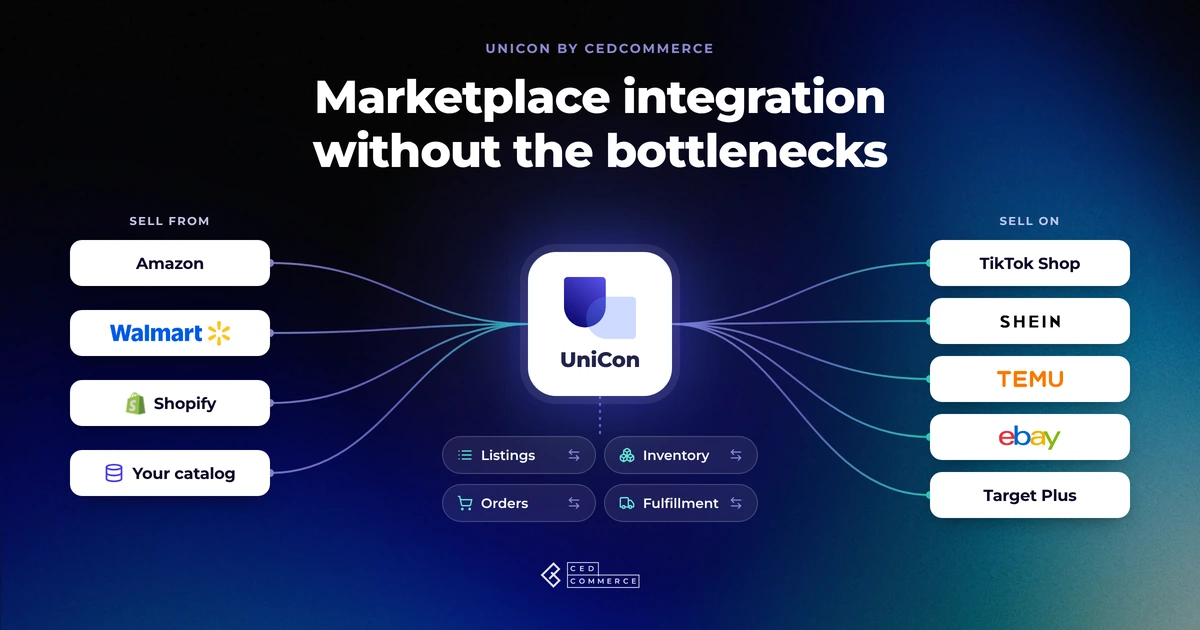
Reading Time: 13 minutes Selling on another marketplace sounds straightforward when you already have a…
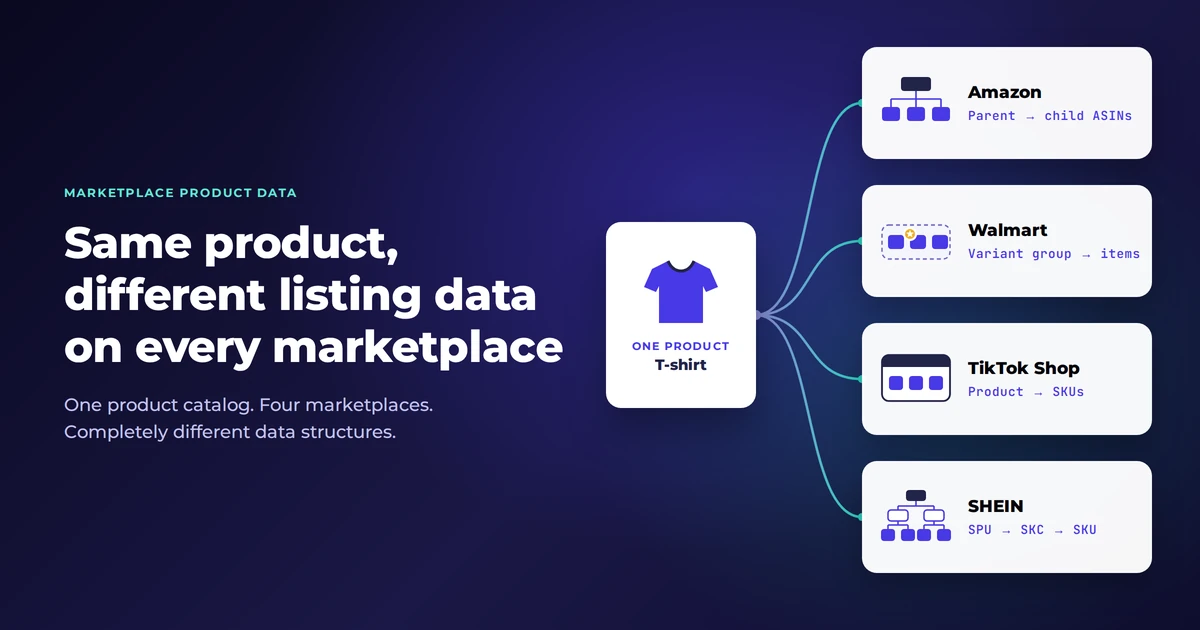
Reading Time: 11 minutes The same physical product can require a different listing structure on…
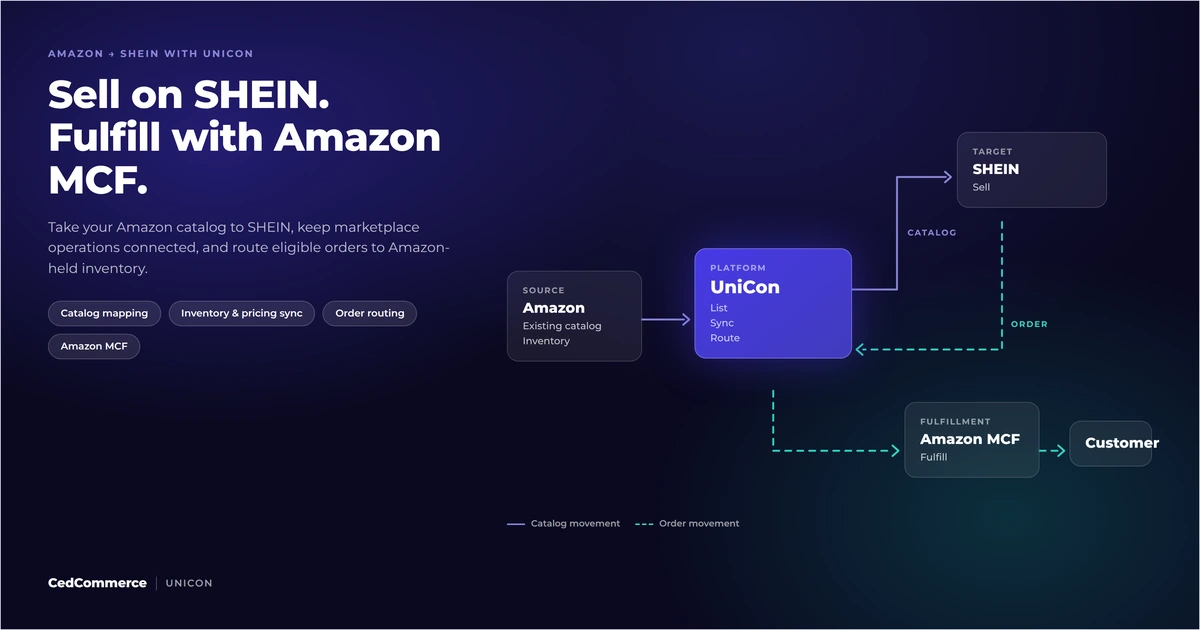
Reading Time: 12 minutes Looking to sell on SHEIN from Amazon? You could potentially tap…
Reading Time: 15 minutes Your marketplace app does not sync continuously. It syncs on a…
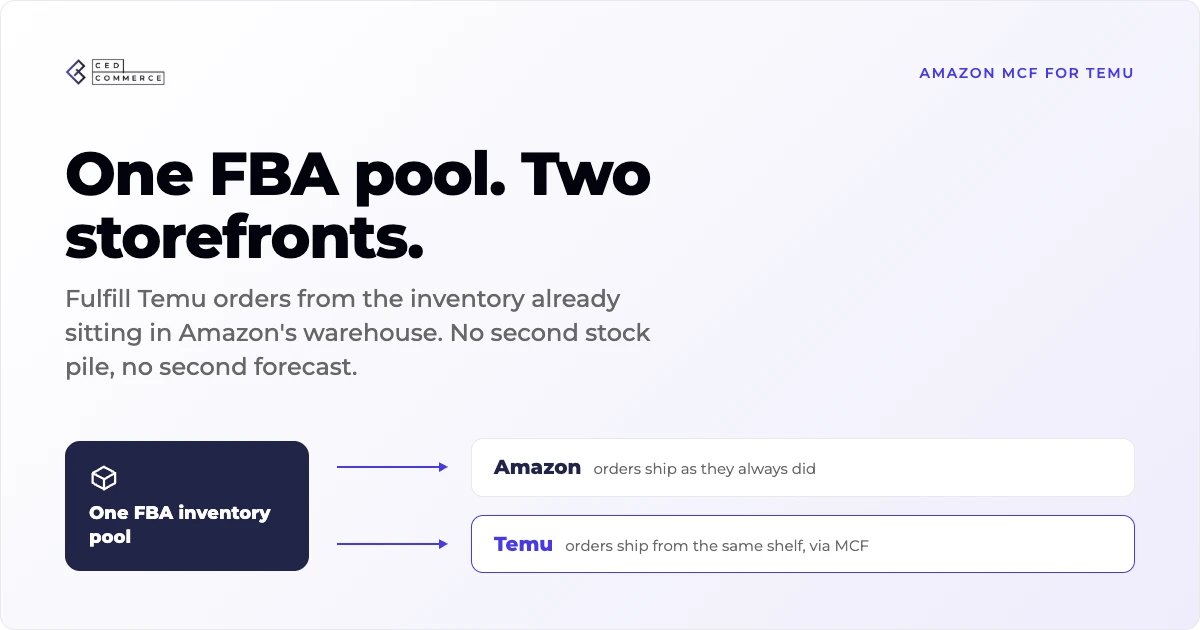
Reading Time: 19 minutes Ever wondered if your FBA inventory could turn Amazon into a…