
How to Prevent Overselling: FBA or WFS Stock on Temu, SHEIN, TikTok
Reading Time: 9 minutes When one Amazon FBA or Walmart WFS inventory pool also sells…
Running short of time? Get PDF of the blog in your mail.
Amazon announced its 2027 US Fulfillment by Amazon (FBA) fees on November 5. Most changes take effect January 15, 2027, when FBA fulfillment fees will rise by an average of $0.19 per unit sold. Your actual change depends on the product, its packaged size, and its price. Amazon will also change how it charges for storage and low inventory starting February 1.
For standard-size items priced between $10 and $50, Amazon says fees rise by an average of $0.40 per unit for small standard-size products and $0.12 for large standard-size products. Above $50, those average increases are $0.70 and $0.47, respectively. Below $10, small standard-size fees rise by $0.20 on average. Large standard-size non-apparel fees stay flat, while large standard-size apparel rises by $0.08 on average. Some categories lose access to low-price rates altogether.
Amazon also replaces its two bulky tiers with four and its extra-large tiers with six oversize tiers. The practical move for bulky and oversize sellers is to check the dimensions and weight Amazon has on file against the new tier. Some lighter or smaller items will cost less to fulfill, while some heavier or larger items will cost more. Amazon says its fuel and logistics surcharge stays in place. (Source: Amazon Seller Central fee summary)
Amazon will drop its storage utilization surcharge and combine the aged-inventory surcharge with monthly storage fees into one age-based rate. Amazon expects storage costs to stay flat or fall for inventory that sells within six months, with higher costs for older stock. Amazon also lists an exception for qualifying inventory that it auto-replenishes through Amazon Warehousing and Distribution.
For eligible products, Amazon will use actual shipments from the four weeks before and the four weeks after an assessment to determine whether inventory falls below 28 days of supply. That means you’ll wait four weeks to see a low-inventory charge for a given assessment week. Check your coverage on fast movers and your inventory age on slow movers. Those are two different decisions. (Source: Low-inventory-level fee)
US FBA sellers. Open the Fee Change Comparison dashboard in Profit Analytics and rank SKUs by expected contribution-margin impact. Start with items that sell the most units or leave you the least room after fees. Use Amazon’s Revenue Calculator to test a price or fulfillment change before you make it.
(Sources: Fee Change Comparison | Amazon Revenue Calculator)
Merchant-fulfilled sellers and multichannel brands. The $0.19 average applies to FBA fulfillment. If you ship your own Amazon orders, review the referral and promotion changes that apply to your business. Those include a lower referral rate for 3D printers and new fees for Buy X, Get Y promotions. If you use Amazon Multi-Channel Fulfillment (MCF), check its separate rate card. Amazon says standard-speed MCF and Buy with Prime fulfillment fees rise by an average of 3.5%. (Sources: Seller Central fee summary | 2027 US MCF rate card)
Integration providers. If your software estimates fees, update any cached rates, effective dates and size-tier mappings. Keep FBA and MCF cost assumptions separate, and compare sample estimates with Seller Central. Amazon documents a Product Fees API for estimates. Its operation reference gives providers a place to verify the input and output contract. Amazon Product Fees API
Use UniCon to start from your existing Amazon listings, prepare them for supported marketplaces, and sync inventory, pricing, and orders across connected channels.
Pull the current and 2027 fee for each priority SKU, then multiply the per-unit difference by the units you expect to sell. A $0.40 increase across 1,000 units adds $400 in fulfillment cost for that SKU before other changes. Run a separate February review for products already approaching six months in storage and for popular SKUs you routinely replenish.

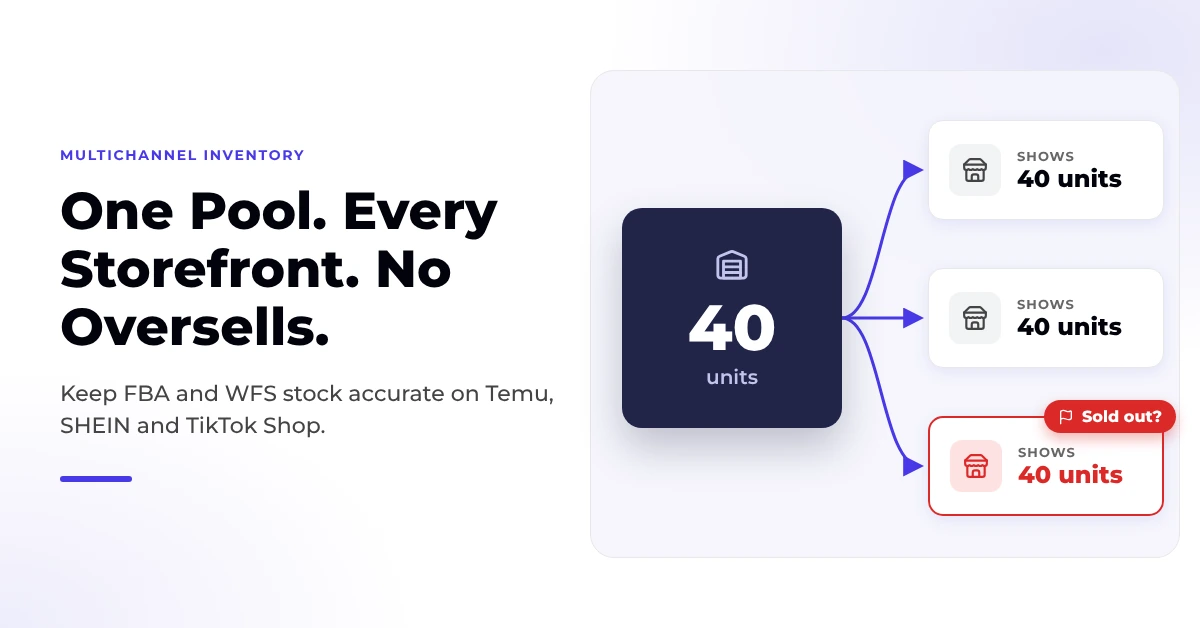
Reading Time: 9 minutes When one Amazon FBA or Walmart WFS inventory pool also sells…
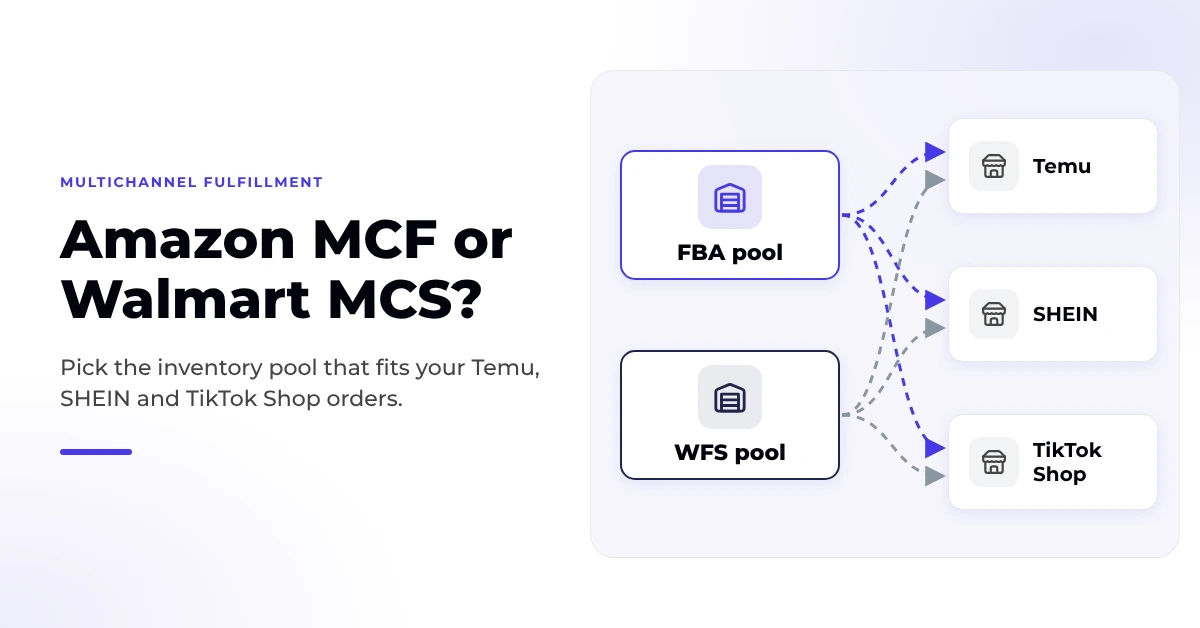
Reading Time: 9 minutes Amazon MCF and Walmart MCS both name Temu, SHEIN and TikTok…
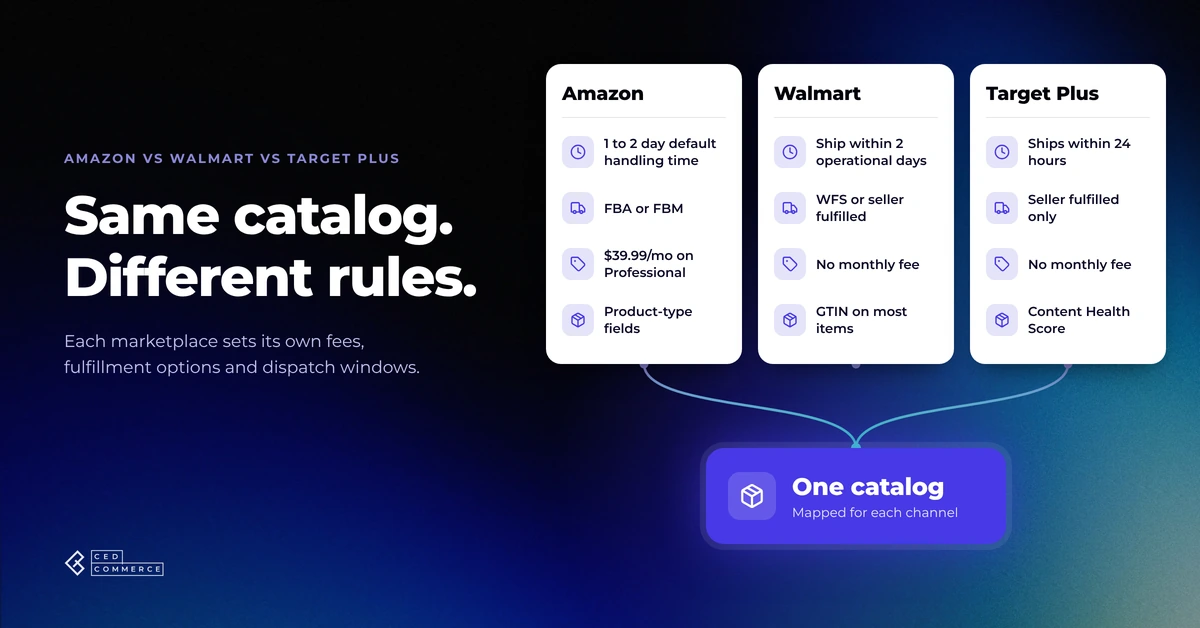
Reading Time: 11 minutes If you already sell on Amazon, adding Walmart or Target Plus…
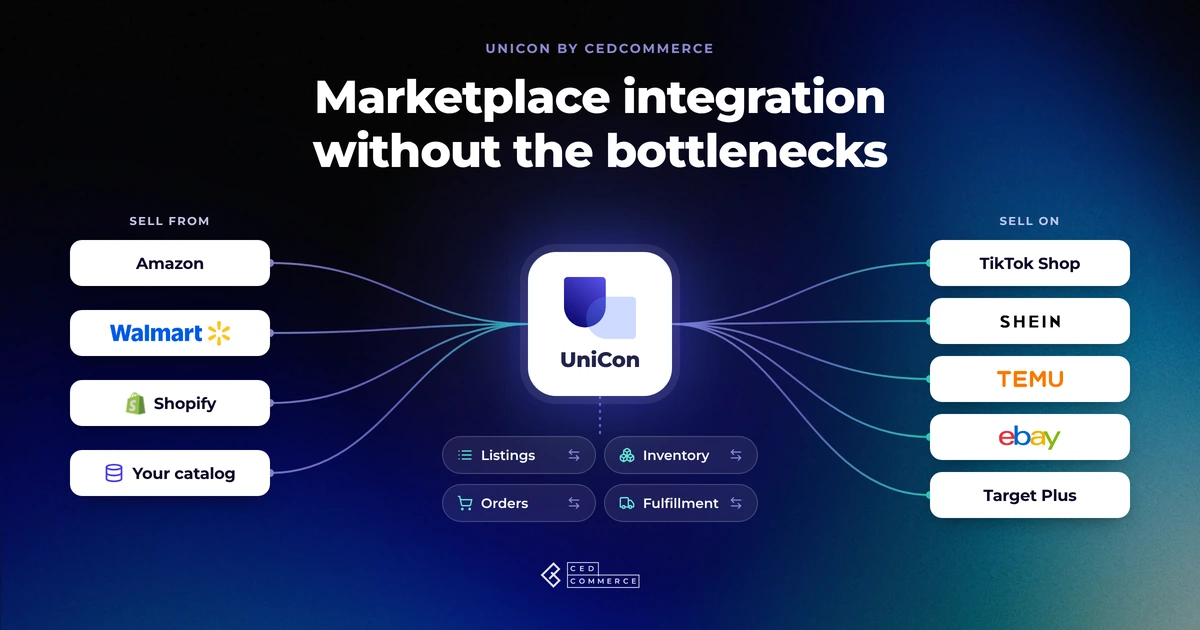
Reading Time: 13 minutes Selling on another marketplace sounds straightforward when you already have a…
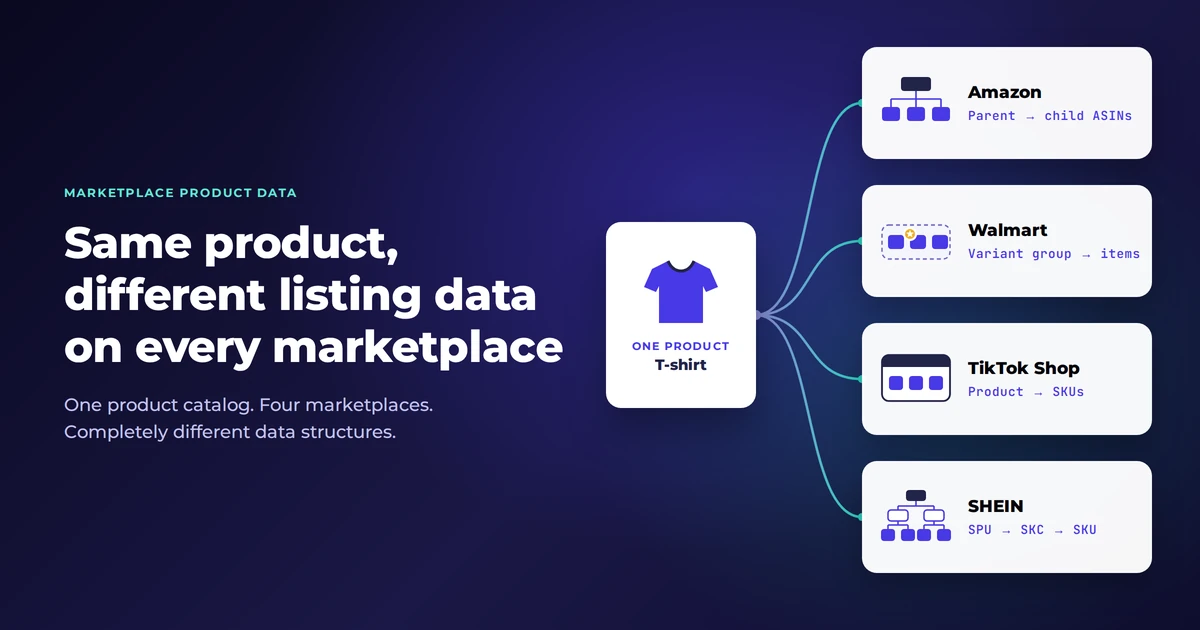
Reading Time: 11 minutes The same physical product can require a different listing structure on…
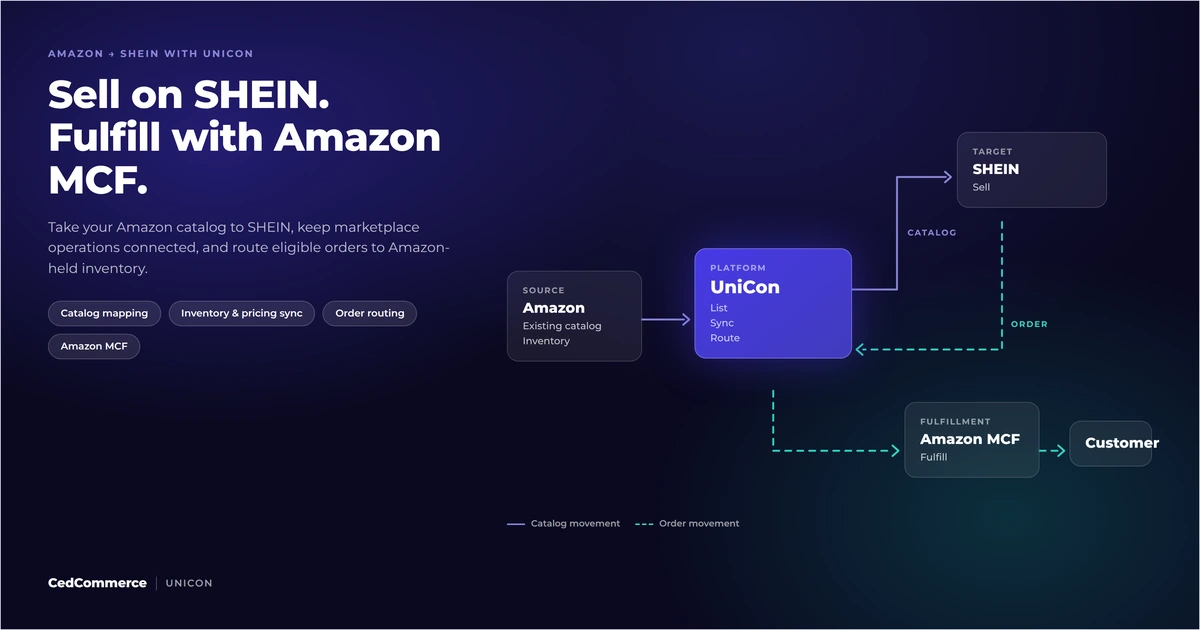
Reading Time: 12 minutes Looking to sell on SHEIN from Amazon? You could potentially tap…
Reading Time: 15 minutes Your marketplace app does not sync continuously. It syncs on a…
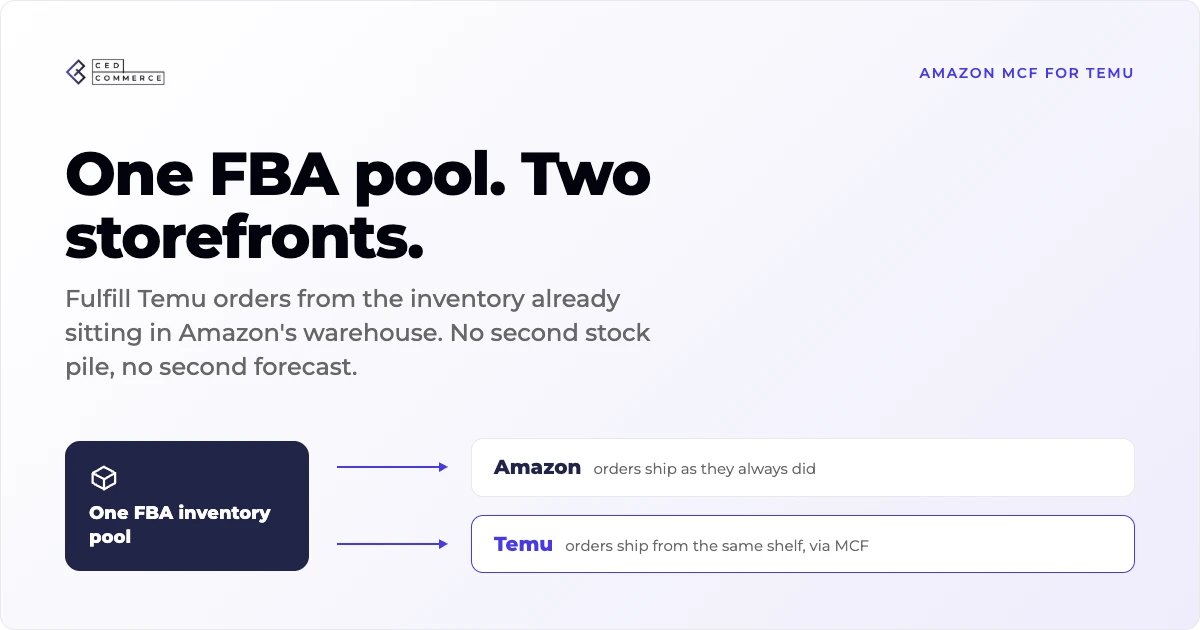
Reading Time: 19 minutes Ever wondered if your FBA inventory could turn Amazon into a…

Reading Time: 18 minutes If you’re an established third-party brand or authorized reseller looking for…
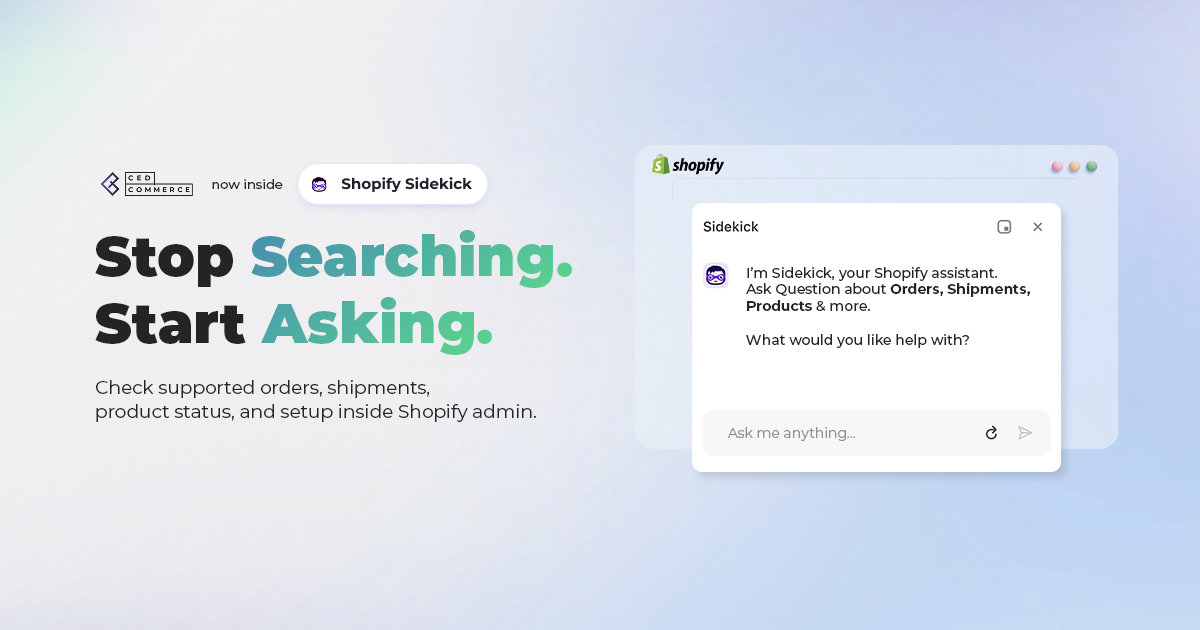
Reading Time: 6 minutes Your marketplace stack may be connected, but your attention is still…