
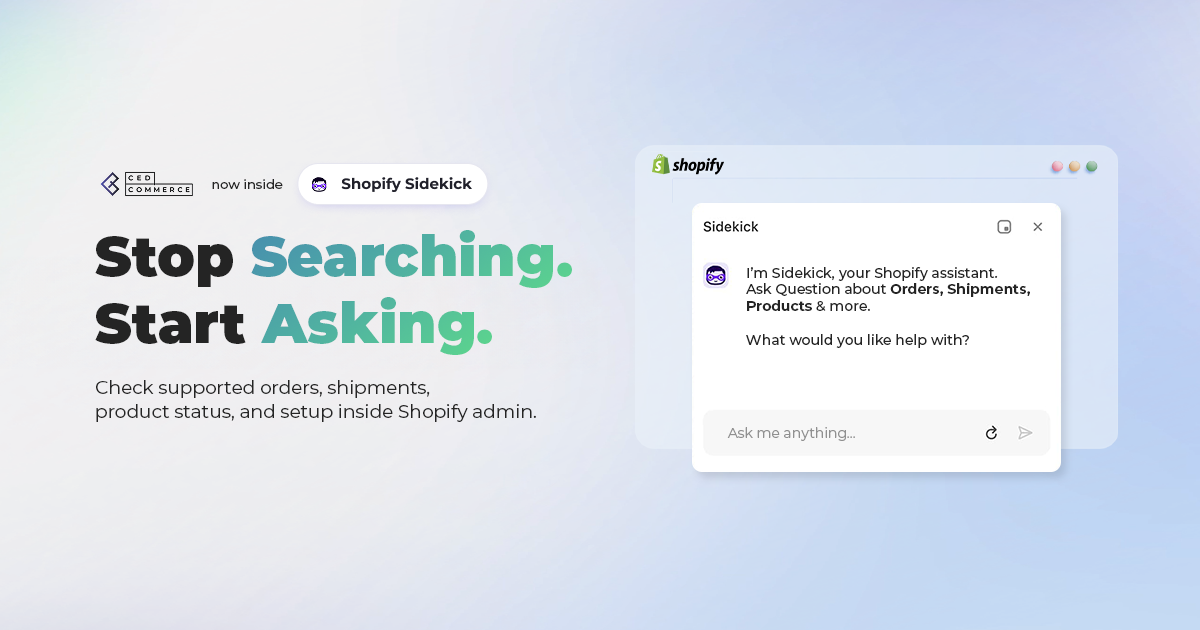
CedCommerce Apps Are Now Available in Shopify Sidekick
Reading Time: 6 minutes Your marketplace stack may be connected, but your attention is still…

Running short of time? Get PDF of the blog in your mail.
Target has announced it will pilot contextual ads inside ChatGPT, promoting both its own products and brands’ advertising through its retail media network, Roundel. Ads will be triggered by keywords within user prompts and clearly labeled, appearing separately from AI-generated responses. On the surface, this looks like a media experiment. In reality, it signals something much bigger: AI assistants are officially becoming monetized commerce gateways.
And that will directly impact how sellers are discovered, recommended, and purchased in 2026.
ChatGPT now surpasses 800 million weekly active users. Target reports that traffic from ChatGPT to its website is already growing 40% month-over-month. That alone confirms: AI assistants are already influencing purchase journeys. The pilot also reveals two important structural shifts:
Instead of bidding on search queries like “best air fryer,” brands may now appear when users ask:
“What’s a convenient countertop appliance for quick weeknight meals?”
This changes how discovery works.
If ChatGPT traffic is growing at 40% MoM for retailers like Target, sellers should expect:
This means visibility inside AI-generated conversations becomes critical. If your product data is weak, unclear, or poorly structured, AI may not surface you.
Target is leveraging Roundel to distribute ads inside ChatGPT. This suggests that sellers active within retail media ecosystems may gain early access to AI ad inventory. However, official confirmations from channel-specific advertisers are yet to come.
For sellers:
If AI monetization scales, marketplace advertising strategies must evolve accordingly.
AI assistants rely heavily on:
Products with vague descriptions like “high-quality kitchen appliance” are less likely to match conversational intent. Conversational AI responds to use-case language, not just keywords.
Sellers should optimize for queries such as:
This is Generative Engine Optimization (GEO) – and it is rapidly becoming as important as SEO.
OpenAI has emphasized that ads will not influence ChatGPT’s answers and will be clearly labeled. However, consumer trust is fragile. If users perceive AI responses as commercialized or biased, ad engagement may fluctuate.
Sellers must prioritize:
AI environments amplify credibility gaps quickly.
Target’s contextual ad pilot inside ChatGPT is not happening in isolation. It is part of a much larger structural shift: Commerce platforms are redesigning discovery, advertising, and checkout for the agentic era.
Here’s how the ecosystem is moving:
Amazon is leading the commercialization of generative AI inside advertising and shopping.
Implication for sellers: Structured product data and intent-rich descriptions are now essential for visibility.
Shopify’s 2026 updates focus on embedding AI into every merchant workflow.
This introduces headless, agent-driven checkout where the AI assistant completes transactions on behalf of users.
Implication for sellers: Your catalog must be machine-readable, API-accessible, and structurally clean for AI agents to transact effectively.
Walmart is integrating AI across its omnichannel ecosystem.
Implication for sellers: Retail media is evolving into a data-driven AI orchestration layer across channels.
Need help with your channel-specific listing optimization? Explore CedCommerce’s listing optimization and brand store services, proven to drive 60% more impressions, 25–35% higher CTR → resulting in 15–30% sales lift via improved organic ranking.

Reading Time: 6 minutes Your marketplace stack may be connected, but your attention is still…

Reading Time: 4 minutes Amazon Prime Day 2026 helped drive more than $26.4 billion in…

Reading Time: 1 minuteIntro Summary Shopify Scripts stopped executing entirely on June 30, 2026. Merchants…

Reading Time: 1 minuteIntro Summary France has passed a revised fast-fashion law aimed at regulating…

Reading Time: 2 minutes Intro Summary The European Union’s new €3 customs duty on low-value…
Reading Time: 2 minutes Amazon has announced a major catalog optimization change that will impact…
Reading Time: 3 minutes SHEIN has launched a new product safety and quality compliance training…

Reading Time: 4 minutes Etsy has introduced listing-level strategies for Etsy Ads, giving sellers more…

Reading Time: 4 minutes Walmart Expands Scrutiny on Product Claims Across Marketplace Listings Walmart Marketplace…
Reading Time: 5 minutes Customers Can Now Turn Simple Prompts Into Personalized Merchandise on Amazon…