
TikTok Shop Fulfillment in 2026: 6 Options and How to Ship from Walmart WFS
Reading Time: 14 minutes TikTok Shop fulfillment in the US now comes down to six…
Running short of time? Get PDF of the blog in your mail.
Every five years or so, a marketplace opens up just enough that the sellers who move first capture a disproportionate share for the next decade. Walmart US in 2017, Shopify in 2019, and TikTok Shop in 2024. The pattern repeats, and the lesson repeats with it: the window between “interesting” and “crowded” is shorter than it looks, and the sellers who hesitate spend the next five years paying for visibility the early movers got for free.
Walmart Canada is that opening in 2026, and most sellers are about to miss it the same way they missed the others: by treating “international expansion” as a multi-quarter project instead of the multi-day workflow it now actually is. The platform has 25M+ monthly shoppers, fees that pay you to launch this year, and, the part most analysis misses, a direct demand-matching API that tells you which of your existing products Canadians are already searching for, before you list a single SKU.
The shift is quiet but decisive. The operational drag that used to define cross-border expansion (Canadian entities, new tax IDs, weeks of catalog rebuild, guessing at assortment) has been systematically dismantled over the last twelve months. What’s left is a clean question: do you have the products Canadians want, and how fast can you get them in front of them? For most US, Amazon, and Shopify sellers, the answer to the first is “yes, more than you think.” The answer to the second is the rest of this How to Sell on Walmart Canada in 2026 guide.
This is the case for moving now, and the playbook for doing it without the friction.
Fair question. Most sellers are already stretched, and adding another channel sounds like adding another job. So let’s be honest about whether it’s worth it.
Canadians shop online a lot, and the channel is still growing. eCommerce makes up about 12.5% of Canadian retail in 2026 and is climbing every year. The market sits at roughly US$45 billion today and is forecast to reach about $71 billion by 2031. That’s not a small market. That’s a market still in the middle of its shift.
Walmart Canada is a real platform, not a side bet. It’s the second most-visited eCommerce site in Canada, with more than 25 million monthly visitors and double-digit growth for three consecutive years. Customers skew younger and more affluent than the stereotype. Walmart reports that more than half of its shoppers are families with kids, the largest age group is 18–34, and one in three households earn over $100K.
And here’s the quiet part. While Walmart Canada’s audience is enormous, the seller side is much less crowded than Amazon’s. That means a real shot at the Buy Box, organic visibility your listings would never earn on a saturated platform, and ad inventory that hasn’t been bid into the sky. This is what an early-mover advantage looks like when you actually see one: cheaper attention per shopper than you’ll find almost anywhere else in North American eCommerce.
This comes up in every conversation we have, so let’s just talk about it.
Yes, the Buy Canadian sentiment is real. After the 2025 trade tensions, the Bank of Canada confirmed Canadians actually shifted spending toward domestic options, not just in surveys, but in real data. Ignoring that would be silly.
But the nuance matters, and it works in your favour more than you’d think.
It hits hardest where Canada actually makes things: groceries, alcohol, personal care. It barely touches categories where Canada doesn’t manufacture much, like consumer electronics, most home goods, and hobby products. If that’s roughly where you sell, the headwind is mostly theoretical.
Price still wins the cart. A 2026 Retail Insider survey found that about 79% of Canadian small-business owners believe shoppers say “buy local” but actually buy on price. Walmart’s entire pitch, every day low prices, strikethrough deals, is built for exactly that shopper.
The movement reacts to foreign-feeling sellers, not foreign sellers. A Canadian shopper isn’t checking your business address. They’re reacting to whether a listing feels local: fast shipping, a Canadian return address, the “Sold & Shipped by [your business name]” badge.
Show up like a committed local merchant, and you’re giving the movement exactly what it asks for, not fighting it.
Walmart Canada seller requirements is fairly straightforward now. There are three ways onto the platform, and the right one depends on your situation:
This is the friendly part of Walmart Canada marketplace fees. Walmart Marketplace doesn’t charge setup fees, monthly fees, or hidden fees. You pay a referral fee, a percentage of each sale that varies by category.
Here’s what Walmart Canada referral fees by category look like:
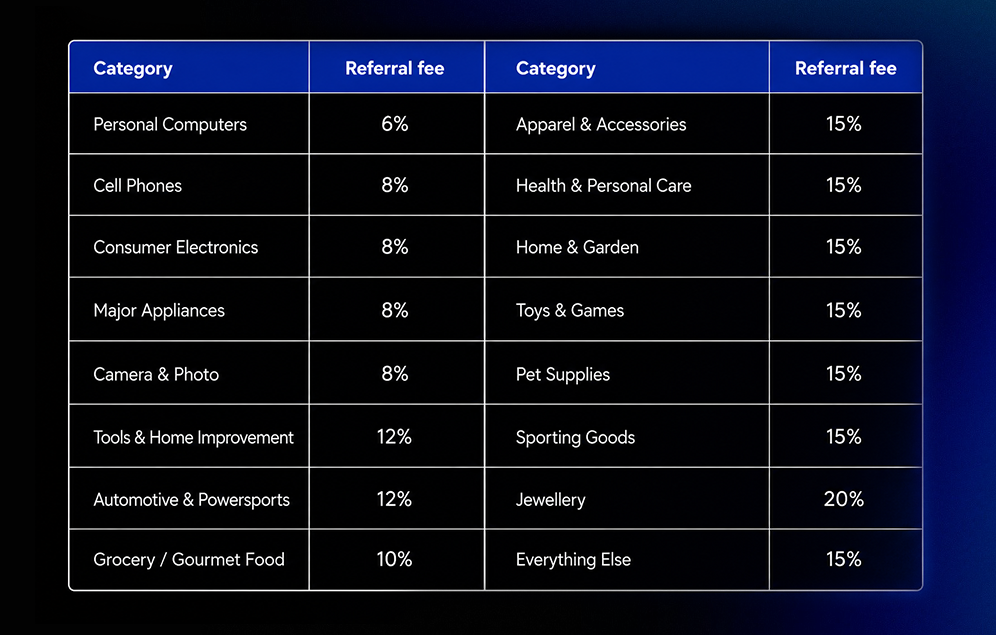
A note worth keeping in mind: the gap between 6% on a personal computer and 15% on “everything else” is huge at scale. If your products fit a lower-fee category, pay attention; that one detail can be the difference between a great margin and a fine one.
Fulfillment is the decision that most affects two things at once: how well your listings perform, and how “local” you feel to a Canadian shopper.
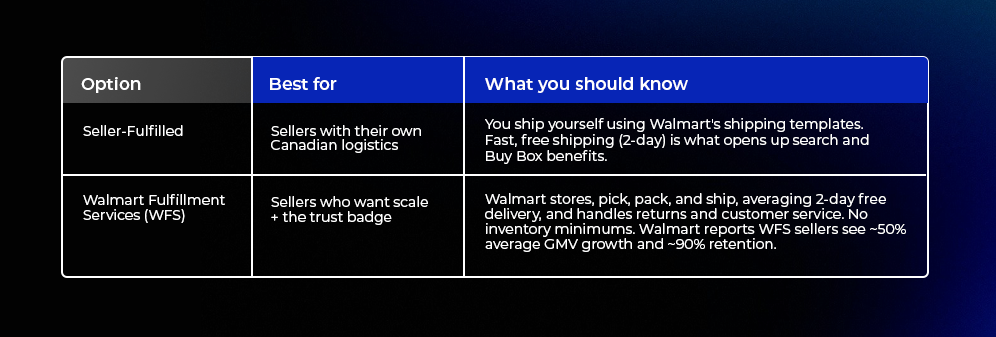
One way to think about it: fast, local-feeling delivery isn’t just an operations decision. It’s the most direct answer to the “Buy Canadian” perception problem and to build buyers’ trust.
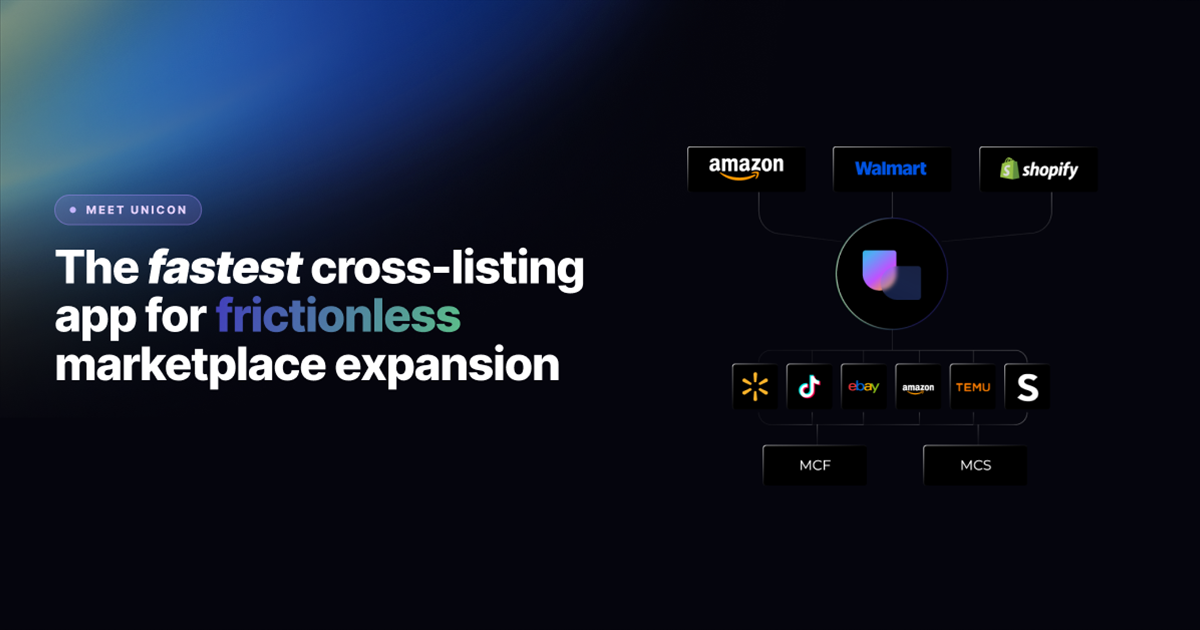
Cross-list your Walmart catalog across 6+ marketplaces and manage them all from one dashboard.
Here’s the manual version of the path. Five steps, on paper:
Steps 1, 2, 3, and 5 are quick. Step 4 is where almost every expansion quietly dies.
Why? Because step 4 is actually two big problems disguised as one task. First: Which of my products will even work in Canada? You stare at a spreadsheet of hundreds (or thousands) of SKUs and have no good way to answer that. Second: re-keying a catalog by hand into a brand-new platform takes weeks, and the listings often come out worse than the originals.
This is the part CedCommerce removes, and it’s worth showing you exactly how, because it changes the whole calculation of how to sell on Walmart Canada in 2026.
We started by asking sellers the question that stops everyone: which of my products belong in Canada? The honest answer is, you shouldn’t have to guess, because Walmart already knows. They track which products their shoppers favour, internally called Customer Favorites, and those items perform meaningfully better than the rest of the catalog. Walmart reports that Customer Favorite items can earn up to 12x higher sales per item, 5x more page views, and 4x higher sales when paired with competitive pricing and fast delivery.
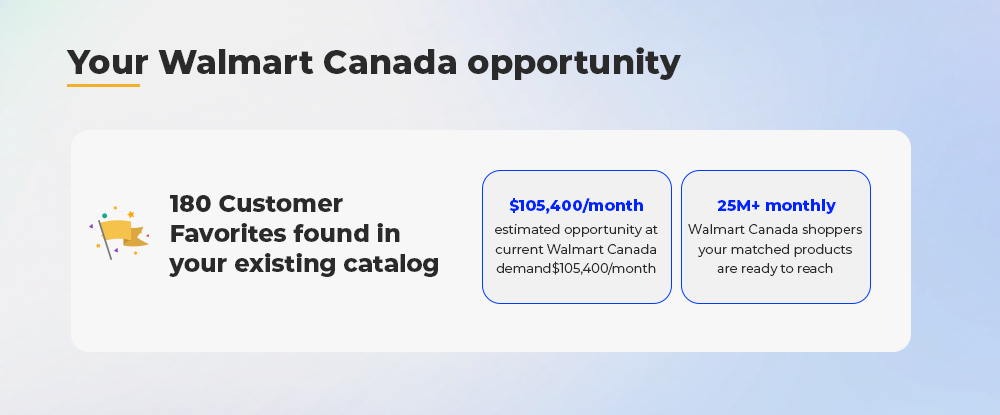
So we built a direct integration with Walmart’s Customer Favorite API. Here’s what that gives you: connect your existing Amazon or Shopify catalog to CedCommerce, and we’ll match it against Walmart’s live demand data. In minutes, you’ll see something like:
We found 180 Walmart Customer Favorites already in your catalog. An estimated $105K/month in opportunity, in front of Walmart’s millions of shoppers.
That’s the moment expansion stops feeling like a leap of faith. You’re not betting on Canada. You’re being shown which products you already have that Canadians are already searching for.
And then we run the onboarding for you. Here’s the actual flow:
Most of the heavy lifting happens on our side. You make a couple of decisions; we handle the rest.
What you actually see and do:
Look at that list again and notice who’s doing what. The hard parts, the API call, the demand match, the catalog handoff, the form auto-population, the cross-platform redirect, all happen on our side. You make a couple of decisions; we handle the rest.
That’s the difference between “expand to Canada” as a months-long project and “expand to Canada” as an afternoon.
Getting listed and selling well aren’t the same thing. Here’s what moves the needle, based on Walmart’s own reporting:
Pricing: Competitive pricing drives visibility, and strikethrough pricing (the “was $X, now $Y” tag) lifts conversion by about 30% on average. A 20% strikethrough drove a 45% conversion lift in Walmart’s data.
Content: Strong, keyword-rich titles, 5+ high-quality images, complete attributes, and accurate descriptions. This sounds basic, but it’s where most listings fall short.
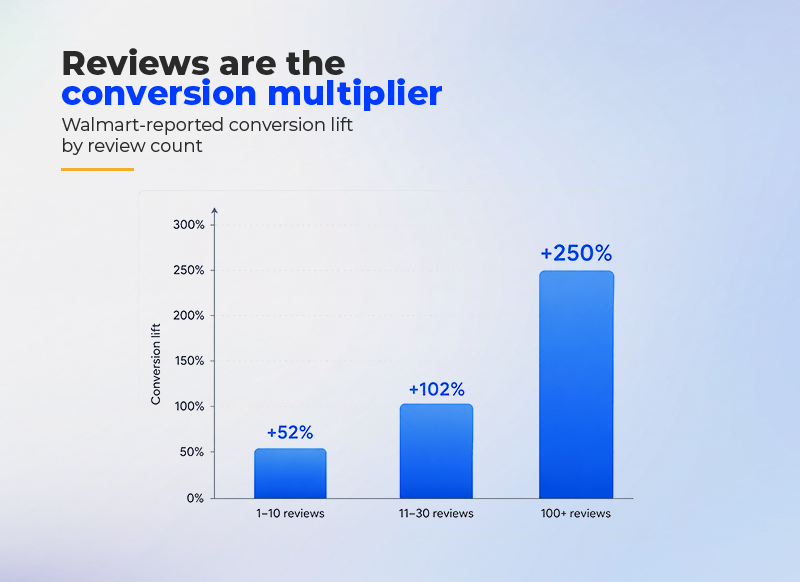
Reviews: Conversion lift scales hard with review count. Walmart reports roughly +52% with 1–10 reviews, +102% with 11–30, and +250% at 100+. If you have reviews on other channels, review syndication can port them onto Walmart, so you don’t start from zero.
Ads (Walmart Connect): The top 4 search positions get about 3x the click-through and 4x the add-to-cart rate of the next 4 positions. Seller-funded SEM averages around a 4:1 return on ad spend. Useful while your organic ranking builds.
This one matters because there’s actual money attached to your timing.
Under Walmart Canada’s New-Seller Savings 2026, eligible first-time sellers who go live on or after February 1, 2026, can get:
This is the difference between launching this quarter and “getting to it eventually,” measured in actual margin, during the exact window when you’re building your first reviews and rankings (which is when those numbers matter most).
Everything in this guide, how to sell on Walmart Canada in 2026, is the strategy. Here’s what CedCommerce actually does:
The opportunity is real for any seller. We’re what turns it from a project into a decision you can make this week.
Can US or international sellers sell on Walmart Canada?
Yes. Beyond establishing a Canadian business, Walmart’s marketplace is open to sellers from about 14 countries, and cross-border programs are expanding the US→Canada reach in 2026. The right path depends on your situation.
How much does it cost to sell on Walmart Canada in 2026?
There’s no setup fee, no monthly fee, and no hidden fees. You pay a referral fee per sale that varies by category, roughly 6–8% for electronics, ~15% for most categories, up to 20% for jewellery.
Do I need a Canadian business and bank account?
Yes. Incorporated business, Canadian Business Number, HST tax ID, Canadian bank account, and Canadian return address.
What’s the difference between WFS and seller-fulfilled in Canada?
With WFS, Walmart stores, ships (averaging 2-day free delivery), handles returns and customer service, and your listings get the “Fulfilled by Walmart” trust badge. Seller-fulfilled means you ship via your own logistics using Walmart’s shipping templates; offering fast, free shipping is key to search visibility and Buy Box eligibility.
Will “Buy Canadian” hurt my sales as a US seller?
Less than you’d expect, especially if you sell in categories where Canada doesn’t manufacture much (electronics, home, hobby) and you show up locally: Canadian return address, fast fulfillment, and “Sold & Shipped by [your name]” on your listings. The movement reacts to foreign-feeling listings more than to foreign sellers.
How long does onboarding take with CedCommerce?
Minutes, not months. We run the API scan, auto-populate your Walmart signup, sync your catalog, and publish your Customer Favorites, most of which happens on our side. You make a couple of decisions; we handle the rest.
What is the 2026 New-Seller Savings offer?
First-time Walmart Canada sellers who go live on or after February 1, 2026, can get 25% off referral fees (seller-fulfilled) or 50% off (WFS) through January 31, 2027, plus discounts on WFS storage and fulfillment.
How long does Walmart Canada seller approval take?
Walmart Canada seller approval typically takes 2–4 weeks from application submission, assuming your business verification documents are complete and accurate. Approval is faster if you’re already an approved Walmart US seller. Walmart’s Global Seller Center lets existing sellers extend to Canada in days rather than weeks. The most common cause of delays is missing or inconsistent documentation (business registration, tax ID, return address, payment details), so review the requirements checklist before applying. With CedCommerce, your application arrives at Walmart pre-populated and verified, which removes most of the back-and-forth that slows approvals down.
What are Walmart Canada Customer Favorites?
Walmart Customer Favorites are products that Walmart’s own demand data identifies as items its shoppers actively want based on search behaviour, purchase patterns, and category demand on Walmart.ca. Walmart reports that Customer Favorite items can earn up to 12x higher sales per item, 5x more page views, and 4x higher sales when paired with competitive pricing and fast delivery. CedCommerce is integrated directly with Walmart’s Customer Favorite API, which means we can scan your existing Amazon or Shopify catalog, match it against Walmart Canada’s live demand data, and show you exactly which of your products are Customer Favorites with an estimated dollar opportunity attached, before you list a single SKU.
Is selling on Walmart Canada profitable?
For most US, Amazon, and Shopify sellers, yes, Walmart Canada is profitable largely because of how the math compounds. Zero setup fees, zero monthly fees, and category referral fees of 6–15% mean costs only kick in when something sells. Walmart.ca’s audience of 25M+ monthly shoppers skews younger and more affluent (one in three households earn over $100K), and the seller side is far less crowded than Amazon, which translates to better Buy Box win rates, cheaper ad inventory, and more organic visibility per listing. Sellers using Walmart Fulfillment Services (WFS) see roughly 50% average GMV growth and 90% retention (Walmart-reported), and the Walmart Canada new-seller savings 2026 program adds 25–50% off referral fees through January 2027, materially improving year-one margin during the exact window when reviews and rankings compound.
Selling on Walmart Canada in 2026 is a better opportunity than most US, Amazon, and Shopify sellers realize, and it’s a smaller project than it used to be. The platform is large and growing. The fees are friendly. The cross-border rails are opening up. And there’s a real, dated incentive that makes this year specifically worth it.
The only real question is which products in your catalog Canadians are already searching for, and the fastest way to find out isn’t a spreadsheet or a strategy meeting. It’s a scan. We’ll run it free, show you the dollar opportunity, and then get your winners live without the months of work most expansions take.
Run your free CedCommerce scan → and see your Walmart Canada opportunity in minutes. Prefer to talk it through first? Connect with a CedCommerce onboarding specialist to understand how to sell on Walmart Canada in 2026, the most efficient way.

Reading Time: 14 minutes TikTok Shop fulfillment in the US now comes down to six…
Reading Time: 11 minutes If you already sell on Amazon, adding Walmart or Target Plus…
Reading Time: 13 minutes Selling on another marketplace sounds straightforward when you already have a…
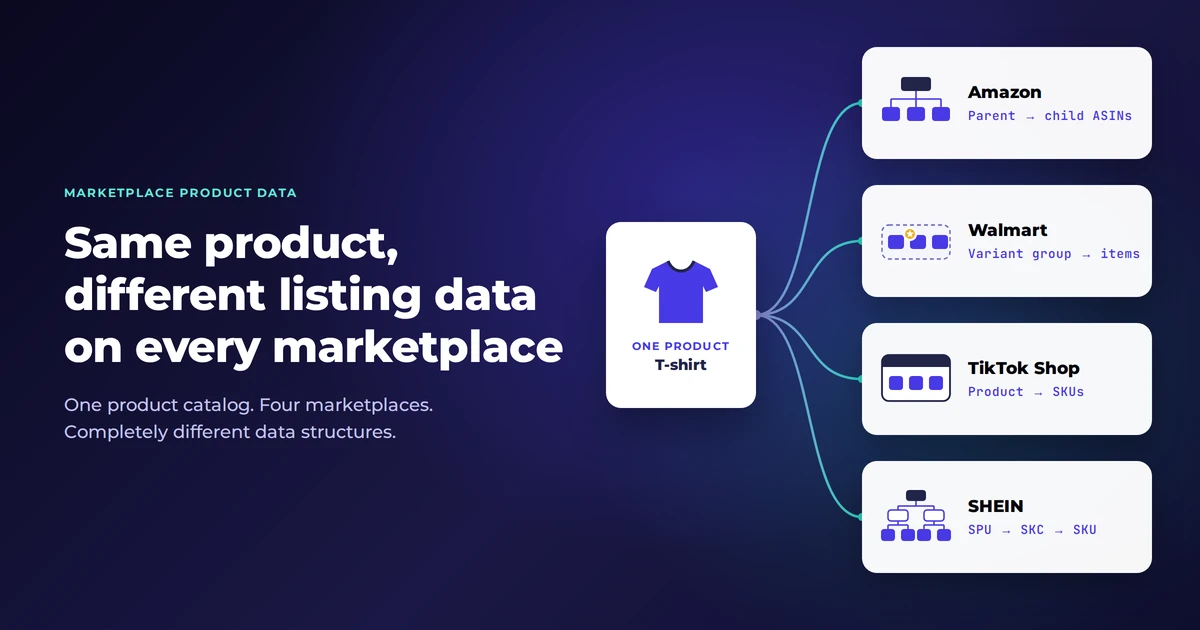
Reading Time: 11 minutes The same physical product can require a different listing structure on…
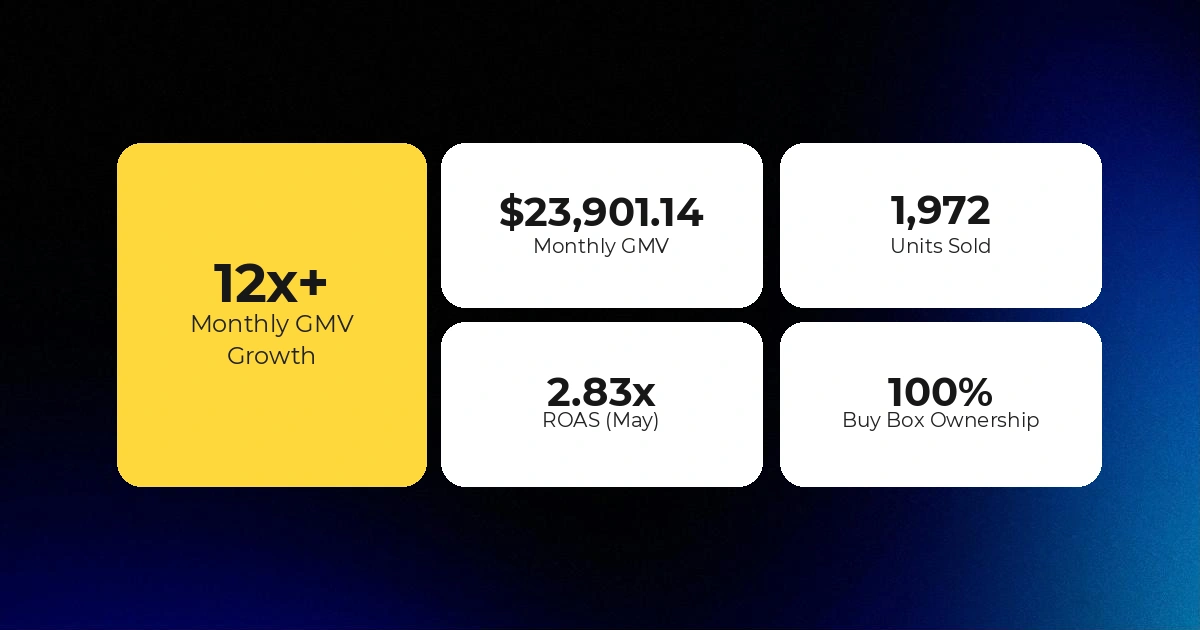
Reading Time: 3 minutes Section 1: About the Client Toadstool Seeds is an online seed…
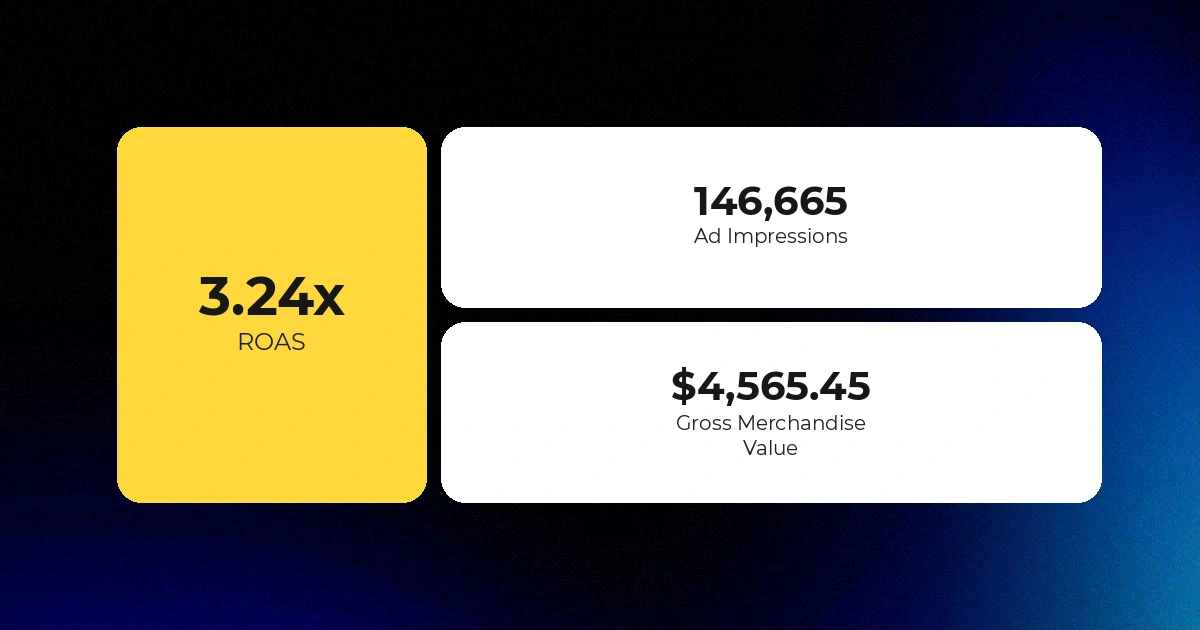
Reading Time: 3 minutes Section 1: About the Client LogOX is a premium outdoor and…
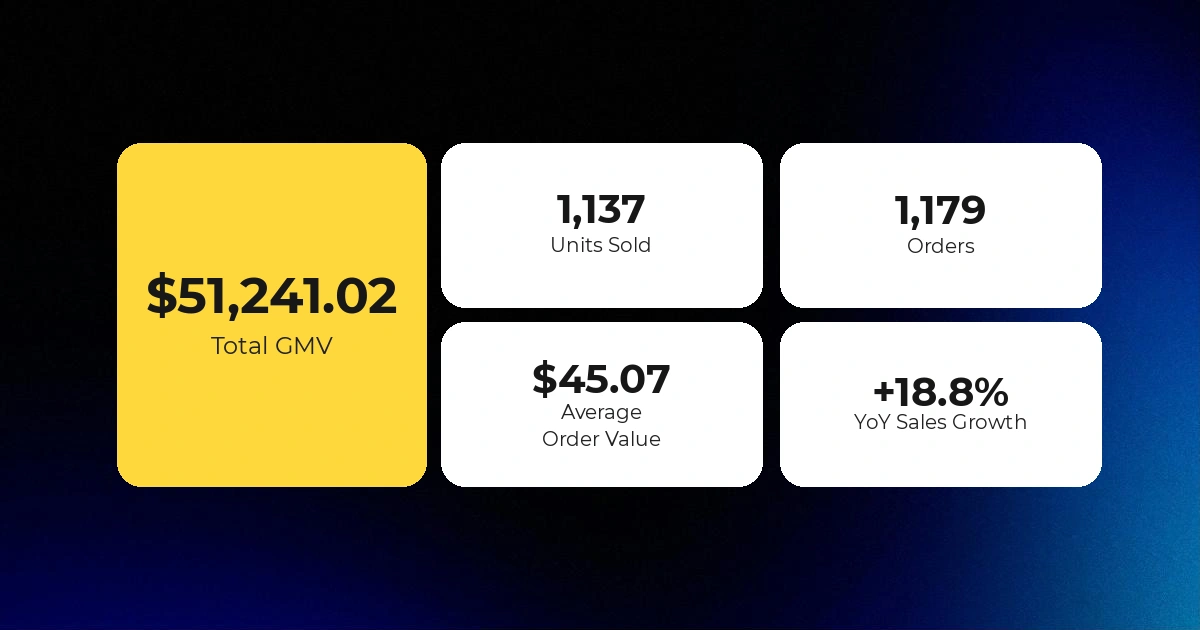
Reading Time: 4 minutes Section 1: About the Client General Jim’s Toys & Bricks is…

Reading Time: 1 minuteWalmart Marketplace has released new Seller Center enhancements designed to help sellers…

Reading Time: 4 minutes Walmart Expands Scrutiny on Product Claims Across Marketplace Listings Walmart Marketplace…
Reading Time: 9 minutes Your buyers are not shopping in one place anymore. They search…