
How to Prevent Overselling: FBA or WFS Stock on Temu, SHEIN, TikTok
Reading Time: 9 minutes When one Amazon FBA or Walmart WFS inventory pool also sells…
Running short of time? Get PDF of the blog in your mail.
Temu is heading into Q4 2026 with the kind of shopper reach that makes it difficult for marketplace sellers to ignore. Temu.com drew an estimated 1.23 billion visits worldwide in August 2026, while Similarweb ranked it the second-most-visited e-commerce marketplace website globally earlier this summer.
And local businesses are already turning that audience into sales. US collectibles retailer PopMarket sold more than 450,000 items in its first eight months on Temu, while California-based Shop Succulents surpassed 11,000 cumulative orders by April 2026.
For sellers planning their next phase of growth, particularly as the year-end shopping season approaches, the opportunity is no longer simply about adding another marketplace. Temu’s Local Seller Program, launched in early 2024, enables eligible businesses to sell through local warehousing and delivery and is now gradually expanding in some regions to help sellers reach customers beyond their home markets. US-based sellers, for example, have been able to sell to Canada since December 2025, while eligible sellers across parts of Europe can already reach nearby and regional markets.
This guide covers everything you need to know about selling on Temu in 2026: how the Temu Local Seller Program works, who can sell on Temu, where the program is available, how to create a Temu seller account, what support is available, and what existing sellers are experiencing on the marketplace.
Temu’s Local Seller Program enables eligible local businesses to sell on Temu using local warehousing and delivery. The program launched in early 2024 and is now active in 3over 357 markets. It was initially designed to help local sellers serve local consumers. Temu is now gradually expanding the program in some regions, so eligible sellers can also reach nearby and regional markets.
That means a business may be able to expand its customer reach without recreating its operating model separately for every market. For sellers already managing products, inventory, and fulfillment locally, the Local Seller Program creates another route to reach Temu shoppers while building on capabilities they may already have.
Yes, in the European Union, eligible sellers have been able to sell across EU markets rather than being limited to a single country. A Germany-based seller, for example, can sell to customers in Belgium even without local warehousing there, using either Temu-supported logistics providers or its own logistics arrangements.
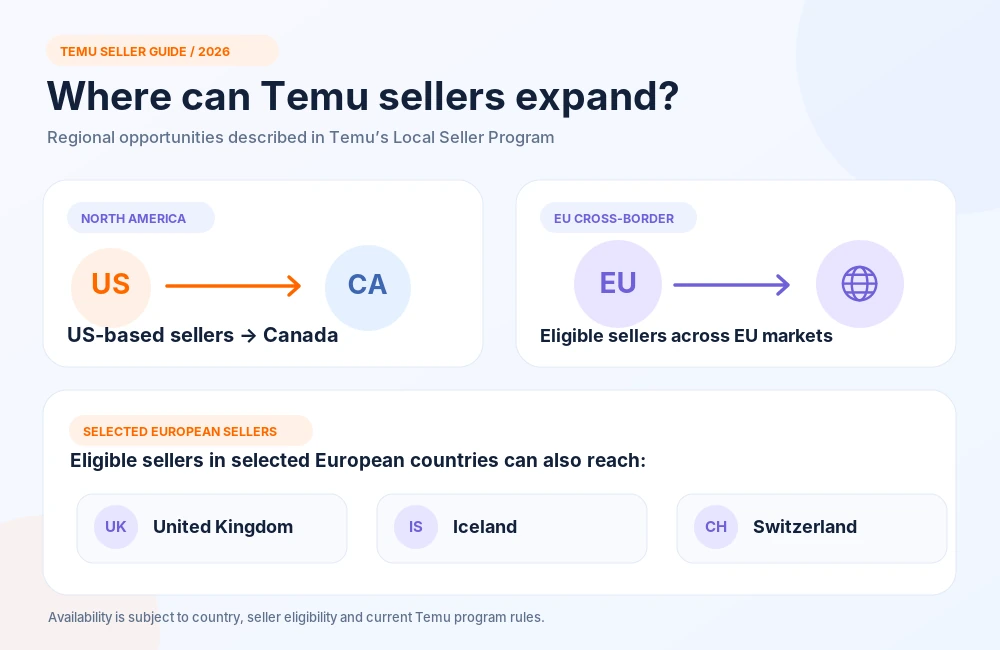
Since early 2026, eligible sellers in Germany, Italy, the Netherlands, Portugal, Spain, Romania, Belgium, Poland and France have also been able to sell into the UK, Iceland and Switzerland. In North America, US-based sellers have been able to sell to Canada since December 2025.
For businesses already set up to manage products, inventory, shipping, and customer demand efficiently, this regional expansion can make selling on Temu more scalable over time.
For many businesses, especially small and medium-sized sellers, entering a new marketplace involves much more than creating an account. There is usually a combination of setup, customer acquisition, operational, fulfillment, and technology requirements to manage. Temu positions its Local Seller Program around reducing some of those barriers through no-cost onboarding, a relatively simple setup process, built-in platform tools, marketplace traffic, and access to third-party services.
According to Temu’s Seller Center, seller applications typically take about 10 minutes, approvals may be issued within one business day, many sellers go live within 72 hours, and around half make their first sale within 20 days. These should be treated as typical program benchmarks rather than guaranteed timelines, since individual seller approval and setup requirements can vary.
>For smaller businesses in particular, having access to marketplace infrastructure without building every capability independently can make experimenting with another eCommerce channel more achievable.
Temu’s Local Seller Program supports a broad range of merchants, from family-run businesses and smaller brands to manufacturers, wholesale distributors, and larger retailers.
The US onboarding flow shown by Temu supports several business types:
Eligibility and documentation requirements can vary by market, so businesses should review the current requirements in Temu Seller Center for their country or region before applying.
At the time of this guide, Temu lists the Local Seller Program as available in over 3537 markets:
United States, Mexico, United Kingdom, Germany, France, Italy, Netherlands, Spain, Belgium, Austria, Poland, Czech Republic, Hungary, Romania, Sweden, Japan, Republic of Korea, Canada, Australia, Portugal, Türkiye, Greece, Denmark, Finland, Bulgaria, Slovakia, Slovenia, Ireland, Lithuania, Croatia, Brazil, Estonia, Switzerland, United Arab Emirates, Latvia, Cyprus, Norway, Armenia and Georgia.
Because marketplace availability can change, sellers should confirm current eligibility in Temu Seller Center before starting registration.
Eligible sellers can list products across more than 700 categories. Examples include apparel, household electronics and gadgets, and everyday essentials.
Temu works with a diverse merchant base, ranging from family-run brands and traditional manufacturers to wholesale distributors and multinational retailers.
Category eligibility and product requirements can vary, so sellers should confirm the requirements for their specific products during setup.
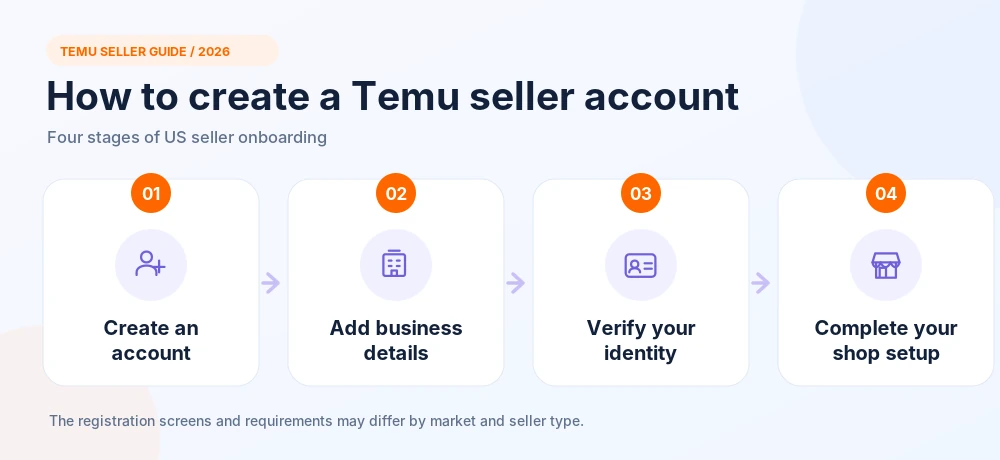
Getting started with a Temu seller account generally involves four stages:
The steps below reflect the US registration flow provided by Temu.
Go to Temu Seller Center and select Sign up.
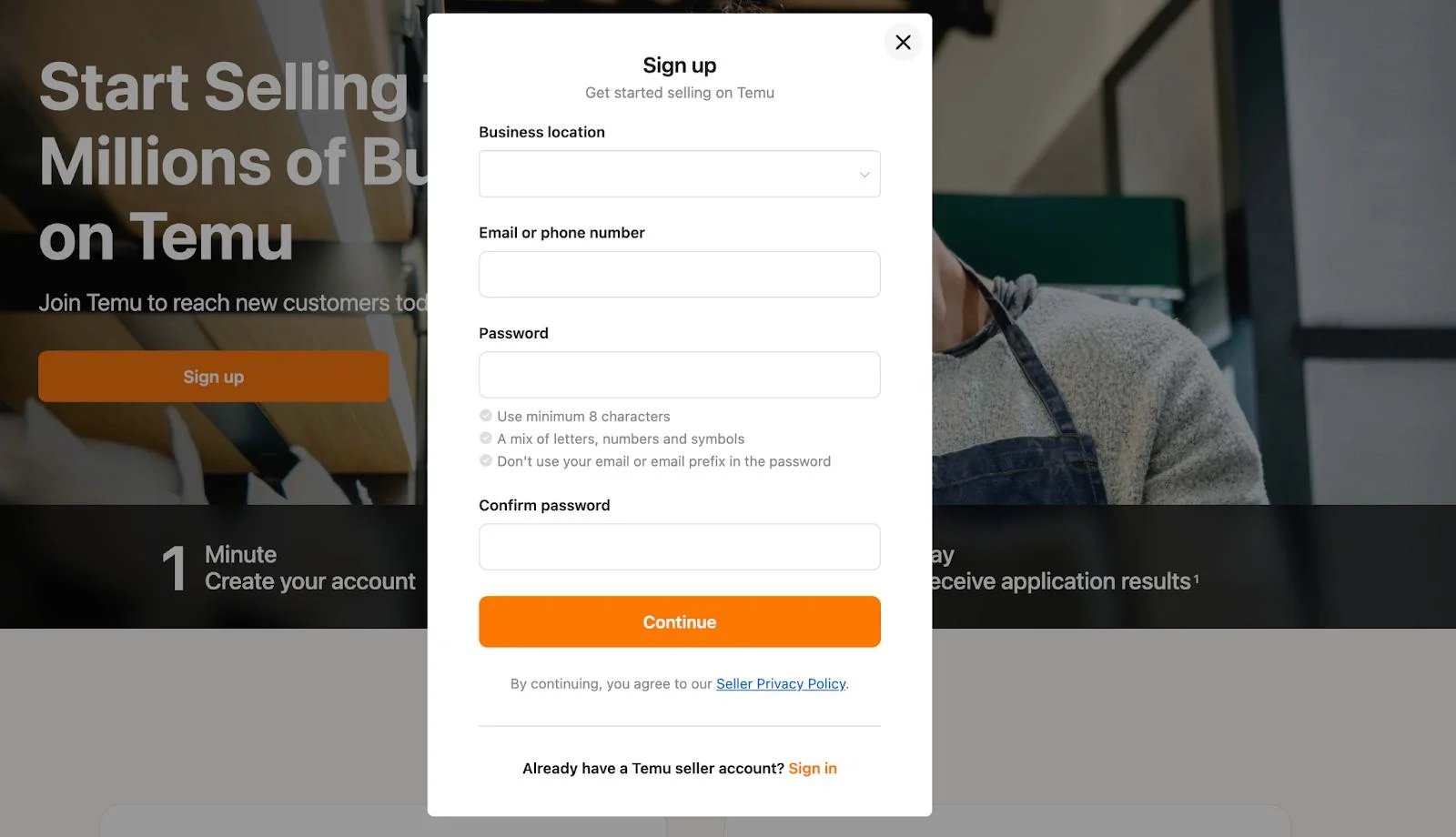
Enter your email address or phone number and create a password.
Temu’s registration flow requires a password of at least eight characters using a combination of letters, numbers, and symbols. Avoid using your email address or email prefix as part of the password.
Once your account details are ready, select Register as seller to continue.
After registration, Temu takes you to the Business information section.
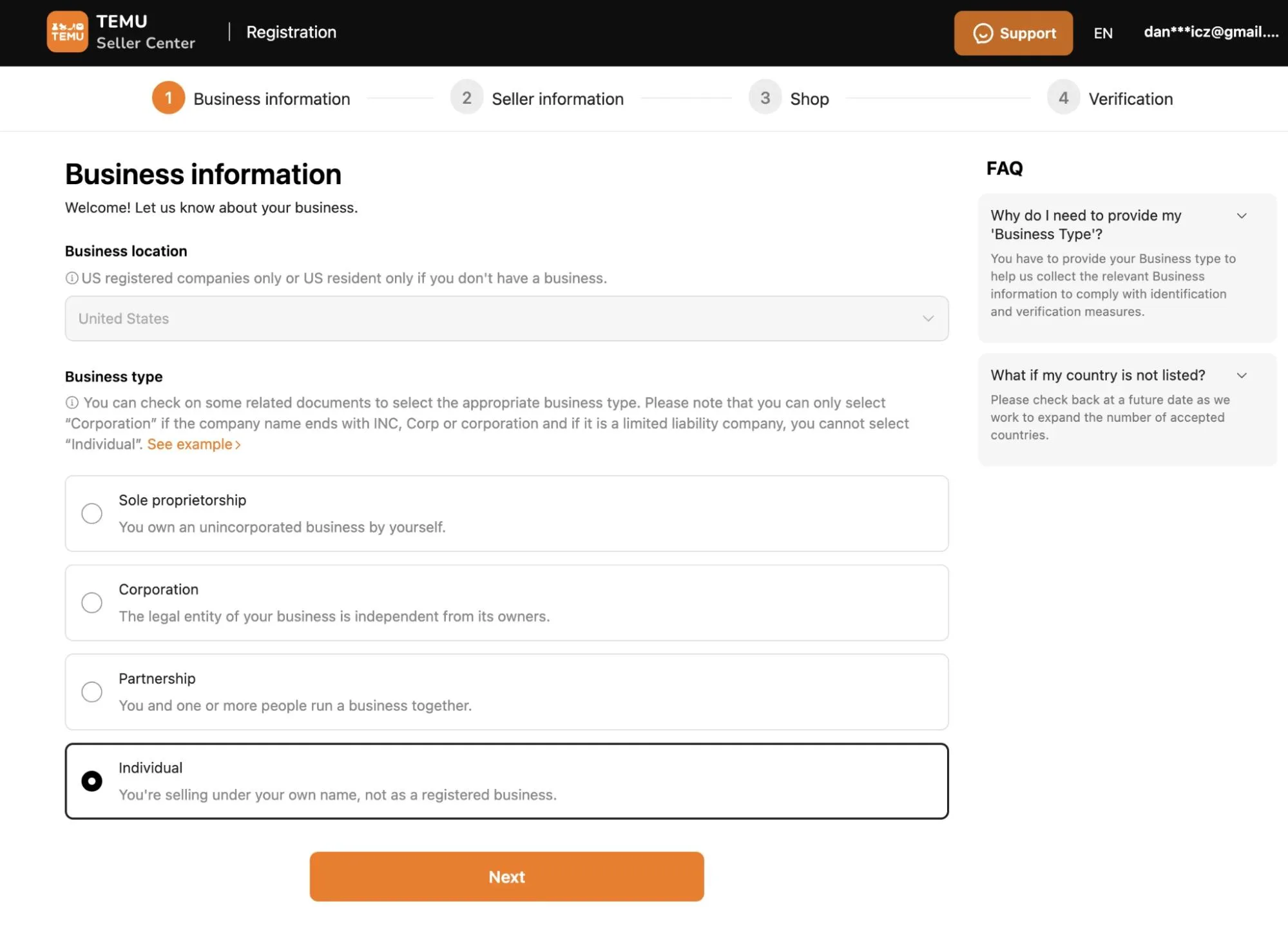
Choose your business location first, then select the business type that matches your operation.
Choosing the correct business type matters because it determines the information and documents you may need during the next stage of your Temu seller registration.
If you selected Sole proprietorship, Corporation, or Partnership, you will need to provide business registration information.
For the US flow, this typically includes:
Your business name should match the name shown on your official documents, including spelling, spacing, punctuation, and legal entity suffixes such as LLC or Inc. Temu’s supplied onboarding flow refers sellers to documents such as the IRS CP 575 or Beneficial Ownership Information Report (BOIR) when entering relevant business details. The EIN and registered business address should also match the applicable official documentation.
After submitting the business information, move to Seller information. You will need to select the country or region that issued the representative’s identity document, choose the ID type, and upload an ID image for verification.
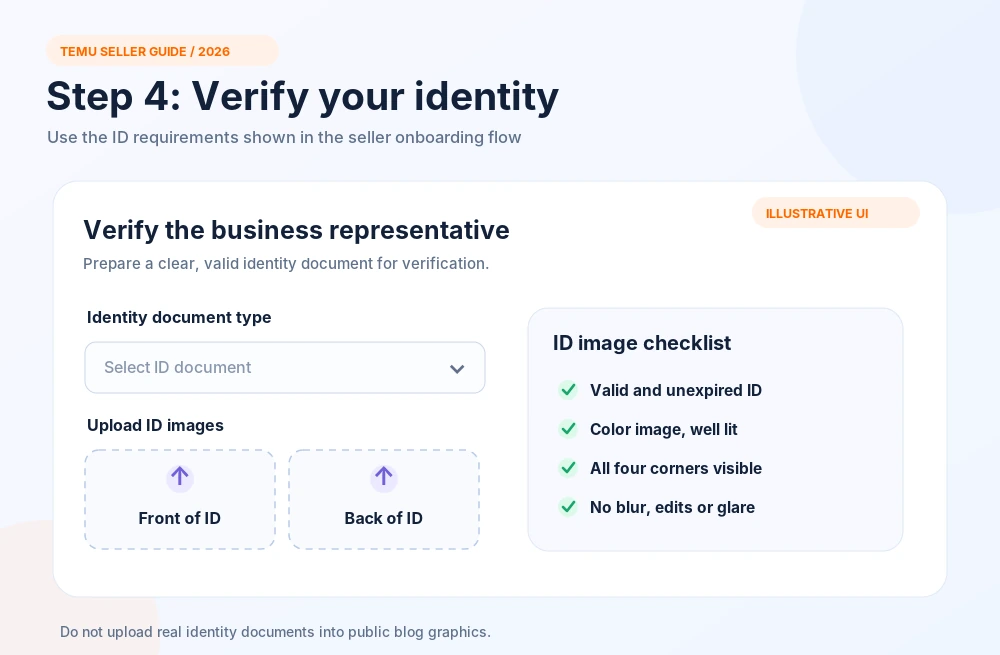
Temu’s US flow uses Jumio for this identity-verification step. According to Temu’s supplied instructions, uploaded ID images should:
After uploading the ID, enter the representative’s information exactly as it appears on the document. This may include the representative’s legal name, ID number, expiry date, citizenship, place of birth, date of birth and address details. Once the business and seller information is complete, continue through the remaining setup steps to prepare the shop for selling.
Temu’s seller support combines marketplace infrastructure, operational tools, and service resources. This includes dedicated seller support teams, access to platform traffic, direct customer engagement features, ERP integrations, and third-party logistics and payment services. Temu also works with logistics companies including USPS, UPS and DHL, and payment providers including Google Pay, Apple Pay, PayPal and Visa. Its partner ecosystem also includes ERP and fulfillment providers such as Rithum, ShipBob, ShipStation and Linnworks.
In Europe, Temu says it works with more than 150 logistics providers and maintains strategic partnerships with 10 national postal service operators.
>Together, these resources are intended to help sellers streamline operations and manage orders without having to build every supporting capability independently.
The Local Seller Program is built around local warehousing and delivery, but fulfillment arrangements can differ by market and seller. Temu’s guidance indicates that eligible sellers may use logistics providers available through Temu or their own logistics arrangements in certain cross-border scenarios. For sellers, the operational question is therefore not only whether a product can be listed. They also need to consider whether inventory, shipping, tracking, and order operations can remain reliable as marketplace volume grows.
Before launching, sellers should review the fulfillment options currently available inside Temu Seller Center for their market and confirm that their shipping setup can meet the applicable program requirements.
Marketplace opportunity is easier to understand when there are real businesses behind the numbers. Temu’s several seller cases from the United States demonstrate how different types of businesses are already using the Local Seller Program.
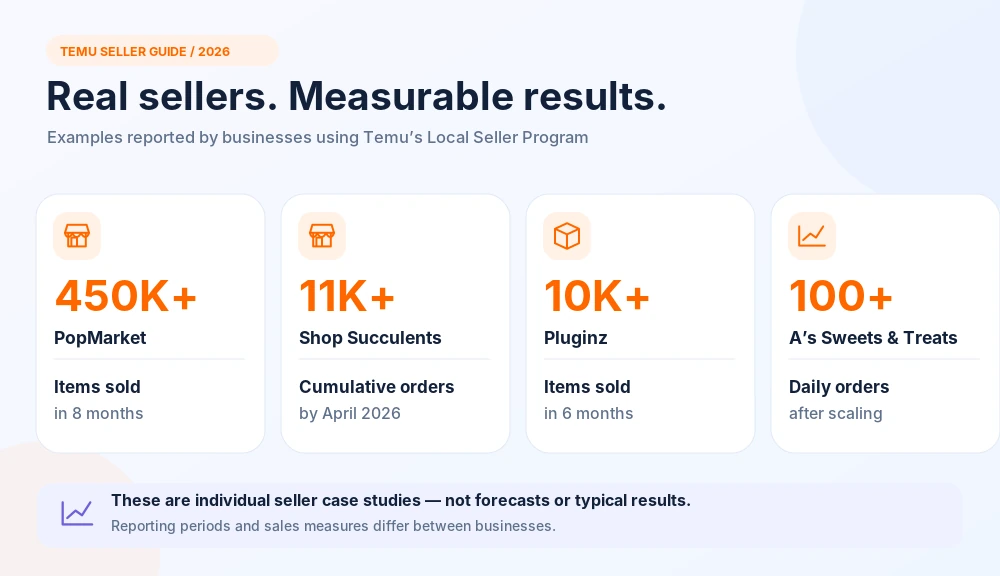
Shop Succulents, a California-based live plant seller, joined Temu in February 2025. The business generated about 3,500 sales during its first four months on the platform. By April 2026, its cumulative Temu sales had surpassed 11,000 orders. The example is particularly interesting because live plants introduce additional packaging, shipping and product-handling requirements compared with many conventional eCommerce products.
PopMarket, a US collectibles and entertainment retailer owned by Alliance Entertainment, began selling on Temu in late 2024. The retailer described the platform as its fastest-growing digital marketplace in more than a decade. During its first eight months on Temu, the retailer sold more than 450,000 items.
New York-based Grumpy Butcher sells premium steak and other perishable food products. The company grew its eCommerce sales by 12% within five weeks of selling on the marketplace.
Patch Party Club is an Illinois-based, family-run patch maker. Temu says the business sold more than 300 patches within three weeks of joining the platform, with approximately 90% of those sales coming from new customers.
Pluginz, a California–based manufacturer known for its iconic guitar-amplifier key holders (“Jack Racks”) and rock-inspired merch, joined Temu’s Local Seller Program in November 2025.
>Within six months of launching, the local business sold over 10,000 items on the platform, rapidly making Temu its fastest-growing sales channel.
A’s Sweets & Treats, a Michigan-based confectionery and treats seller, joined Temu’s U.S. Local Seller Program in late 2025.
After unsuccessful attempts on other online marketplaces, Temu became the brand’s first successful e-commerce marketplace and its top sales channel, accounting for approximately 80% of total sales. Within six months, the business sold over 10,000 products, growing from roughly one order per week to more than 100 per day, with peak days reaching up to 250 orders.
One defining characteristic of Temu’s Local Seller Program is its emphasis on local merchant participation combined with a discovery-based marketplace model. Temu also emphasizes flexibility around logistics and service providers rather than requiring sellers to build every supporting capability themselves. For smaller businesses, that can reduce some of the operational burden associated with entering another marketplace.
>For more established sellers, the gradual expansion of the program across regional markets can provide another route for taking an existing catalog to additional customers.
Adding another marketplace also adds another set of products, inventory, and operational workflows. That can become increasingly difficult when a seller is already managing a store alongside other marketplaces.
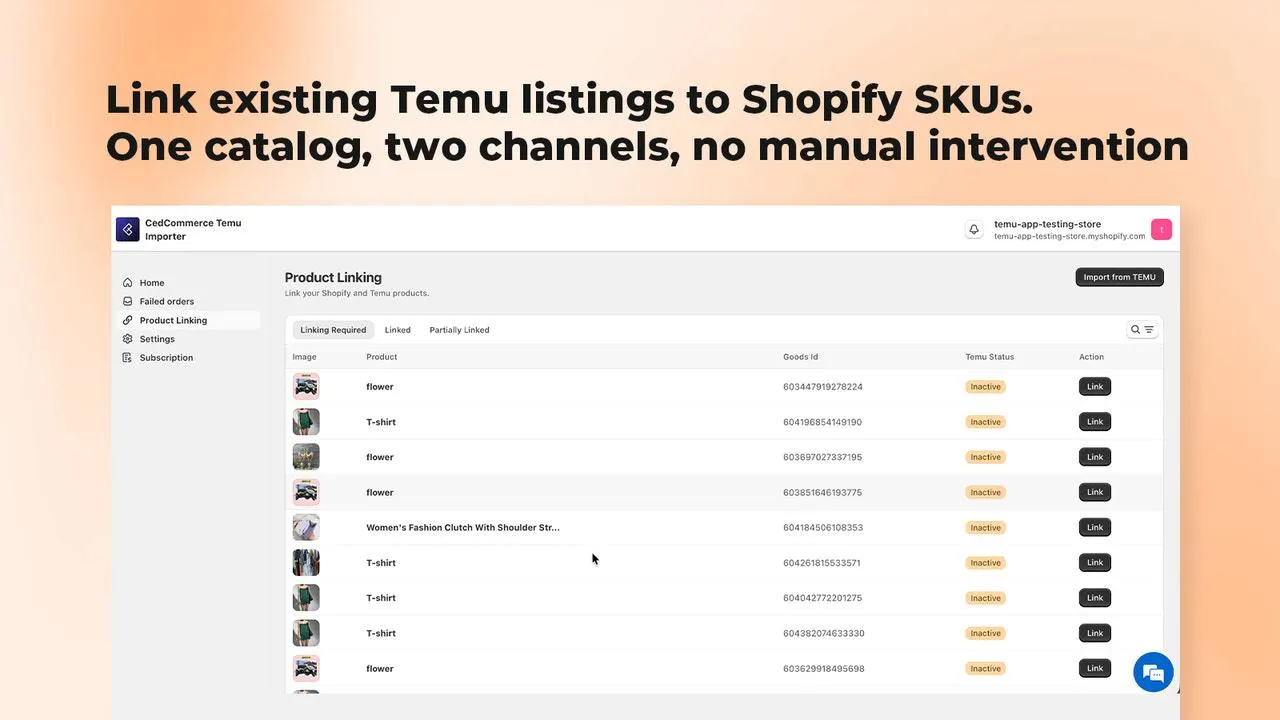
For multichannel sellers, third-party connectors can help reduce manual work by keeping stock levels coordinated across connected channels. The existing CedCommerce Temu solution supports inventory synced across Temu, Shopify, WooCommerce, and other marketplaces. If you’re considering selling on Temu and want help understanding your setup, integration, or wider multichannel operations, CedCommerce marketplace experts can help you plan the next steps.
CTA: Speak with a CedCommerce marketplace expert
Temu’s Local Seller Program allows eligible local businesses to sell on Temu using local warehousing and delivery. The program launched in early 2024 and is currently active across over 35 markets. In some regions, Temu is gradually expanding the program to allow eligible sellers to reach nearby and regional markets as well.
Yes. Eligible US businesses and individuals can register through Temu Seller Center. The US onboarding flow supports sole proprietorships, corporations, partnerships, and individual sellers.
Yes. According to Temu, US-based sellers have been able to sell to Canada since December 2025.
Eligible sellers within the EU can sell across EU markets. Sellers in selected European countries have also been able to sell into the UK, Iceland, and Switzerland since early 2026.
According to Temu, seller applications typically take about 10 minutes, approvals may be issued within one business day, and many sellers go live within 72 hours.
Actual timing can vary depending on the seller and verification requirements.
For registered business types, Temu’s US flow may require information such as the registered business name, Employer Identification Number, registered business address, and details about the business representative.
Identity verification also requires a valid identification document.
Eligible sellers can list products across more than 700 categories, including apparel, household electronics and gadgets, and everyday essentials on Temu.
Specific eligibility and product requirements can vary by marketplace and category.
Yes. Temu’s Local Seller Program supports merchants ranging from smaller businesses and family-run brands to manufacturers, distributors, and multinational retailers.
Temu works with multiple logistics, ERP, and fulfillment partners. The specific fulfillment and logistics options available to an individual seller depend on the market and seller setup.
CedCommerce can help businesses connect Temu with their wider eCommerce operations and coordinate inventory across connected channels, reducing the need to manage stock manually across each marketplace.
Temu’s Local Seller Program began with a straightforward goal: enabling eligible local businesses to sell through local warehousing and delivery. As the program develops, that model is also beginning to provide eligible businesses in some regions with access to customers beyond their immediate home market.
As the program develops, that model is also beginning to provide eligible businesses in some regions with access to customers beyond their immediate home market. That makes selling on Temu relevant both for new sellers launching their online presence and for established multichannel sellers evaluating their next marketplace.
The starting point is straightforward: confirm your market eligibility, prepare the correct business information, understand the fulfillment options available to you, and build your Temu operations around accurate product, inventory, and order management from the beginning.
Ready to explore selling on Temu? Speak with a CedCommerce marketplace expert to plan your Temu seller setup and multichannel operations.

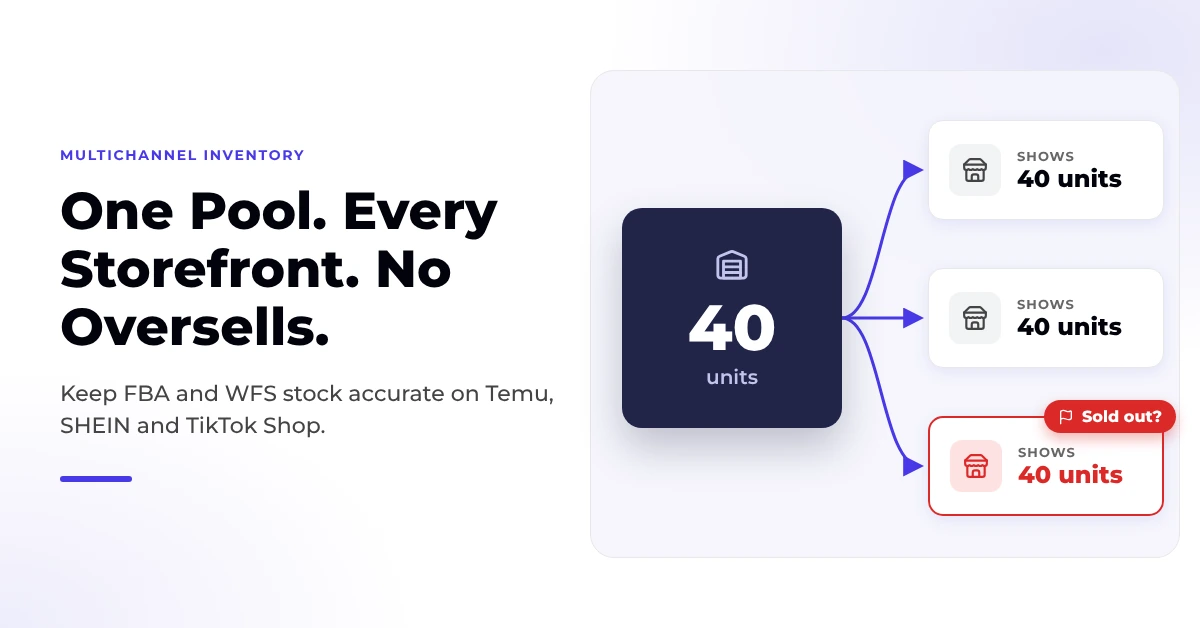
Reading Time: 9 minutes When one Amazon FBA or Walmart WFS inventory pool also sells…
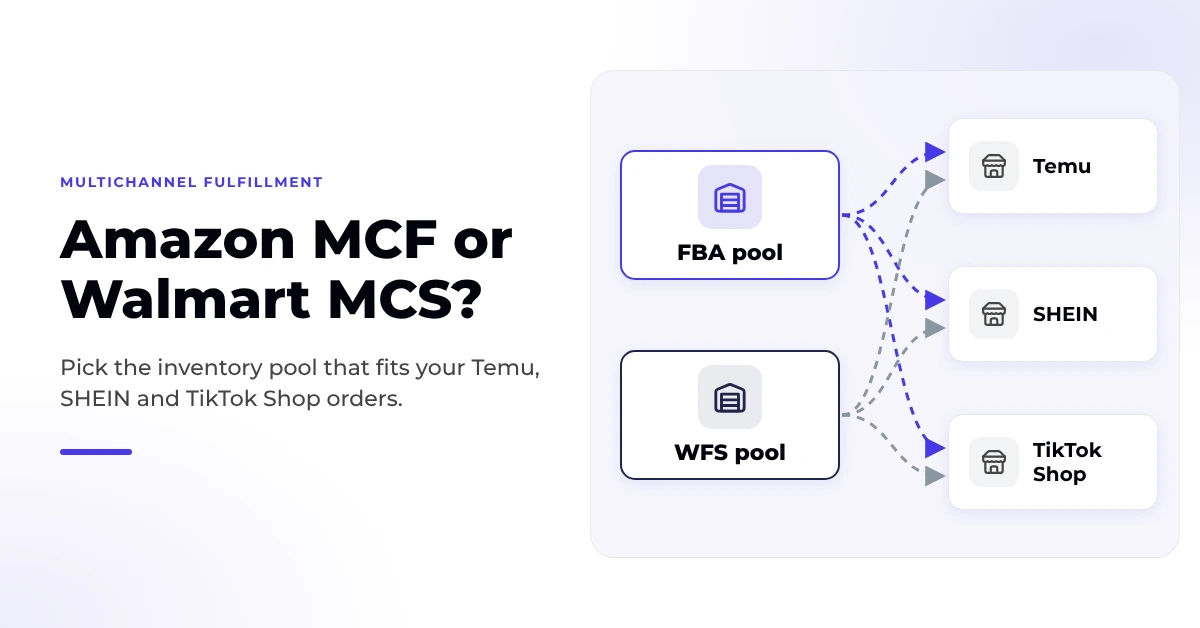
Reading Time: 9 minutes Amazon MCF and Walmart MCS both name Temu, SHEIN and TikTok…
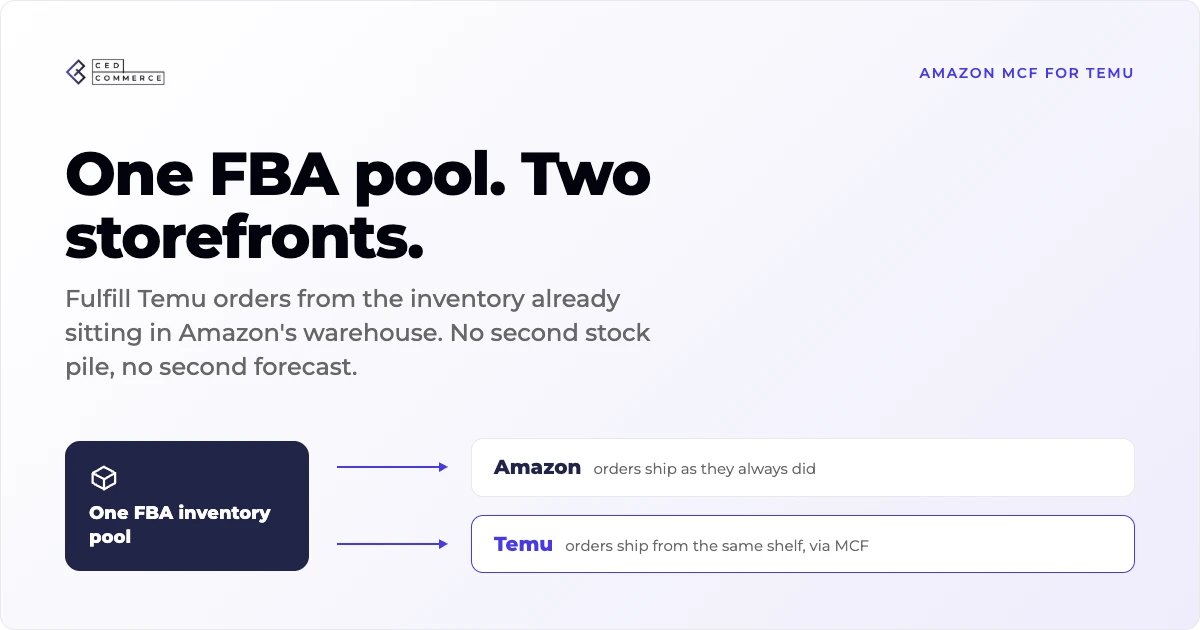
Reading Time: 19 minutes Ever wondered if your FBA inventory could turn Amazon into a…

Reading Time: 1 minuteIntro Summary France has passed a revised fast-fashion law aimed at regulating…

Reading Time: 3 minutes Major global marketplaces, including Temu, SHEIN, eBay, Amazon, and AliExpress, are…
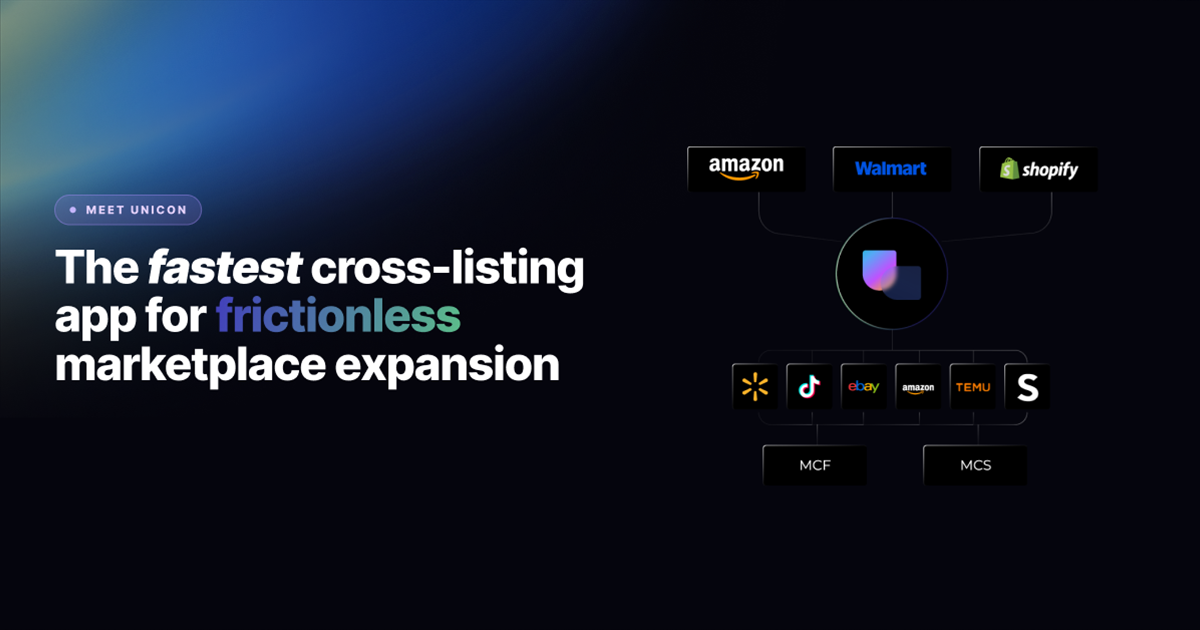
Reading Time: 9 minutes Your buyers are not shopping in one place anymore. They search…

Reading Time: 4 minutes Temu has become a General Member of the International AntiCounterfeiting Coalition,…
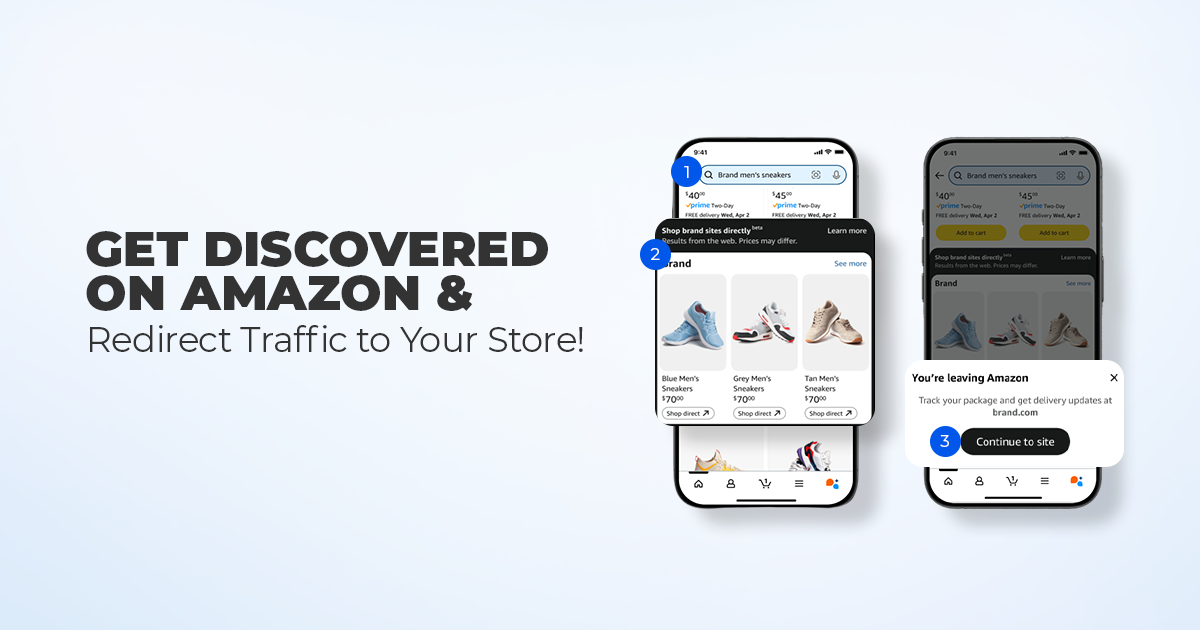
Reading Time: 11 minutes What if reaching hundreds of millions of Amazon customers didn’t mean…

Reading Time: 3 minutes Temu has taken a decisive and globally significant step in Turkey…

Reading Time: 11 minutes By now you have seen your BFCM 2025 numbers. The harder…