That’s why this guide turns 2025’s learnings into a system-first 2026 eCommerce strategy designed to help sellers win with systems across inventory, pricing, fulfillment, and growth planning.
The 2026 eCommerce Strategy Framework (One-Page View)
Below is a one-page framework to help you identify and correct any structural weakness holding back your business. This is the lens the rest of the guide follows.
How to use this framework in 2026 planning?
Start with diagnosis, not tactics
For each row, ask: Do I recognize these signals in my business today?
Treat weaknesses as constraints
If a weakness exists, it limits how fast and how safely you can grow.
Only scale where the system is stable
If a tactic doesn’t improve predictability, margin control, or reliability, it doesn’t scale.
Use this as a recurring check, not a one-time exercise
Revisit this framework quarterly as demand, fees, and channels shift.
Key principle: Growth in 2026 is not something you force. It’s a byproduct of system stability.
What 2025 Revealed About Seller Readiness
This section breaks down the three readiness gaps that could potentially have surfaced during BFCM and clearance cycles and why they matter for 2026 planning.
Where Inventory Planning Broke Down in 2025
Forecasting errors: If your buying decisions were based on best-case demand scenarios, you likely ended the year with excess stock.
Low-velocity SKU overload: If a large part of your catalog moved slowly outside promotions, working capital was probably tied up in inventory.
Late reactions to demand shifts: If you responded to slowing demand only after inventory piled up, clearance became the only option for you.
Key principle: Inventory that can’t move fast doesn’t scale.
What Pricing and Margin Failures Became Obvious
Discount dependency: If discounts became the easiest way to maintain conversion, pricing likely stopped being a strategic lever and became a crutch instead.
Short-term wins, long-term damage: If price drops boosted sales temporarily but margins didn’t recover afterward, those promotions signaled buyers to wait.
Post-promotion drop-offs: If demand slowed sharply once promotions ended, pricing volatility likely weakened both buyer urgency and algorithm confidence.
Key principle: Unstable pricing delays purchases and hurts visibility as algorithms favor consistency.
Which Operational Gaps Hurt Sellers the Most
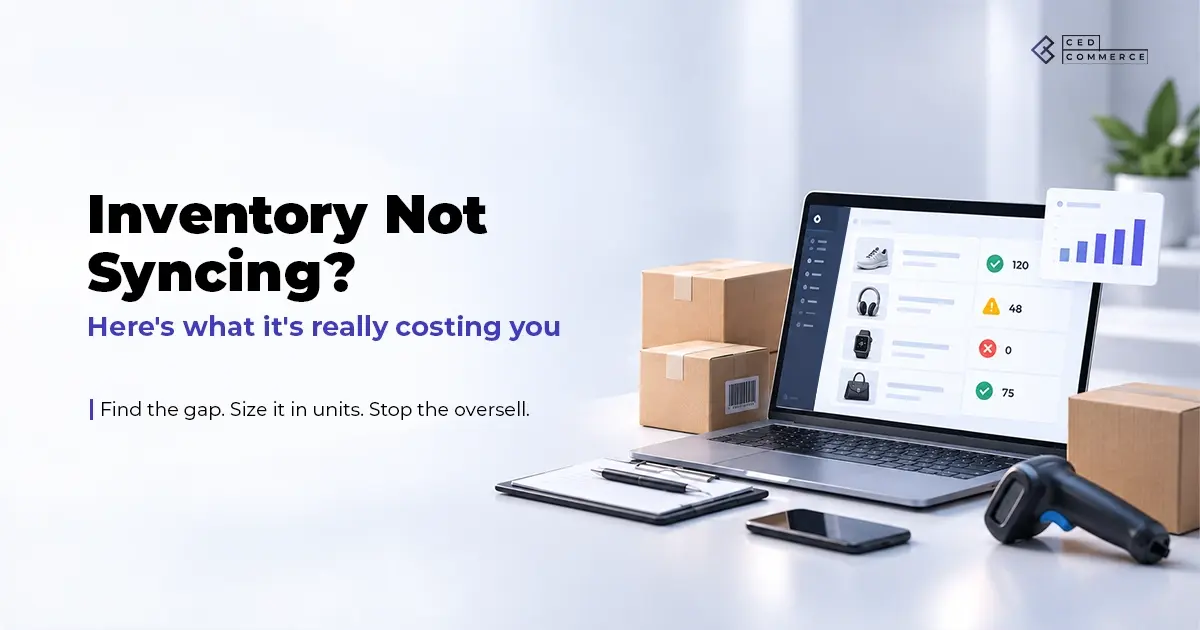
Inventory mismatches: If you oversold on one channel while stock sat idle on another, cancellations and buyer frustration likely followed.
Fulfillment bottlenecks: If buyers experienced late or missed deliveries during peak periods, they likely lost trust, left poor ratings, and your listings lost visibility.
Returns without insight: If returns and refunds increased but you couldn’t trace them back to specific SKUs or fulfillment issues, the same problems probably repeated.
Key principle: Operations now directly influence ranking, not just customer experience.
Need hands-on help with Shopify growth and operations?
2026 Product and Demand Outlook: What to Sell in 2026 and, What to Avoid?
2026 demand planning can’t rely on seasonal spikes alone, as not all demand is equal. Learning to separate true demand from temporary clearance-driven volume can help you plan inventory with greater accuracy.
This section focuses on identifying durable demand patterns, filtering out misleading signals, and aligning product bets with how marketplaces are actually evolving.
Which Product Categories Are Likely to Perform in 2026
Compliance- and sustainability-aligned products: Sustainability is now an expectation, with a growing share of buyers actively factoring it into purchase decisions. This pushes marketplaces to favor compliant listings.
Key Product Insight: Products that support stable pricing through repeatable, justified demand outperform trend-led SKUs that only move when discounted.
Which Demand Signals Matter in 2026 — and Which Mislead Sellers
Repeat purchase behavior drive higher lifetime value and more predictable revenue than first-time promotional spikes, making them a stronger signal for scalable demand.
Regional demand clustering signals where inventory should be placed, not just how much to stock as sales data indicates demand is not evenly distributed across regions.
Clearance-driven sell-through often reflects price sensitivity, not long-term demand as that drops sharply once pricing normalizes.
Key Planning Insight: if demand for your product disappears at full price, it’s discount dependent.
Walmart: Your visibility depends on seller performance standards, such as on-time delivery, cancellation rate, valid tracking, and price parity. Walmart evaluates this through performance metrics, Pro Seller criteria, and other factors.
Planning insight: marketplaces are converging on one priority: reliability beats aggressiveness.
Inventory Planning Framework for 2026 (Q1–Q4)
Once demand signals are clear, the real challenge is execution. In 2025, you may have known what was selling but either overbought, replenished too slowly, or locked capital into the wrong SKUs. The difference in 2026 will come from how your inventory is planned across the year.
This framework breaks inventory planning into practical, repeatable decisions you should make from Q1 through Q4.
How to Prioritise SKUs After 2025?
Retire SKUs that only moved during clearance or deep discounts
Identify and stock up on high-turn products that sell even on low-discount
Remove SKUs that consume effort without contributing to revenue
Planning insights
If your goal is profit, keep a small catalog with products that sell regularly without heavy discounts.
If your goal is steady cash flow, focus on products you can restock quickly instead of carrying many slow movers.
If your goal is reaching more customers, expand your catalog carefully and only where you can manage inventory and delivery well.
If your goal is scaling the business, group products by purpose (core sellers, new tests, clearance) instead of treating all products the same.
What Buy Cycles and Timing Work Best in 2026
Earlier, planned sourcing: Plan your core buys in December–January for spring and early summer for more control over cost and timing.
Shorter replenishment cycles: Replace large advanced buying/sourcing with shorter/frequent replenishment cycles to mitigate damage if demand forecasts are off.
Inventory based on confidence, not hope: Your inventory depth should reflect how predictable market demand actually is.
Planning insight: Faster, smaller buying cycles make it easier to adjust when demand changes, reducing aged inventory fees, instances of overstocking, and the need for forced discounts.
Inventory Readiness Checklist for 2026 (Your Decision Filter)
Before scaling any SKU in 2026, run a quick test to check that demand is reliable, repeatable, and operationally safe. This checklist turns 2025’s inventory failures into a simple decision filter.
Use it SKU by SKU, not at the catalog level.
SKU turn cycle under 90 days
Can this SKU sell through its available inventory in three months or less without heavy discounting?If yes, capital isn’t locked for long periodsIf no, the SKU increases storage costs and clearance riskWhy it matters: long turn cycles were one of the biggest contributors to aged inventory fees and forced markdowns in 2025.
Forecast accuracy above 80%
Did actual sales stay within ±20% of the forecast over the last comparable period?If yes, demand is predictable enough to scaleIf no, buying more increases risk, not revenue
Replenishment window under 30 days
Can inventory be reordered and restocked within a month if demand spikes?If yes, you can hold leaner inventoryIf no, you’re forced to overbuy “just in case”Why it matters: faster replenishment reduces both stockouts and excess inventory.
Clearance-driven revenue under 20%
Is less than one-fifth of this SKU’s revenue coming from deep discounts or clearance?If yes, pricing is healthyIf no, demand may be discount-dependentWhy it matters: SKUs that rely on clearance damage long-term margins.
How to interpret the results
4 out of 4: The SKU is scale-ready, increase quantity with confidence
2–3 out of 4: Demand exists, but fundamentals need tightening before expansion
0–1 out of 4: Pause buying to fix forecasting, pricing, or supply constraints first
Bottom line: Use this checklist to scale SKUs that won’t force you into discounts, storage penalties, or cash flow stress later.
Fulfillment Strategy for 2026 — Speed, Cost Control, and Reliability at Scale
For 2026, fulfillment must be planned alongside inventory and pricing, not afterwards. Your goal? Predictable execution at sustainable cost, even when volume surges.
What Fulfillment Issues Caused Loss of Sales and Visibility in 2025?
Over-reliance on a single fulfillment model (only FBA, only WFS, only self-fulfill) could have impacted you via delays, stockouts, or policy changes.
Sudden demand increases could have left you scrambling to move or rebalance stock.
Fulfillment costs or returns at the SKU level, could have kept unprofitable products selling without correction.
Key takeaway: when fulfillment fails, it cancels out good pricing and strong demand signals.
Choosing the Right Fulfillment Model for 2026
No single fulfillment model works across all SKUs.
Stable prices reduce buyer hesitation and comparison churn
Marketplaces increasingly favor sellers who avoid extreme volatility
Insight: Sellers who control pricing with discipline are better positioned to absorb fee increases, fulfillment cost changes, and competitive pressure.
Channel Expansion for 2026
When Channel Expansion Makes Sense and When It Doesn’t
Expand when:
Inventory clears faster on secondary channels
Price sensitivity varies meaningfully across markeplaces
Fulfillment costs differ enough to improve net margins
Do not expand when:
Inventory and order sync are unstable
Margins can’t absorb additional marketplace fees
Ops teams are already in reactive mode
Planning insight: expansion without readiness increases your existing weaknesses.
Defining Channel Roles Instead of Chasing Channel Names
Each channel should solve a specific business problem. Diversification reduces risk only when execution is stable. Hence, choose accordingly.
Channel role
Platforms that fit
Demand engine
Amazon, Walmart
Margin control
Shopify (DTC)
Differentiation
Etsy
Liquidation & long-tail
eBay
Discovery leverage
TikTok Shop, regional marketplaces
Infrastructure Required for Multi-Channel Scaling in 2026
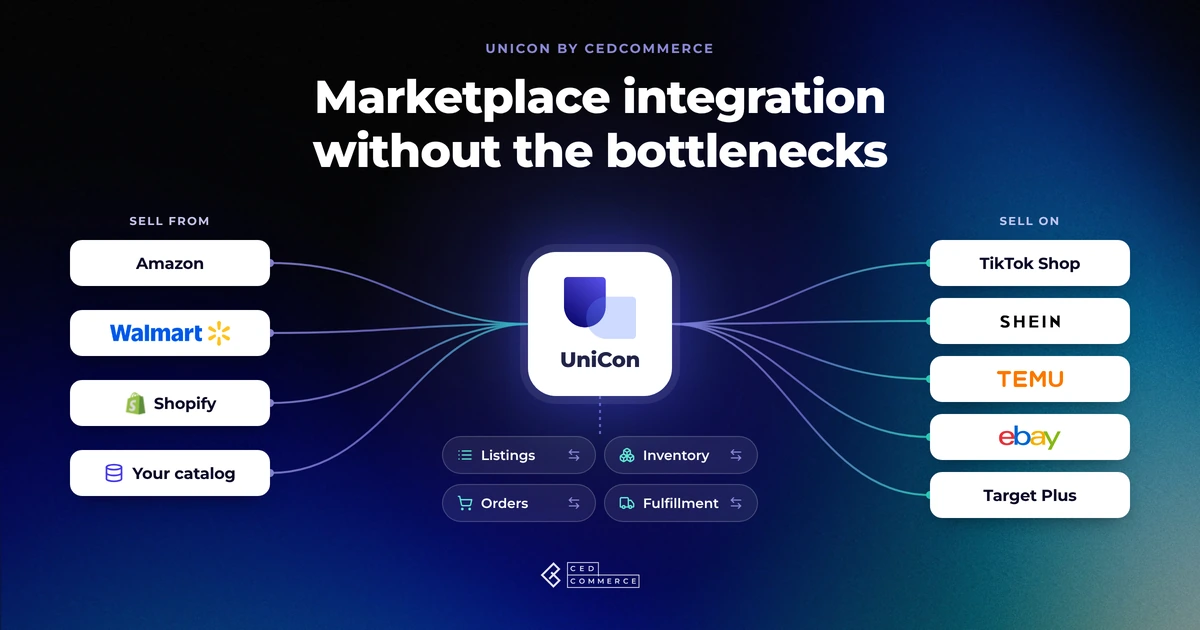
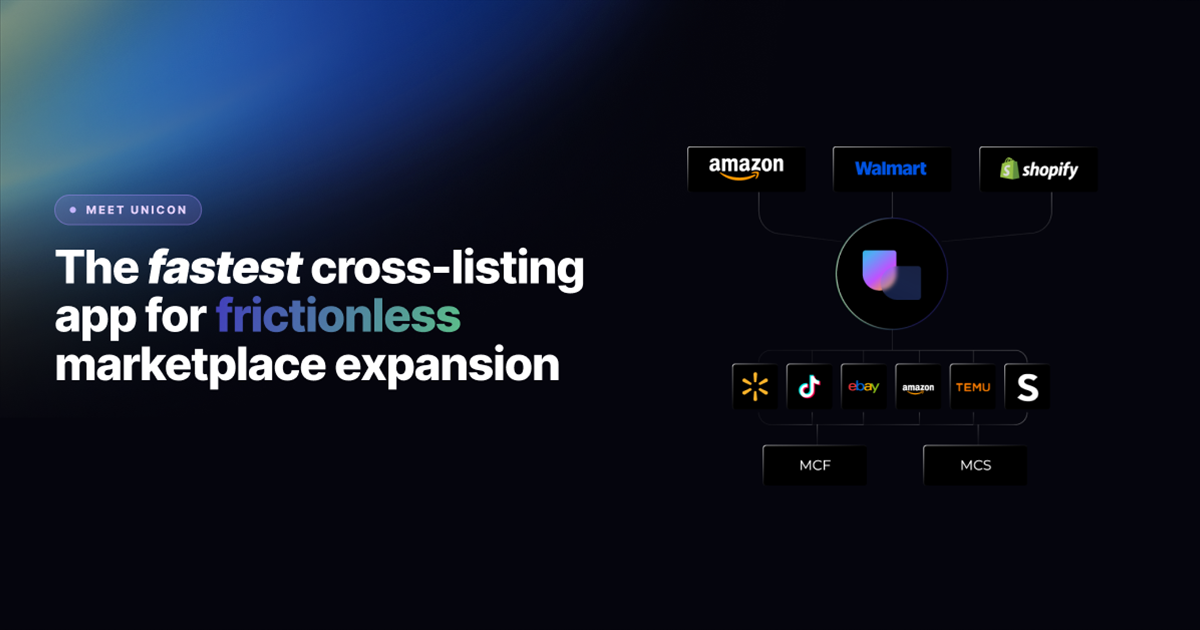
Unified inventory and pricing control (UniCon)
Channel-specific rules instead of global overrides
Central analytics to compare profitability across channels
Planning insight: multi-channel growth benefits from centralized control.
Struggling to control inventory, pricing, and fulfillment across channels?
Success in 2026 requires a more system-level coordination.
CedCommerce is built to support sellers who want to operate with control.
Centralized inventory visibility across marketplaces to prevent overselling and stock imbalances
Marketplace-specific pricing and listing controls that protect margins without breaking consistency
Fulfillment-aware workflows that align inventory placement, delivery performance, and visibility
Analytics to compare channel performance, costs, and profitability
What You Can Expect
Better-performing SKUs instead of margin-eating catalogs leading to fewer forced discounts
Pricing discipline for more stable rankings
Reliable fulfillment that end in cleaner inventory turns
Expansion decisions based on data, and channel roles that align with our business
If your systems guide inventory, pricing, fulfillment, and expansion, your business won’t just grow in 2026, it will be more predictable, profitable–on your own terms.
eCommerce strategy 2026fulfillment strategyinventory planningmulti-channel growthpricing and margin strategy
About The Author
Ananaya Banerjee
With a pen in one hand and coffee in the other, Ananaya is currently living out her dream of being a writer. Whether she's diving into the latest eCommerce trends or decoding the mysteries of Amazon's algorithms, Ananaya is always on the hunt for the next great adventure (and the perfect playlist). She believes life’s too short for anything but joy, hilarious mishaps, and stories that make you smile!