
CedCommerce Apps Are Now Available in Shopify Sidekick
Reading Time: 6 minutes Your marketplace stack may be connected, but your attention is still…

Running short of time? Get PDF of the blog in your mail.
B2B buying in the United States is undergoing a fundamental behavioral shift as generative artificial intelligence and digital-first research tools compress purchasing cycles and weaken long-standing supplier loyalty. According to new survey findings released by Google in partnership with National Research Group, nearly three-quarters of U.S. business buyers now complete their purchasing journey in 12 weeks or less—a pace that would have been considered highly accelerated just a few years ago.
The data shows that buyers are no longer dependent on sales representatives for discovery, education, or vendor validation. Instead, they are independently navigating purchasing decisions through:
This shift marks a decisive move toward self-directed, AI-assisted procurement across technology, software, web services, and retail purchasing.
One of the most consequential findings in the study is the scale of active vendor churn now taking place inside B2B markets.
This indicates that B2B loyalty is becoming increasingly fragile in an environment where:
“Buyers no longer stay simply because it’s what they’ve always done,” the report’s authors state. “If they find a better alternative, they can pivot quickly.”
This marks a departure from decades of relationship-led B2B selling, where contracts, familiarity, and account management created long-term customer lock-in.
The findings are based on a survey of 2,063 senior U.S. business leaders across multiple industries. All respondents had:
The buyer base surveyed reflects decision-makers who now operate in an environment where:
The researchers describe the current B2B climate as one increasingly driven by AI-powered, trust-first decision-making, where credibility, proof, and transparency matter more than brand legacy alone.
As purchasing cycles compress, the traditional linear sales funnel—awareness → consideration → demo → close—is rapidly breaking down.
Today’s buyers are:
Rather than progressing in predictable stages, buyers now move in non-linear, self-guided research loops, jumping between:
If credible content is missing at any step, vendors are often eliminated silently—without ever knowing they were considered.
Google’s research introduces what it calls the “Day 1 List”—the initial shortlist of solutions that buyers seriously evaluate from the very beginning of their research phase.
Once a vendor fails to make this early shortlist, recovery is difficult.
The report emphasizes that being “discovered later” is no longer a reliable path to conversion. If sellers are not present at the very start of the buyer’s self-guided journey, they are often excluded entirely.
Historically, B2B relationships were built on:
The new data suggests that many of these anchors are weakening under digital pressure. With AI tools accelerating vendor comparison and risk evaluation, relationships now have to be continuously re-earned through:
Instead of loyalty being assumed, it is now situational and performance-driven.
The survey makes the new mandate for B2B sellers unmistakably clear:
As the report concludes, the B2B playbook of the early 2020s no longer works. Sellers must adapt to a marketplace where buyers:
This shift reflects a broader transformation underway across B2B commerce:
In effect, B2B buyers are now behaving more like advanced digital consumers—expecting instant answers, radical transparency, and low tolerance for friction.
Google’s latest survey confirms that AI-driven research is no longer augmenting B2B buying—it is reshaping it at the structural level. With purchasing cycles shrinking to under 12 weeks for most buyers and vendor switching becoming routine, B2B sellers are now competing in a market where:
For vendors, the message is clear: adapt to the self-directed, AI-powered buyer—or risk disappearing before a sales conversation even begins.
Source: https://www.digitalcommerce360.com/2025/12/05/google-survey-of-b2b-buyers/

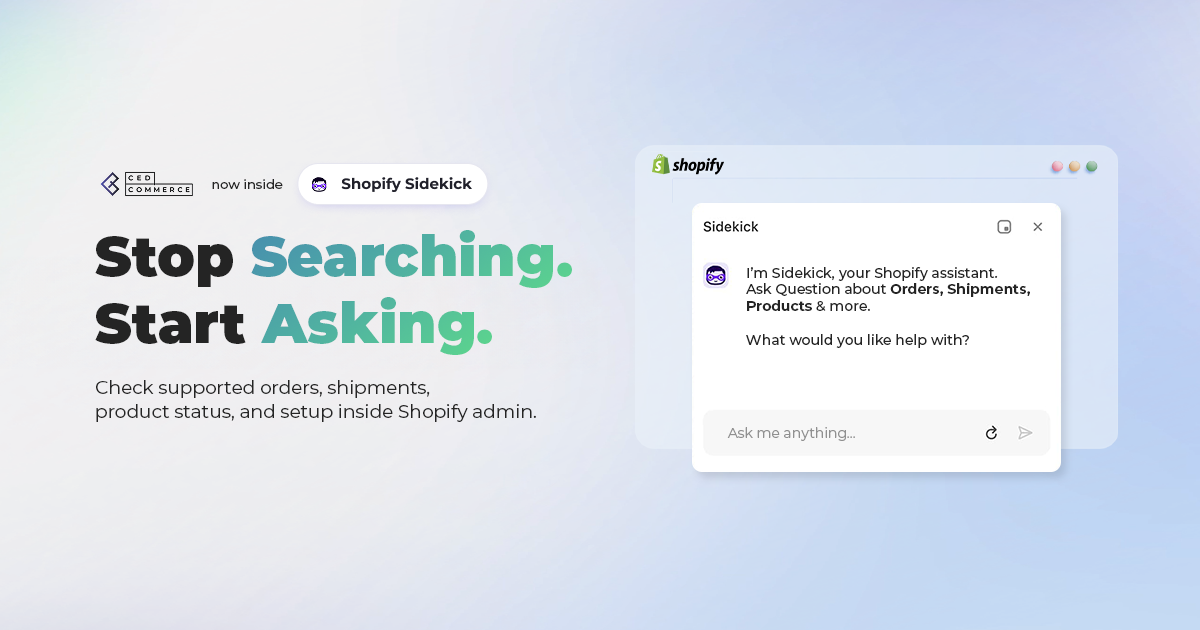
Reading Time: 6 minutes Your marketplace stack may be connected, but your attention is still…
Reading Time: 4 minutes Amazon Prime Day 2026 helped drive more than $26.4 billion in…

Reading Time: 1 minuteIntro Summary Shopify Scripts stopped executing entirely on June 30, 2026. Merchants…

Reading Time: 1 minuteIntro Summary France has passed a revised fast-fashion law aimed at regulating…
Reading Time: 2 minutes Intro Summary The European Union’s new €3 customs duty on low-value…
Reading Time: 2 minutes Amazon has announced a major catalog optimization change that will impact…
Reading Time: 3 minutes SHEIN has launched a new product safety and quality compliance training…

Reading Time: 4 minutes Etsy has introduced listing-level strategies for Etsy Ads, giving sellers more…

Reading Time: 4 minutes Walmart Expands Scrutiny on Product Claims Across Marketplace Listings Walmart Marketplace…
Reading Time: 5 minutes Customers Can Now Turn Simple Prompts Into Personalized Merchandise on Amazon…