
EU Custom Code Reform Advances on March 26: What Cross-Border Sellers Should Know
Reading Time: 3 minutes On March 26, 2026, the European Parliament and the Council reached…
Running short of time? Get PDF of the blog in your mail.
Differences in platform requirements often lead to problems when you try to list Shopify products on Etsy, even when using an integration service! Issues such as listing errors, missing attributes, or incorrect category mapping may require manual adjustments. Additionally, keeping product details synced across both platforms can quickly become a tedious task.
This is where Product Profiling in CedCommerce’s Etsy Integration comes in. Profiling ensures your listings are accurate, complete, and compliant with Etsy’s requirements. Once set up, these rules apply automatically, making listing and syncing through the CedCommerce Etsy Integration efficient and seamless.

In this guide, you’ll learn how to list Shopify products on Etsy via Product Profiling in the Etsy Integration-CedCommerce. Discover how to simplify your workflow, save time, reduce errors, and streamline your Etsy store management.
Let’s dive in!
Before you sell Shopify products on Etsy, it’s important to understand how Etsy structures product details, categorizes products, and presents them to potential buyers!
A listing is a product entry on Etsy that includes key details such as:
If you manually create listings on Etsy, you need to input all product details individually, ensuring they meet Etsy’s format and guidelines. This process can be time-consuming and prone to errors, especially when managing multiple products.

With the Etsy Integration-CedCommerce, profiling enables accurate bulk listing by automating product data mapping. Instead of manually entering details for each product, the app imports Shopify product data and lets you apply and define rules to ensure seamless category mapping, attribute selection, and variant synchronization—reducing errors and saving time.
Profiling plays a crucial role in ensuring that your products are accurately listed, categorized, and optimized for Etsy’s marketplace. It helps you set up a structured framework to streamline bulk listings, reduce manual labor and errors, and improve discoverability.
In short, profiling transforms scattered product data into well-structured, high-performing Etsy listings, boosting their sales potential.

To start selling on Etsy with your Shopify store, follow these steps:
Once your Shopify store is connected to Etsy via the integration, the app ensures:
A well-optimized Etsy listing can significantly boost visibility and sales. Here’s why:
Hence, you can maximize their success on Etsy while saving time with automation by setting up correctly and optimizing listings from the start.
Profiling is a powerful feature within the Etsy Integration-CedCommerce app that enables sellers to sell Shopify products on Etsy in bulk while ensuring accuracy and compliance. Moreover, it helps you group products with shared attributes and apply Etsy-specific details to them instantly.

Once your products are imported into the app, begin by navigating to the profiling section and begin to create a profile by following these steps:
Additionally, you can effortlessly list and sell Shopify products on Etsy in bulk while maintaining accuracy, compliance, and enhanced search visibility on Etsy by using the Profiling feature within the Etsy Integration-CedCommerce.
You can improve visibility, conversions, and overall Etsy success by avoiding these mistakes!
Profiling is the backbone of seamless Shopify-to-Etsy selling. By grouping products, assigning the right categories, and mapping variations accurately, you can ensure error-free, optimized listings that boost visibility and conversions.
With Etsy Integration–CedCommerce, however, the entire listing and syncing process becomes effortless. From bulk listing to real-time inventory and price updates, the app eliminates manual work, reduces errors, and keeps your Etsy store in sync with Shopify.
Ready to simplify list and sell Shopify products on Etsy? Explore Etsy Integration–CedCommerce today and streamline your journey!


Reading Time: 3 minutes On March 26, 2026, the European Parliament and the Council reached…

Reading Time: 4 minutes Kanzen Skincare and six other brands are preparing for what is…
Reading Time: 5 minutes When a seller expands to a new Walmart market, the first…
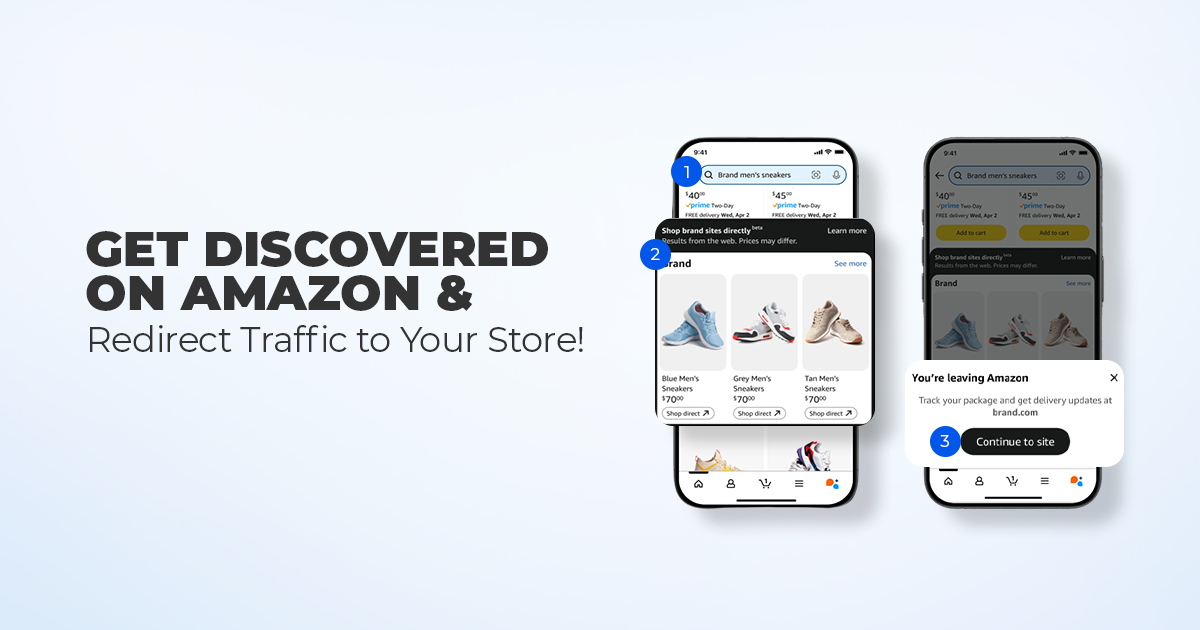
Reading Time: 10 minutes What if reaching hundreds of millions of Amazon customers didn’t mean…
Reading Time: 2 minutes Alibaba’s latest update shows that AI is becoming a much bigger…

Reading Time: 2 minutes A new industry study shows that agentic commerce is moving from…

Reading Time: 2 minutes Amazon has introduced new 1-hour and 3-hour delivery options for customers…
Reading Time: 16 minutes How to find, quantify, and validate winning Amazon products? Amazon product…
Reading Time: 2 minutes Amazon is rolling out a significant update that will directly impact…
Reading Time: 3 minutes Ulta Beauty is preparing to launch a curated storefront on TikTok…
Reading Time: 2 minutes Until now, falling below the 90% OTDR (On-time Delivery Requirement) could…
Reading Time: 5 minutes Amazon has formally expanded its Multi-Channel Fulfillment (MCF) operations in Europe…
Reading Time: 4 minutes Amazon has announced that Sponsored Products prompts and Sponsored Brands prompts…
Reading Time: 4 minutes Amazon has expanded access to its healthcare-focused AI assistant, Health AI,…
Reading Time: 4 minutes Amazon has officially launched its Spring Deal Days shopping event, offering…

Reading Time: 4 minutes eBay UK has announced a new partnership with global embedded finance…
Reading Time: 4 minutes TikTok Shop has officially launched its first-ever Fine Art category, marking…
Reading Time: 2 minutes eBay has temporarily paused international sales from the United States to…

Reading Time: 3 minutes Walmart Marketplace has expanded its Review Accelerator program with a new…
Reading Time: 3 minutes A significant policy change is coming to Amazon Wish Lists that…