
TikTok Shop Expands Seller Logistics With Shipping and Pickup
Reading Time: 3 minutes TikTok Shop is strengthening its U.S. seller logistics stack with Upgraded…

Running short of time? Get PDF of the blog in your mail.
Did you end 2025 with excess stock and tighter margins, even with an eCommerce strategy? Despite global eCommerce sales climbing to $6.9–$8.1 trillion and U.S. online sales crossing $1.2 trillion, scale just didn’t go very far in fixing the real problems of inventory inefficiency, tighter margins, and operational bottlenecks.
On Amazon, independent third-party sellers like you accounted for roughly 62% of paid unit sales in Q3 2025. This underscores that in a seller-led marketplace, operational discipline is now the primary differentiator.
Looking to scale visibility without relying on constant discounts?
That’s why this guide turns 2025’s learnings into a system-first 2026 eCommerce strategy designed to help sellers win with systems across inventory, pricing, fulfillment, and growth planning.
Below is a one-page framework to help you identify and correct any structural weakness holding back your business. This is the lens the rest of the guide follows.

For each row, ask: Do I recognize these signals in my business today?
If a weakness exists, it limits how fast and how safely you can grow.
If a tactic doesn’t improve predictability, margin control, or reliability, it doesn’t scale.
Revisit this framework quarterly as demand, fees, and channels shift.
Key principle: Growth in 2026 is not something you force. It’s a byproduct of system stability.

This section breaks down the three readiness gaps that could potentially have surfaced during BFCM and clearance cycles and why they matter for 2026 planning.
Key principle: Inventory that can’t move fast doesn’t scale.
Key principle: Unstable pricing delays purchases and hurts visibility as algorithms favor consistency.
Key principle: Operations now directly influence ranking, not just customer experience.
Need hands-on help with Shopify growth and operations?
2026 demand planning can’t rely on seasonal spikes alone, as not all demand is equal. Learning to separate true demand from temporary clearance-driven volume can help you plan inventory with greater accuracy.
This section focuses on identifying durable demand patterns, filtering out misleading signals, and aligning product bets with how marketplaces are actually evolving.
Key Product Insight: Products that support stable pricing through repeatable, justified demand outperform trend-led SKUs that only move when discounted.
Key Planning Insight: if demand for your product disappears at full price, it’s discount dependent.
Planning insight: marketplaces are converging on one priority: reliability beats aggressiveness.
Once demand signals are clear, the real challenge is execution. In 2025, you may have known what was selling but either overbought, replenished too slowly, or locked capital into the wrong SKUs. The difference in 2026 will come from how your inventory is planned across the year.
This framework breaks inventory planning into practical, repeatable decisions you should make from Q1 through Q4.

Planning insight: Faster, smaller buying cycles make it easier to adjust when demand changes, reducing aged inventory fees, instances of overstocking, and the need for forced discounts.
Before scaling any SKU in 2026, run a quick test to check that demand is reliable, repeatable, and operationally safe. This checklist turns 2025’s inventory failures into a simple decision filter.
Use it SKU by SKU, not at the catalog level.
How to interpret the results
Bottom line: Use this checklist to scale SKUs that won’t force you into discounts, storage penalties, or cash flow stress later.
For 2026, fulfillment must be planned alongside inventory and pricing, not afterwards. Your goal? Predictable execution at sustainable cost, even when volume surges.

Key takeaway: when fulfillment fails, it cancels out good pricing and strong demand signals.
No single fulfillment model works across all SKUs.
Planning insight: hybrid fulfillment avoids single-point failures and protects visibility during peaks.
Planning insight: Selling more doesn’t help if fulfillment costs erase the margin.
Planning insight: So yes, consistency in fulfillment perofrmance is now part of your ranking strategy.
Next challenge? Pricing strategy amid rising costs so your business can do more than short-term volume gains during peak season.
Planning insight: Discount-First Pricing creates margin problems permanently.
Planning insight: Setting a minimum price aka a price floor, protects profit and prevents ranking drops.
Insight: Sellers who control pricing with discipline are better positioned to absorb fee increases, fulfillment cost changes, and competitive pressure.
Expand when:
Do not expand when:
Planning insight: expansion without readiness increases your existing weaknesses.
Each channel should solve a specific business problem. Diversification reduces risk only when execution is stable. Hence, choose accordingly.
| Channel role | Platforms that fit |
|---|---|
| Demand engine | Amazon, Walmart |
| Margin control | Shopify (DTC) |
| Differentiation | Etsy |
| Liquidation & long-tail | eBay |
| Discovery leverage | TikTok Shop, regional marketplaces |
Planning insight: multi-channel growth benefits from centralized control.
Struggling to control inventory, pricing, and fulfillment across channels?
Success in 2026 requires a more system-level coordination.
CedCommerce is built to support sellers who want to operate with control.
If your systems guide inventory, pricing, fulfillment, and expansion, your business won’t just grow in 2026, it will be more predictable, profitable–on your own terms.

Reading Time: 3 minutes TikTok Shop is strengthening its U.S. seller logistics stack with Upgraded…
Reading Time: 2 minutes Amazon has opened a new Global Warehousing & Distribution (GWD) facility…
Reading Time: 3 minutes About the Client The Drive Clothing is a lifestyle apparel brand…
Reading Time: 3 minutes Amazon is updating its reference pricing rules in two phases that…

Reading Time: 4 minutes Temu has become a General Member of the International AntiCounterfeiting Coalition,…

Reading Time: 3 minutes eBay has shared early results from its 24 Hours of Drops…

Reading Time: 3 minutes eBay has been revealed as a beta partner in Meta’s new…

Reading Time: 3 minutes Etsy is updating its Purchase Protection programme from 7 May, and…
Reading Time: 2 minutes Walmart is doubling down on creator-driven social commerce, turning influencer content…
Reading Time: 2 minutes In a major follow-up to our earlier coverage — “Amazon Confirms:…

Reading Time: 12 minutes From Etsy policy changes, such as fees and payments, to creativity…
Reading Time: 1 minuteDigital Commerce 360 reports that eCommerce accounted for 25% of total retail…
Reading Time: 1 minuteA coalition of 23 WTO member countries, including the United States, Britain,…
Reading Time: 2 minutes Amazon has announced a 3.5% surcharge for sellers using its fulfilment network…
Reading Time: 2 minutes Amazon has officially expanded its free, box-free, label-free returns network by…
Reading Time: 2 minutes Walmart is bringing Sparky, its proprietary shopping assistant, into ChatGPT, marking…
Reading Time: 2 minutes Visa has rolled out six AI-powered dispute resolution tools aimed at…
Reading Time: 3 minutes On March 26, 2026, the European Parliament and the Council reached…
Reading Time: 4 minutes Kanzen Skincare and six other brands are preparing for what is…
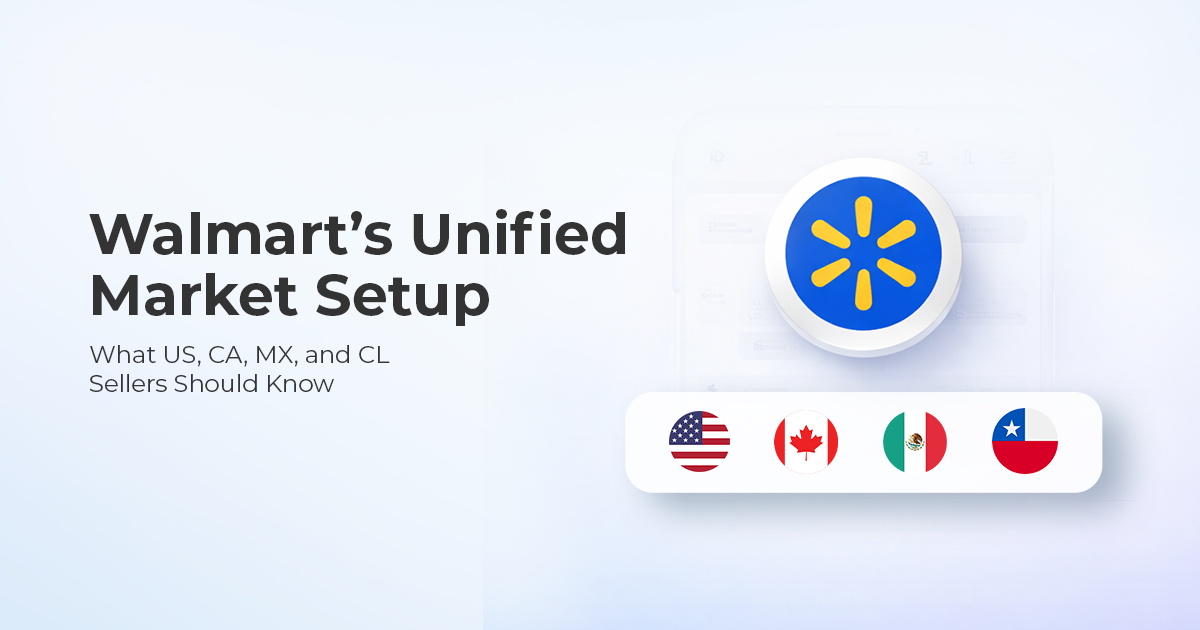
Reading Time: 5 minutes When a seller expands to a new Walmart market, the first…