
Etsy expands Purchase Protection: What sellers need to fix before 7 May
Reading Time: 3 minutes Etsy is updating its Purchase Protection programme from 7 May, and…
Running short of time? Get PDF of the blog in your mail.
Amazon is formally stepping back from its most ambitious brick-and-mortar grocery experiments, confirming it will close all Amazon Fresh supermarkets and Amazon Go convenience stores as it re-centres its grocery strategy on online delivery and Whole Foods Market.
The decision brings an end to two concepts that Amazon once positioned as the future of physical grocery retail but which, by the company’s own admission, failed to deliver a “truly distinctive customer experience.”
Amazon will shutter:
Some of the vacated properties will be converted into Whole Foods Market stores, reflecting where Amazon now sees durable demand, clearer positioning, and better long-term economics.
The closures underscore a rare but notable recalibration for Amazon: an acknowledgement that physical grocery retail is not infinitely scalable, even for the world’s most powerful eCommerce operator.
Rather than continuing to invest in store formats that struggled to differentiate, Amazon is redirecting capital toward areas where it already has traction:
Amazon seriously entered the physical grocery market with its $13.7 billion acquisition of Whole Foods Market in 2017. Since then, Whole Foods has demonstrated scale and resilience, with sales up more than 40% and a current footprint of around 550 stores.
Amazon now plans to add 100+ additional Whole Foods locations over the next few years, including smaller-format Whole Foods Market Daily Shops, and is testing store-within-a-store integrations with Amazon services.
Launched in 2018, Amazon Go was designed to redefine convenience retail using Just Walk Out technology. Shoppers could enter, pick up items, and leave without stopping at a checkout, with purchases automatically billed via the Amazon app.
While the store concept failed to reach sufficient scale, the technology itself proved viable. Amazon has since licensed Just Walk Out to more than 360 third-party locations, including sports arenas, where speed and throughput are critical.
The outcome highlights a recurring theme in Amazon’s retail strategy: technology can succeed even when the store format does not.
Amazon Fresh began as an online grocery service in 2007, long before the physical stores launched in 2020. The stores were positioned as a more affordable alternative to Whole Foods but struggled to stand out in a crowded, price-sensitive grocery landscape.
Unlike Whole Foods, which has a clearly defined value proposition, Amazon Fresh stores sat uncomfortably between discount grocers and premium players. The Amazon brand, powerful online, failed to translate into a compelling in-store reason to visit.
Amazon will continue operating Amazon Fresh as a delivery service, but the physical stores will be fully phased out.
Industry analysts view Amazon’s decision as pragmatic rather than defensive.
“Amazon is prudent to step back from rolling out an expensive fleet of suboptimal stores and to divert its investments to areas where it can have more impact and generate a better return,” said Neil Saunders, managing director at GlobalData.
Saunders added that integrating perishable groceries into Amazon’s core eCommerce operations, expanding fast delivery, and growing online assortments are proven levers for grocery growth, while Whole Foods remains a differentiated asset with scope for further food-led innovation.
Amazon’s retreat from Amazon Fresh stores and Amazon Go marks a clear strategic line:
Rather than forcing scale where it doesn’t naturally exist, Amazon is consolidating around grocery models that already work.
In doing so, the company signals a more disciplined phase in its grocery ambitions—one focused on return, clarity, and operational leverage rather than retail novelty.


Reading Time: 3 minutes Etsy is updating its Purchase Protection programme from 7 May, and…
Reading Time: 2 minutes Walmart is doubling down on creator-driven social commerce, turning influencer content…
Reading Time: 2 minutes In a major follow-up to our earlier coverage — “Amazon Confirms:…

Reading Time: 12 minutes From Etsy policy changes, such as fees and payments, to creativity…

Reading Time: 1 minuteDigital Commerce 360 reports that eCommerce accounted for 25% of total retail…

Reading Time: 1 minuteA coalition of 23 WTO member countries, including the United States, Britain,…
Reading Time: 2 minutes Amazon has announced a 3.5% surcharge for sellers using its fulfilment network…
Reading Time: 2 minutes Amazon has officially expanded its free, box-free, label-free returns network by…
Reading Time: 2 minutes Walmart is bringing Sparky, its proprietary shopping assistant, into ChatGPT, marking…
Reading Time: 2 minutes Visa has rolled out six AI-powered dispute resolution tools aimed at…
Reading Time: 3 minutes On March 26, 2026, the European Parliament and the Council reached…
Reading Time: 4 minutes Kanzen Skincare and six other brands are preparing for what is…
Reading Time: 5 minutes When a seller expands to a new Walmart market, the first…
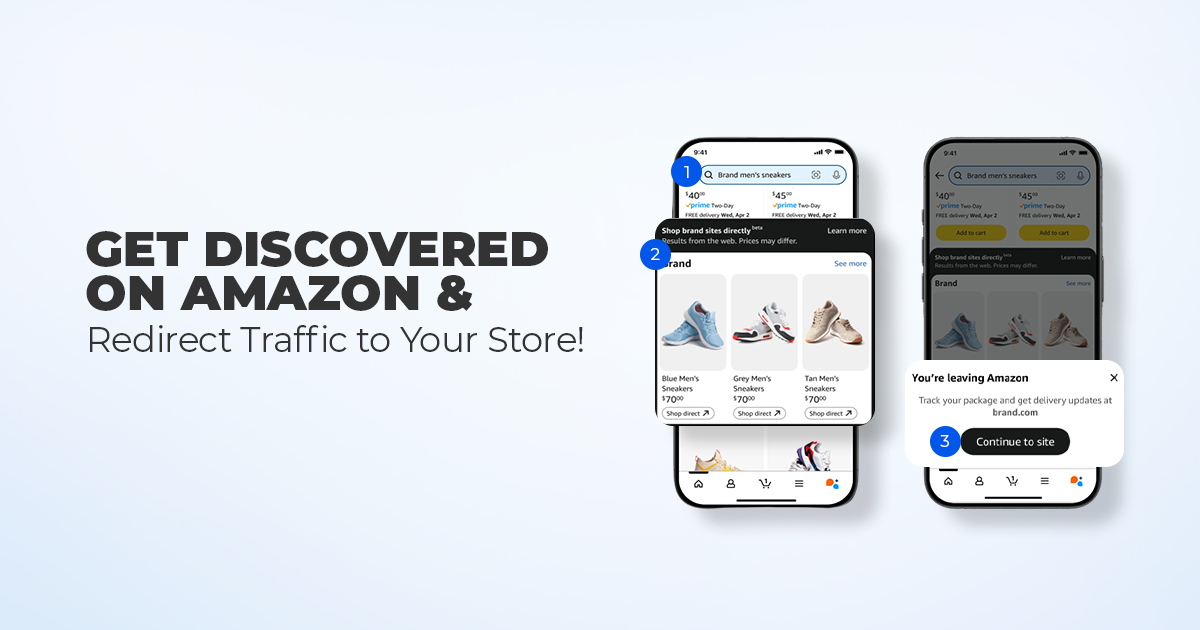
Reading Time: 11 minutes What if reaching hundreds of millions of Amazon customers didn’t mean…
Reading Time: 2 minutes Alibaba’s latest update shows that AI is becoming a much bigger…

Reading Time: 2 minutes A new industry study shows that agentic commerce is moving from…
Reading Time: 2 minutes Amazon has introduced new 1-hour and 3-hour delivery options for customers…
Reading Time: 16 minutes How to find, quantify, and validate winning Amazon products? Amazon product…
Reading Time: 2 minutes Amazon is rolling out a significant update that will directly impact…
Reading Time: 3 minutes Ulta Beauty is preparing to launch a curated storefront on TikTok…