
Etsy Policy Changes 2026: What Sellers Must Fix to Stay Compliant, Visible, and Profitable
Reading Time: 12 minutes From Etsy policy changes, such as fees and payments, to creativity…
Running short of time? Get PDF of the blog in your mail.
Amazon has formally expanded its Multi-Channel Fulfillment (MCF) operations in Europe with the launch of a dedicated German-language website for the service. The new portal, available at supplychain.amazon.de, signals Amazon’s growing push to position its fulfillment infrastructure as a logistics backbone not just for its marketplace, but for direct-to-consumer (D2C) brands selling across multiple channels.
The expansion targets brands that sell on Amazon while also operating their own websites or independent eCommerce stores. By enabling these businesses to leverage Amazon’s logistics network for non-Amazon orders, the company is attempting to simplify fulfillment operations and remove one of the major operational barriers facing omnichannel retailers.
The launch was announced by Christian Breukhoven, Head of Business Development for Continental Europe at Amazon MCF.
Germany represents one of the most significant eCommerce markets in Europe. It is the largest online retail market in the German-speaking region and ranks among the top four eCommerce markets across Europe.
For many brands operating in Germany, a common challenge has been managing separate inventory pools:
This fragmented inventory management can lead to forecasting challenges, higher storage costs, and operational inefficiencies.
Amazon MCF aims to solve this by allowing sellers to store a single inventory within Amazon’s fulfillment centers and use that stock to fulfill orders originating from any sales channel.
MCF is closely related to Fulfillment by Amazon, but the two services serve different purposes.
FBA processes orders that originate directly from Amazon’s marketplace. MCF, on the other hand, fulfills orders placed through external sales channels, such as:
This means that if a seller already stores inventory within Amazon’s fulfillment centers for FBA, that same inventory can also be used to fulfill external orders through MCF without requiring separate shipments.
One important distinction is that MCF does not require businesses to sell on Amazon at all. Companies that operate purely through their own D2C websites can register directly for the service and use Amazon’s logistics infrastructure.
Amazon’s MCF service offers two Click-to-Delivery (CTD) speed options for shipments originating in Germany:
Orders can be delivered across the European Union through Amazon’s network of fulfillment centers located in countries including:
This network allows D2C brands to offer fast EU-wide delivery without building their own logistics infrastructure. Within Germany, Amazon ships MCF orders in unbranded packaging, meaning parcels do not carry Amazon logos or marketplace branding. This neutral packaging is automatically applied to eligible products and is offered at no additional cost.
For D2C brands, this is particularly important because it preserves the brand experience for customers ordering from independent websites.
MCF orders can be managed through Amazon’s Seller Central dashboard. Once an order is placed through an external sales channel, sellers can monitor its fulfillment status under the “Manage Orders” section.
The system provides information, including:
This ensures sellers maintain visibility over orders even when deliveries are handled by Amazon’s logistics partners.
MCF operates on a pay-as-you-go pricing model, allowing businesses to use the service without signing long-term contracts.
Fulfillment fees are calculated based on several factors, including:
Amazon also offers multi-item order discounts of up to 25%, which apply when multiple units are shipped in a single order.
However, sellers should also be aware of additional cost considerations.
Inventory stored in Amazon fulfillment centers for more than 271 days incurs long-term storage fees on top of regular monthly storage charges.
Additionally, the maximum reimbursement for a single eligible MCF unit in Europe is capped at €275, according to Amazon’s documentation.
Returns management under MCF differs from the process used for Amazon Marketplace orders. Sellers have two options for handling returns:
When returning items to Amazon’s facilities, sellers must generate a Return Merchandise Authorization (RMA) through Seller Central.
The system produces:
Unlike Amazon marketplace returns, postage costs are not included in the label, meaning either the seller or the customer must cover return shipping.
Once the item arrives at the fulfillment center, Amazon inspects the product. Resalable items are returned to inventory, while damaged items are either disposed of or returned to the seller based on preconfigured settings.
According to Amazon, more than 300,000 sellers globally now use Multi-Channel Fulfillment to ship orders originating from websites, social media shops, and other online platforms.
Several case studies highlighted on the German MCF website demonstrate how brands have used the service to support D2C growth.
For example:
While these figures come from Amazon’s own materials, they highlight the company’s effort to position MCF as a viable logistics partner for D2C brands.
The launch of the German-language MCF website reflects a broader strategic shift in Amazon’s logistics business.
Rather than limiting its fulfillment infrastructure to marketplace orders, Amazon is increasingly positioning its network as shared logistics infrastructure for multi-channel retail.
Recent developments reinforce this strategy.
In 2024, Google Merchant Center announced an integration with Amazon MCF, allowing merchants to display delivery speed estimates directly in Shopping ads.
In 2025, Walmart updated its marketplace shipping policies to allow sellers to use Amazon MCF for Walmart orders, provided that packages use neutral branding.
These developments indicate that Amazon’s fulfillment network is evolving into a cross-platform logistics infrastructure supporting modern omnichannel commerce.
For brands operating in Germany and across Europe, the expansion of Amazon MCF could significantly change the economics of direct-to-consumer fulfillment.
Fast delivery has become a major conversion factor in online shopping. When brands can promise 1–2 day delivery without building their own warehouse network, it can directly improve performance across advertising and customer acquisition campaigns.
At the same time, the single-inventory model simplifies operations for brands that sell simultaneously on Amazon, their own website, and other platforms.
Whether the service will see widespread adoption in Germany will depend on factors such as pricing competitiveness, integrations with local commerce platforms, and how effectively Amazon promotes the service to European merchants.
However, the launch clearly signals Amazon’s ambition to extend its logistics network beyond its own marketplace and become a central infrastructure provider for global eCommerce fulfillment.
Source: https://ppc.land/amazon-mcf-comes-to-germany-what-d2c-brands-need-to-know-now/


Reading Time: 12 minutes From Etsy policy changes, such as fees and payments, to creativity…

Reading Time: 1 minuteDigital Commerce 360 reports that eCommerce accounted for 25% of total retail…
Reading Time: 1 minuteA coalition of 23 WTO member countries, including the United States, Britain,…
Reading Time: 2 minutes Amazon has announced a 3.5% surcharge for sellers using its fulfilment network…
Reading Time: 2 minutes Amazon has officially expanded its free, box-free, label-free returns network by…
Reading Time: 2 minutes Walmart is bringing Sparky, its proprietary shopping assistant, into ChatGPT, marking…
Reading Time: 2 minutes Visa has rolled out six AI-powered dispute resolution tools aimed at…
Reading Time: 3 minutes On March 26, 2026, the European Parliament and the Council reached…
Reading Time: 4 minutes Kanzen Skincare and six other brands are preparing for what is…
Reading Time: 5 minutes When a seller expands to a new Walmart market, the first…
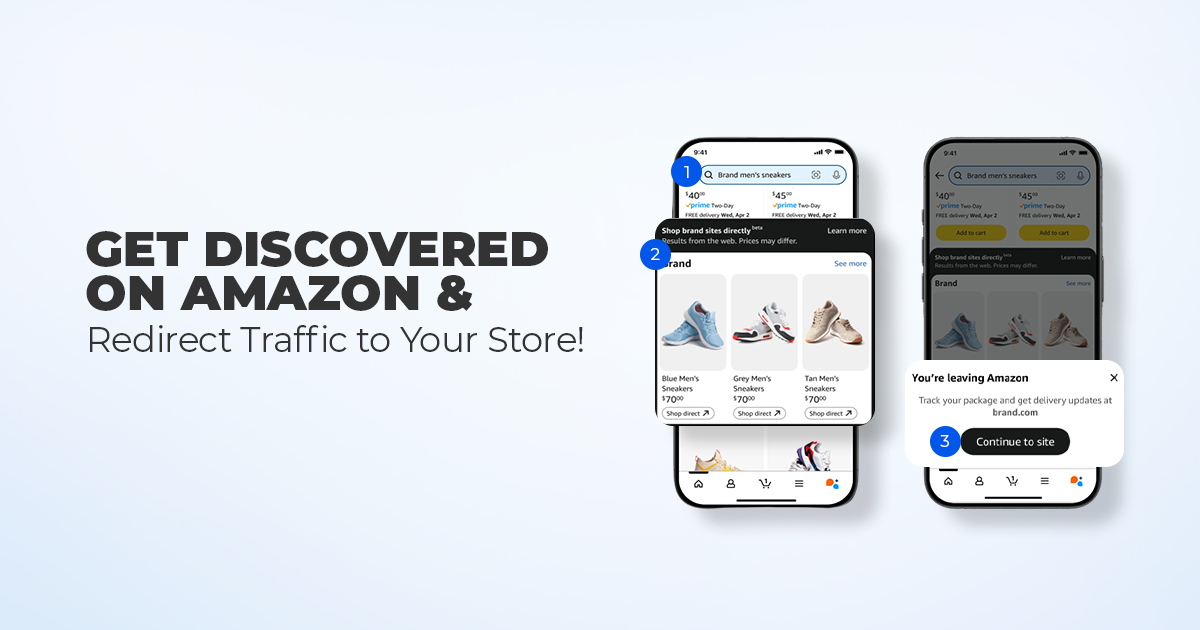
Reading Time: 11 minutes What if reaching hundreds of millions of Amazon customers didn’t mean…
Reading Time: 2 minutes Alibaba’s latest update shows that AI is becoming a much bigger…

Reading Time: 2 minutes A new industry study shows that agentic commerce is moving from…
Reading Time: 2 minutes Amazon has introduced new 1-hour and 3-hour delivery options for customers…
Reading Time: 16 minutes How to find, quantify, and validate winning Amazon products? Amazon product…
Reading Time: 2 minutes Amazon is rolling out a significant update that will directly impact…
Reading Time: 3 minutes Ulta Beauty is preparing to launch a curated storefront on TikTok…
Reading Time: 2 minutes Until now, falling below the 90% OTDR (On-time Delivery Requirement) could…
Reading Time: 5 minutes Amazon has formally expanded its Multi-Channel Fulfillment (MCF) operations in Europe…
Reading Time: 4 minutes Amazon has announced that Sponsored Products prompts and Sponsored Brands prompts…