
Amazon vs Walmart vs Target Plus: What Changes Operationally for Sellers?
Reading Time: 11 minutes If you already sell on Amazon, adding Walmart or Target Plus…
Running short of time? Get PDF of the blog in your mail.
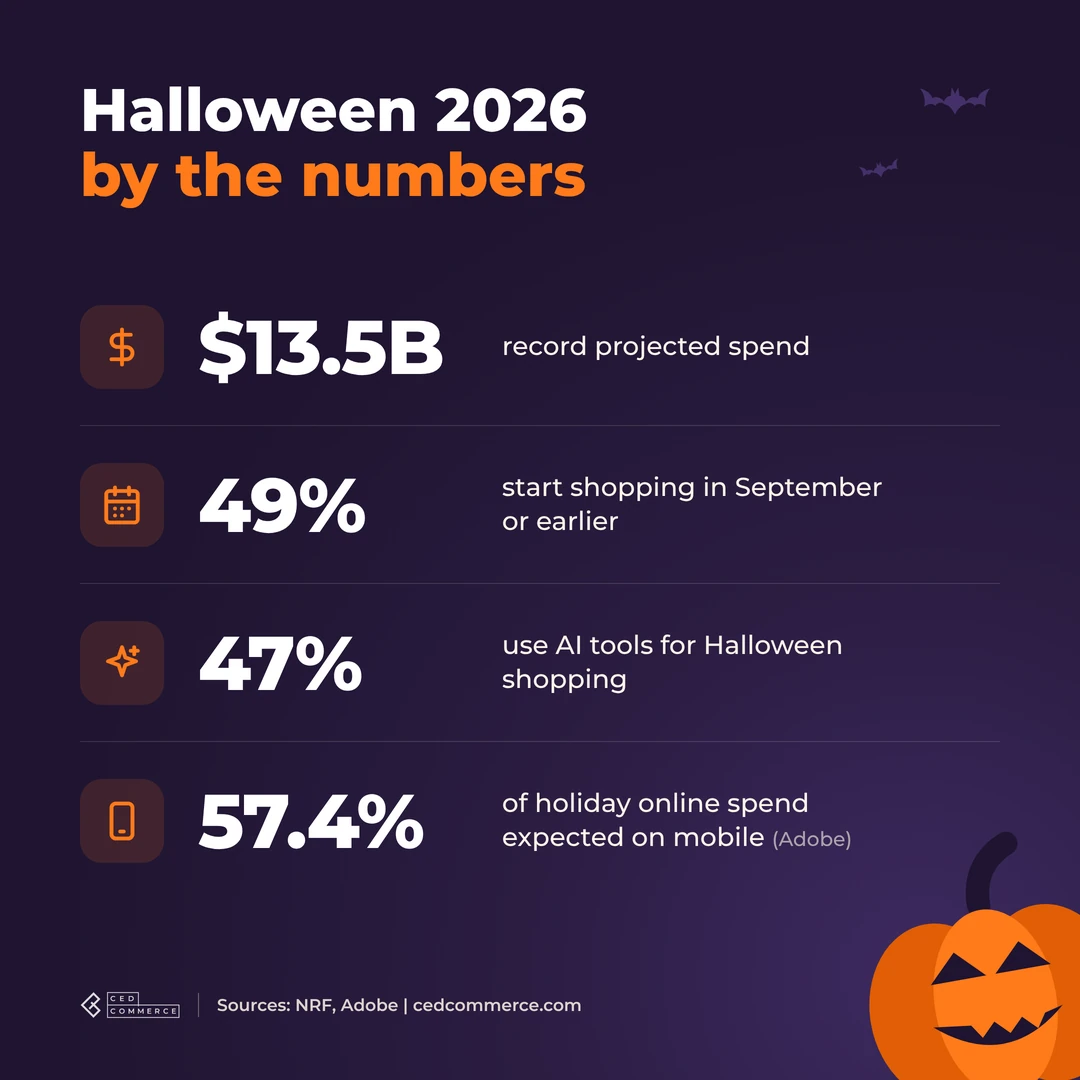
Halloween promotions work best when they start in September and run on the channels where shoppers already buy. The National Retail Federation (NRF) expects U.S. Halloween spending to reach a record $13.5 billion in 2026, with 74% of consumers planning to celebrate and the average shopper spending $115.14.
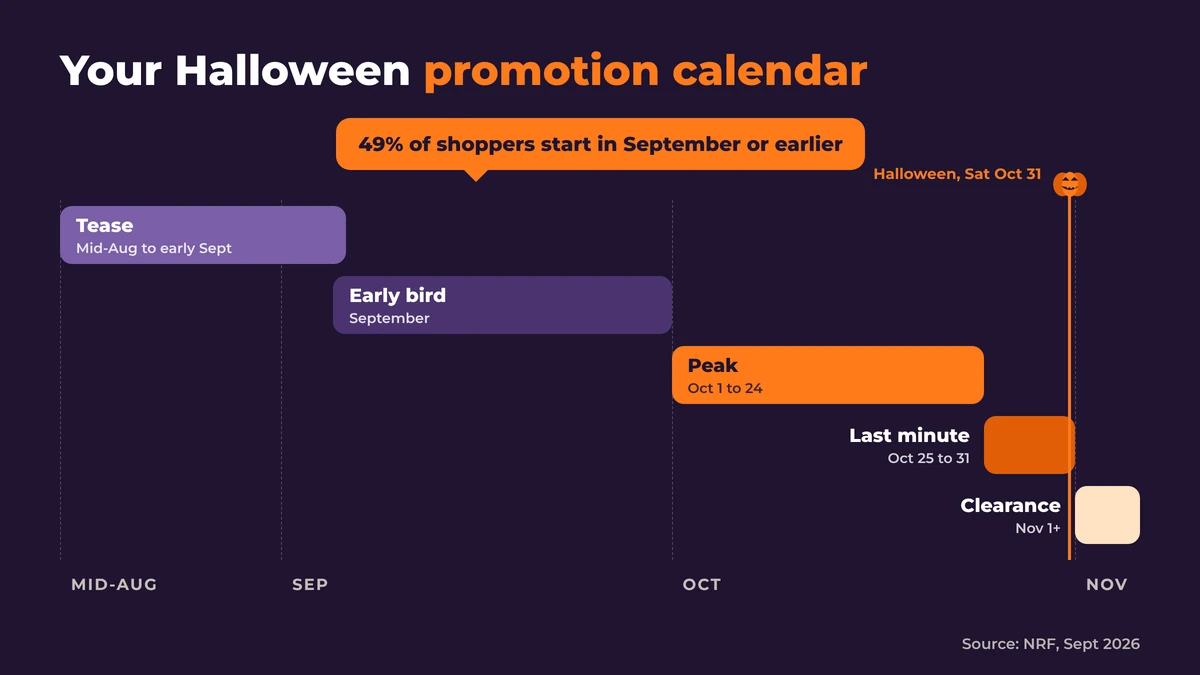
Nearly half of shoppers (49%) start buying in September or earlier. So the sellers who win sales must plan early-bird offers before October and switch to fast-shipping and clearance offers in the final days. Below are 11 Halloween promotion ideas updated with 2026 data, plus how to run them across Amazon, Walmart, TikTok Shop and other marketplaces from one catalog.
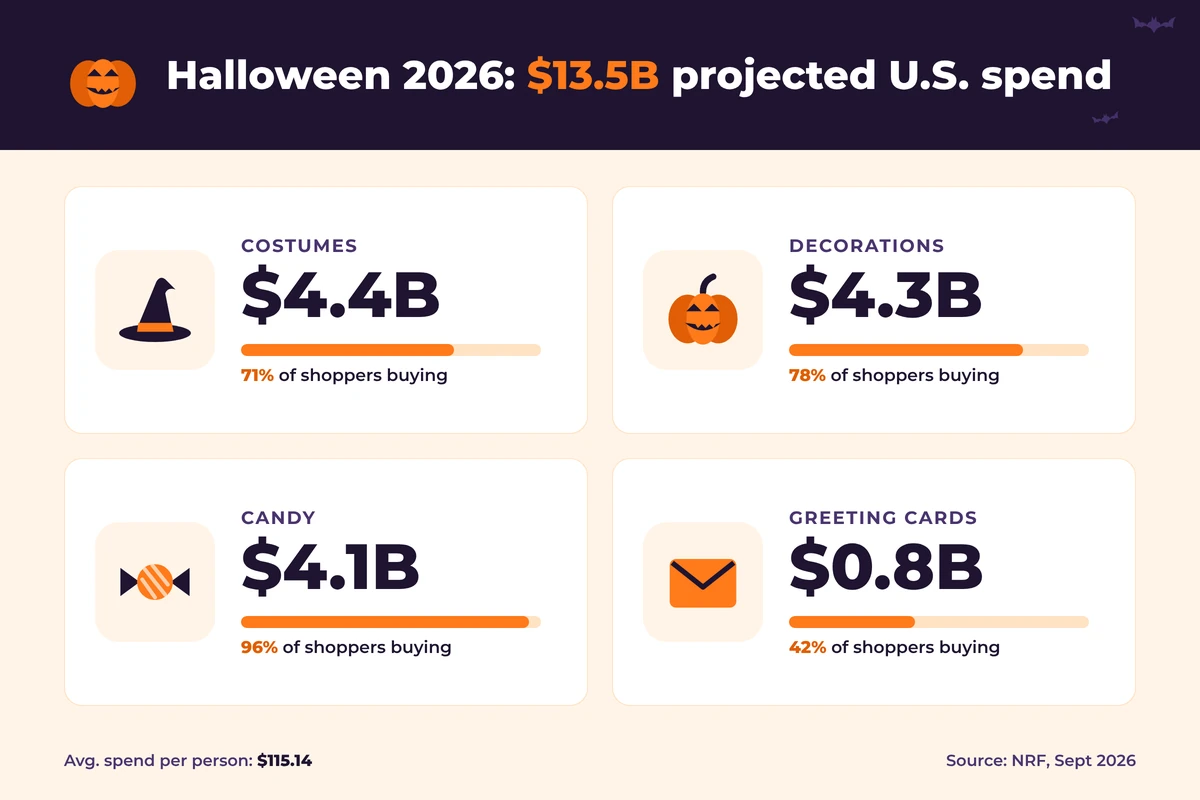
Halloween is now one of the biggest retail events before the winter holidays. NRF’s 2026 survey of 7,889 U.S. consumers projects $13.5 billion in total spending, up from the previous record of $13.1 billion in 2025 (NRF, September 2026).
Here’s where that money goes:
| Category | Projected 2026 spend | Share of shoppers planning to buy |
|---|---|---|
| Costumes | $4.4 billion | 71% |
| Decorations | $4.3 billion | 78% |
| Candy | $4.1 billion | 96% |
| Greeting cards | $0.8 billion | 42% |
Costumes are the biggest category by dollars. Candy reaches the most shoppers, but decorations nearly match costumes in total spend, which makes décor a strong category for online sellers who don’t stock costumes.
Halloween also opens the holiday season. Adobe forecasts U.S. online holiday sales of $275.1 billion between November 1 and December 31, 2026 (Adobe, September 2026). A customer you win in October is a customer you can retarget for Black Friday. Our guide to holiday marketing strategies covers that handoff.
Earlier than a decade ago. In 2026, 49% of consumers planned to start Halloween shopping in September or earlier, compared with 34% in 2016. Early shoppers say they enjoy the fall season (42%), call Halloween their favorite holiday (34%), want to spread out their budget (23%) or are chasing good prices and promotions (21%).
Use that pattern to set your promotion calendar:
| Phase | Timing | What to run |
|---|---|---|
| Tease | Mid-August to early September | List seasonal SKUs, build email segments, post sneak peeks |
| Early bird | September | Limited-time early discounts and pre-built bundles |
| Peak | October 1 to 24 | Email sequence, UGC contest, social content, marketplace ads |
| Last minute | October 25 to 31 | Fast-shipping offers, “arrives by Halloween” messaging, gift cards |
| Clearance | November 1 onward | Markdowns on leftover stock, then pivot listings to fall and holiday |
The ideas below suit online stores and marketplace sellers. For campaign setup basics, see these tips on setting your Halloween marketing campaigns right.
Early discounts catch the 49% of shoppers who start in September. One in five of those early shoppers say promotions are part of the reason they buy early, so a dated offer (“15% off costumes until September 30”) gives them a reason to act now.
Keep early offers narrow. Discount a few hero SKUs or bundles and save your deepest cuts for clearance. Announce the sale through email and social before it starts, so returning customers don’t miss it.
Shoppers search for complete looks, and the most popular costumes are easy to assemble from generic items. NRF’s 2026 data puts witch (4.8 million adults) and vampire (4.2 million adults) at the top of adult costume plans.
Build kits that combine clothing, accessories, makeup and props, then add a one-page styling guide. If you sell home goods instead of apparel, bundle themed décor with fall items such as candles, throws, table runners or doormats. Bundles raise order value and give you a fresh listing to promote on every channel.
Your email list is the cheapest channel to tell existing customers about Halloween offers. Start a short sequence in September and build toward your main offer in October.
Mix promotional emails with useful content such as costume ideas, décor setups, party checklists or treat recipes. Segment past Halloween buyers and send them early access first. In the final week, switch subject lines to shipping deadlines and countdowns.
Most online holiday spending now happens on phones. Adobe expects mobile to account for 57.4% of U.S. online holiday spending in 2026, up from 56.4% in 2025.
Test your Halloween landing pages on a phone before launch. Compress large seasonal images, cut checkout steps, offer digital wallets alongside cards and show your delivery promise (“Order by Oct 28 for Halloween delivery”) next to the add-to-cart button.
Small seasonal touches tell visitors you’re running a Halloween offer. Update profile pictures with a light Halloween element while keeping your logo recognizable.
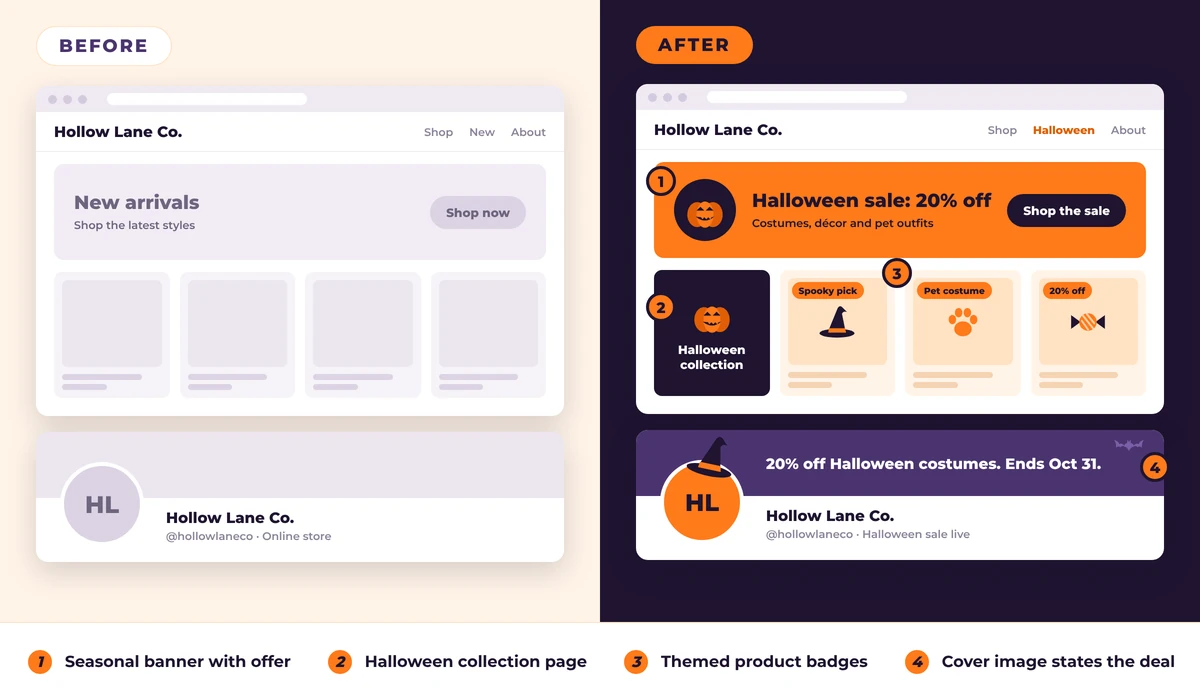
Use cover images to state the offer clearly, since non-followers see them first. On your store, add a Halloween banner, a seasonal collection page and themed product badges. Keep it simple enough that the products, not the decorations, stay the focus.
One or two Halloween posts a week through October is enough for most brands. Make each post useful to your specific audience:
Ask followers to post their best Halloween photo with your product and a campaign hashtag for a chance to win a prize. User-generated content gives you social proof for product pages and ads, and a branded hashtag helps entrants find each other.
Create categories such as best costume, best décor setup, best pet costume or best Halloween treat made with your product. Repost entries daily during the contest to keep momentum going.
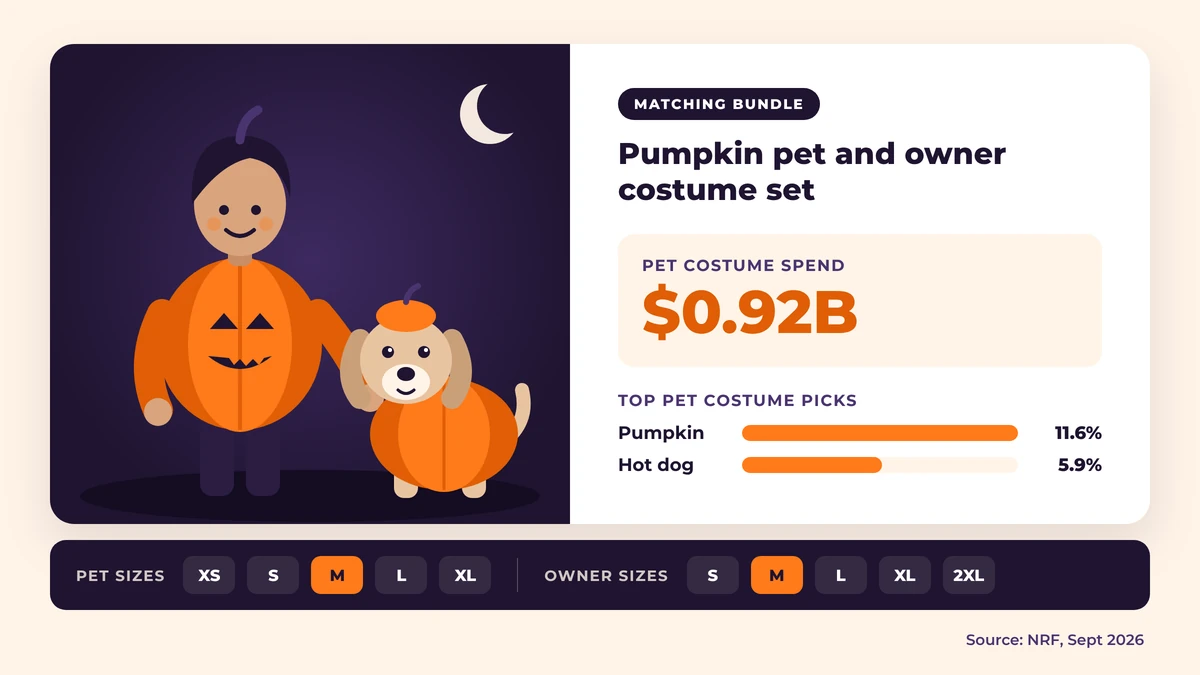
Pet costumes are a category of their own. NRF expects pet costume spending to reach $0.92 billion in 2026, with pumpkin (11.6%) and hot dog (5.9%) as the two most popular choices.
Pair pet costumes with matching owner outfits for a “twinning” bundle. Include clear size charts by weight or breed so buyers pick the right fit the first time.
Shoppers now ask AI tools for ideas. NRF found that 47% of consumers used AI platforms or tools for Halloween shopping in 2026, mostly to brainstorm ideas (34%) and get recommendations during product research (32%). Adobe also expects AI-driven traffic to U.S. retail sites to rise 130% this holiday season.
AI assistants pull from structured product data. Fill every attribute marketplaces offer, including size, age range, material and theme. Write titles that say exactly what the product is (“Kids’ Witch Costume with Hat, Ages 4 to 6”) and answer common questions in the description.
Halloween shoppers spread their spending across channels. In 2026, 39% planned to shop at discount stores, 32% at specialty Halloween or costume stores and 27% online.
Your own website reaches only part of that demand. Listing your Halloween catalog on marketplaces such as Amazon, Walmart, Temu and TikTok Shop puts the same products in front of more buyers, without building a new store for each.
Halloween 2026 falls on a Saturday, so most party orders need to arrive by Friday, October 30. In the final week, promote items you can deliver in time, pin a delivery-cutoff banner, offer faster shipping upgrades and sell digital gift cards to shoppers who’ve missed the cutoff.
On November 1, mark down leftover stock and move unsold seasonal items into fall or holiday collections. Clearing Halloween inventory quickly frees up listings and ad budget for Black Friday.
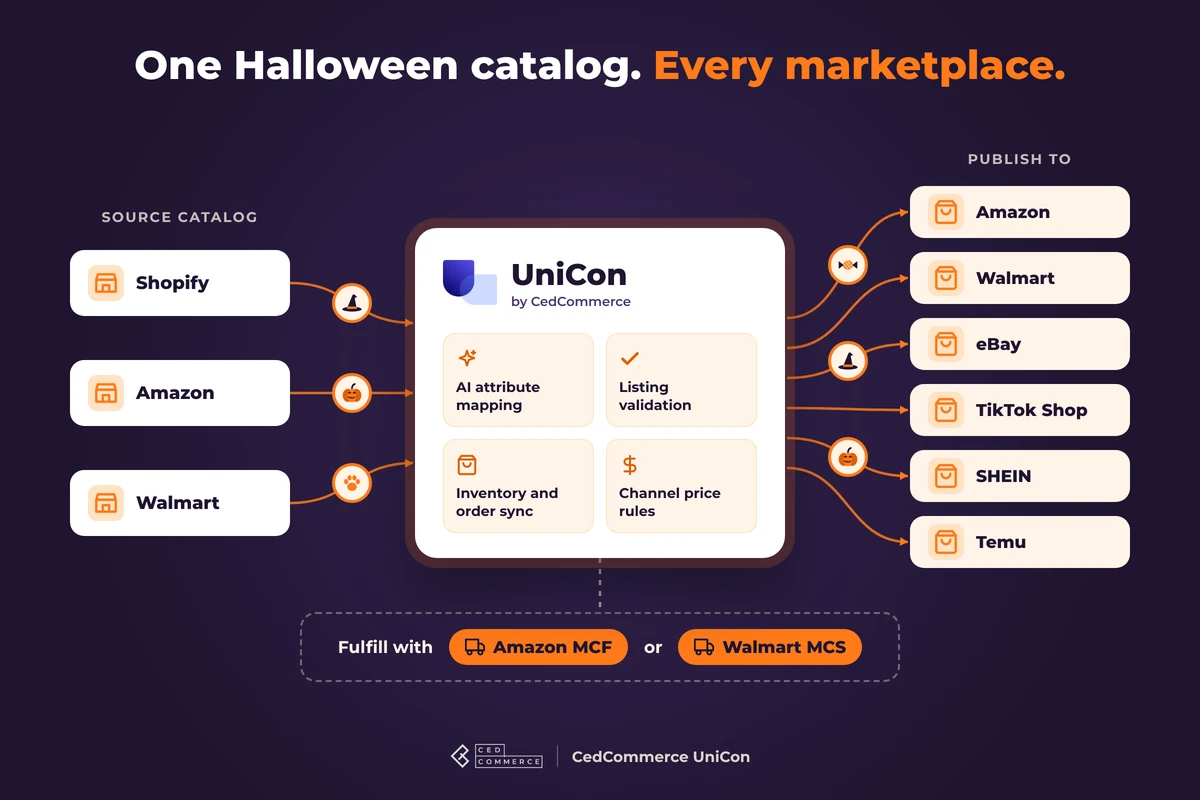
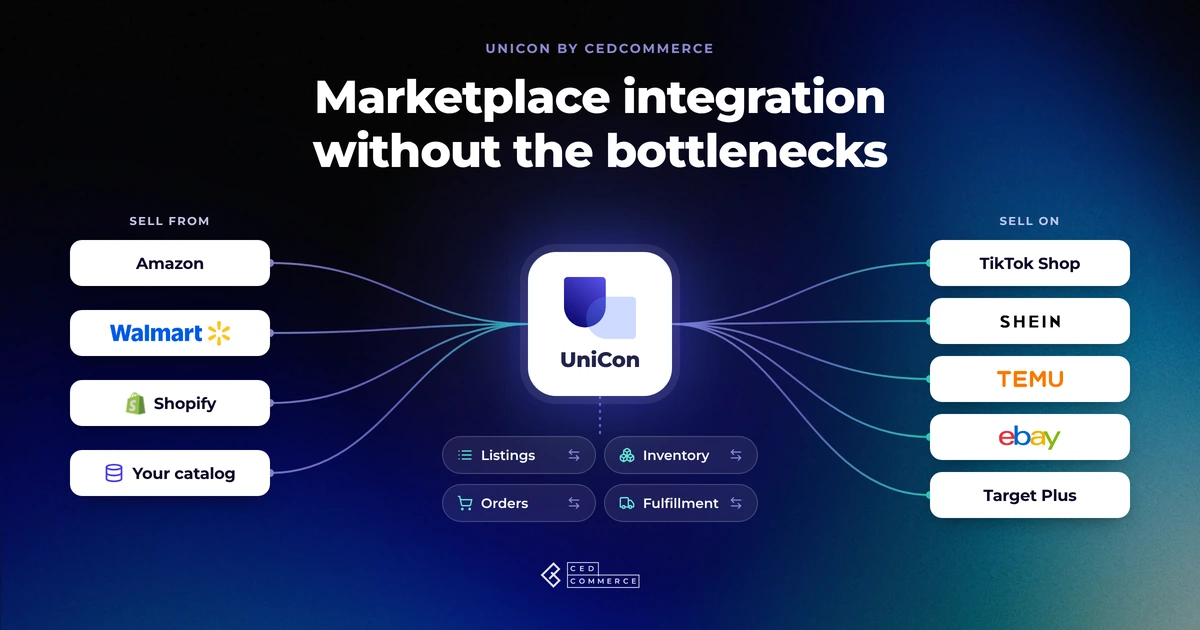
Running the same Halloween offer on four marketplaces means four sets of listings and four inventory counts to keep in step. CedCommerce UniCon is a multichannel connector that manages them from one place. You connect a source catalog from Shopify, Amazon or Walmart, then publish listings to channels such as Amazon, Walmart, eBay, TikTok Shop, SHEIN and Temu.
Build your costume, décor, party and pet SKUs once in your source store. UniCon cross-lists them to each connected marketplace, so you don’t rebuild a new witch costume kit by hand on every channel.
If you already sell seasonal products on another platform, cross-listing from your main catalog is the quickest way to reach more Halloween shoppers before the window closes.
Every marketplace asks for different categories and attributes. A children’s costume may need age range, size, material and theme on one channel and a different taxonomy on the next.
UniCon uses AI attribute mapping to match your product data to each channel’s required attributes, and required-field validation flags gaps before you publish. CedCommerce reports mapping 8,000+ SKUs in under 20 minutes.
A title that converts on TikTok Shop may not suit Walmart. UniCon keeps standard and custom attributes, reusable templates, lists and bulk edits in one catalog, so you can adjust each channel’s version without starting over.
Suppression-risk checks catch listings that could go live with missing data. On paid plans, AI content generation drafts channel-ready titles, bullets and descriptions. You can also set channel-level price rules, so a Halloween markdown on one marketplace doesn’t have to match another.
Halloween stock has a hard deadline. Overselling a costume on October 30 means a cancellation you can’t win back with a later delivery.
UniCon syncs inventory and pricing across connected channels and centralizes orders with tracking updates. Sync frequency depends on your plan, from every 4 hours on Starter to near real-time on Enterprise, so match your plan to your peak-week order volume.
Agencies and multi-brand sellers can manage multiple seller accounts and catalogs from one system. That means one view of your Halloween performance instead of a tab for every marketplace.
If your Halloween inventory already sits in FBA, Amazon Multi-Channel Fulfillment (MCF) ships orders from your other sales channels using that same stock, with 2, 3 and 5 business-day delivery options. UniCon supports MCF workflows for SHEIN, TikTok Shop and Temu orders, with inventory sync and automatic tracking updates.
Walmart Multichannel Solutions (MCS) does the same for sellers using Walmart Fulfillment Services (WFS). UniCon supports MCS so orders from other channels ship from your WFS inventory. Walmart doesn’t accept multi-box or big and bulky items for MCS, so check oversized props and inflatables before routing them. Both workflows are available on UniCon’s Starter plan and above.
CedCommerce states that UniCon setup takes under 30 minutes, with 48 hours from connection to a first live listing.
CedCommerce UniCon
Put your Halloween catalog on more marketplaces
Cross-list costume, décor, party and pet SKUs from Shopify, Amazon or Walmart to TikTok Shop, Temu, eBay and more. AI attribute mapping and synced inventory keep every channel ready for the seasonal rush.
NRF projects a record $13.5 billion in U.S. Halloween spending for 2026, up from $13.1 billion in 2025. The average shopper plans to spend $115.14, and 74% of consumers plan to celebrate.
Start in September. NRF found that 49% of shoppers begin Halloween shopping in September or earlier, so have listings, bundles, ads and email segments ready by late August.
Costumes lead in total spending at $4.4 billion, followed by decorations at $4.3 billion and candy at $4.1 billion. Candy reaches the most shoppers, with 96% planning to buy it.
Run an early-bird discount, send a short email sequence, post useful Halloween content on social media and host a UGC contest. Listing your products on more than one marketplace also helps, since shoppers split their spending across discount stores, specialty stores and online channels.
Yes. Amazon Multi-Channel Fulfillment ships orders from other channels using FBA inventory, and Walmart Multichannel Solutions does the same with WFS inventory. UniCon supports both workflows on its Starter plan and above.
Turn Halloween shoppers into Black Friday buyers
Talk to a UniCon expert about moving your seasonal catalog to new marketplaces and routing orders through Amazon MCF or Walmart MCS before the holiday rush.

Reading Time: 11 minutes If you already sell on Amazon, adding Walmart or Target Plus…
Reading Time: 13 minutes Selling on another marketplace sounds straightforward when you already have a…
Reading Time: 18 minutes If you’re an established third-party brand or authorized reseller looking for…