
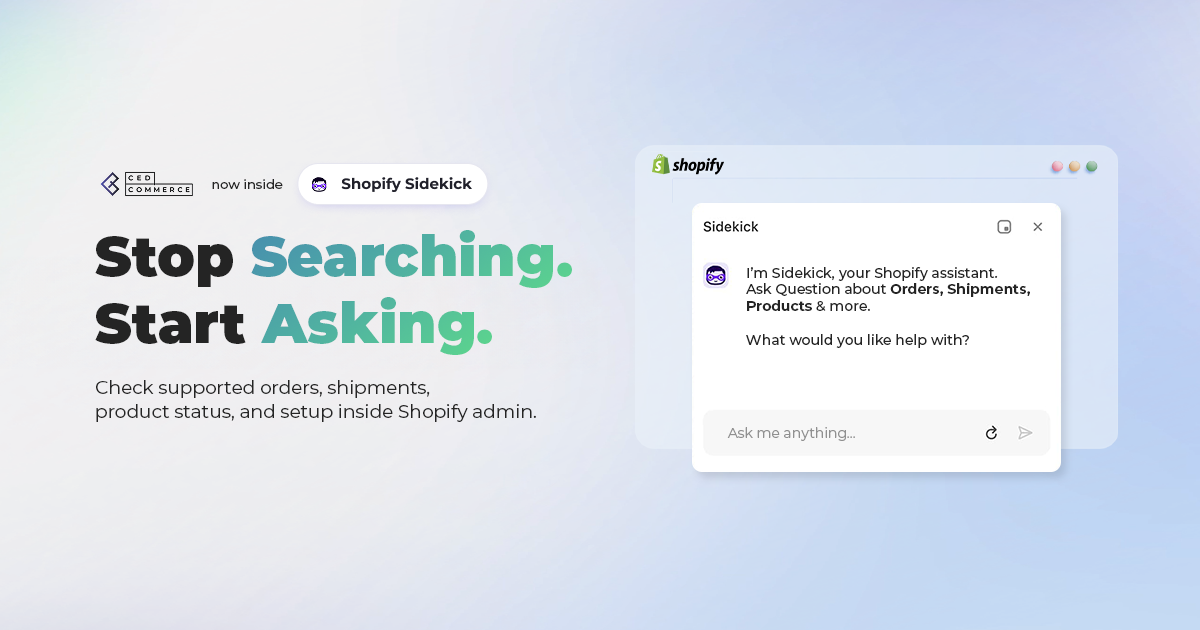
CedCommerce Apps Are Now Available in Shopify Sidekick
Reading Time: 6 minutes Your marketplace stack may be connected, but your attention is still…

Running short of time? Get PDF of the blog in your mail.
On March 26, 2026, the European Parliament and the Council reached a provisional agreement on a major reform of the EU Customs Code. The agreement will treat sellers and platforms facilitating distance sales from non-EU countries into the EU as importers, introduce a new handling-fee framework, and create a new EU Customs Authority plus a shared customs data hub.
While the headline is about customs modernization, the broader story is about scale: eCommerce parcel volumes into the EU have surged, and regulators are now building a more centralized, digital system to manage product checks, duty collection, and import data more efficiently.
For sellers, this is not a sudden one-day shift. It is the latest step in a broader EU effort that began with the European Commission’s customs reform proposal in May 2023 and has accelerated as parcel volumes and compliance requirements have grown.
May 17, 2023: The European Commission proposed a broad reform of the EU Customs Union to modernize how the bloc handles rising trade volumes, especially eCommerce imports.
December 12, 2025: The Council agreed that low-value parcels entering the EU would face a fixed customs duty from July 1, 2026, as an interim step before the wider reform infrastructure is fully in place.
February 11, 2026: The Council gave final approval to those small-parcel duty rules, confirming a €3 interim flat-rate customs duty from July 1, 2026.
March 25, 2026: Lille, France was selected as the seat of the new EU Customs Authority, which will help coordinate customs risk management and enforcement across member states.
March 26, 2026: The Council and European Parliament reached a provisional agreement on the wider customs reform, including a more modern framework for ecommerce imports, a new customs data hub, and clearer responsibility for traders and platforms involved in direct sales into the EU.
The EU is responding to the rapid growth of eCommerce shipments, with Reuters reporting 5.8 billion low-value parcels entered the bloc in 2025.
The reform is designed to make customs processes more centralized, more digital, and easier to manage across all 27 EU member states.
For the broader eCommerce ecosystem, the direction is clear: cross-border trade into Europe is moving toward better data visibility, stronger customs coordination, and more standardized import processes.
This matters for marketplaces, brands, logistics providers, and independent sellers alike because the operating environment is becoming more structured rather than less open.
Sellers shipping from outside the EU into EU markets should expect greater focus on customs data quality, product documentation, and import compliance.
The upcoming €3 small-parcel duty means pricing, margins, and landed-cost planning will need a closer review for low-value cross-border orders.
Businesses using EU-based inventory or local warehousing may find themselves better positioned as cross-border processes become more compliance-led. This is an inference from the reform’s direction toward clearer import accountability and parcel-level oversight.
Sellers should view this as a planning signal, not a reason to pause expansion. The EU remains a major eCommerce market, but operational readiness will matter more.
The March 26 deal is still a provisional agreement and needs formal approval before it is fully adopted.
The €3 interim customs duty on small parcels is scheduled to begin on July 1, 2026.
Reuters reported that the new EU Customs Data Hub is expected to begin with ecommerce in 2028, before expanding more broadly over time.
Sellers should now monitor implementation timelines, review shipping models, and prepare for a more data-driven import environment.
For sellers managing multiple marketplaces and cross-border catalogs, this is a good time to audit fulfillment flows, product feeds, and regional selling strategy.
CedCommerce can help you streamline marketplace operations, improve catalog consistency, and stay operationally ready as cross-border requirements evolve.

Reading Time: 6 minutes Your marketplace stack may be connected, but your attention is still…

Reading Time: 4 minutes Amazon Prime Day 2026 helped drive more than $26.4 billion in…

Reading Time: 1 minuteIntro Summary Shopify Scripts stopped executing entirely on June 30, 2026. Merchants…

Reading Time: 1 minuteIntro Summary France has passed a revised fast-fashion law aimed at regulating…

Reading Time: 2 minutes Intro Summary The European Union’s new €3 customs duty on low-value…
Reading Time: 2 minutes Amazon has announced a major catalog optimization change that will impact…
Reading Time: 3 minutes SHEIN has launched a new product safety and quality compliance training…

Reading Time: 4 minutes Etsy has introduced listing-level strategies for Etsy Ads, giving sellers more…

Reading Time: 4 minutes Walmart Expands Scrutiny on Product Claims Across Marketplace Listings Walmart Marketplace…
Reading Time: 5 minutes Customers Can Now Turn Simple Prompts Into Personalized Merchandise on Amazon…